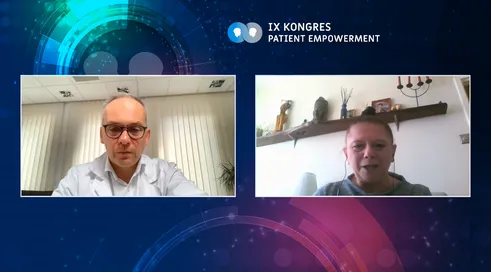
Interview with Dr. Konstantin Shuldrzynski, specialist in anesthesiology and intensive care, head of the Department of Anesthesiology and Intensive Care and deputy director of the National Medical Institute of the Ministry of Internal Affairs for Medical Affairs.
World Anesthesiology Day
Anesthesiology and intensive care are among the fastest growing fields of medicine

Published Oct. 15, 2024 08:29
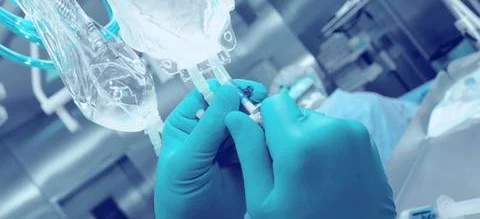
Fot. Thinkstock / Getty Images
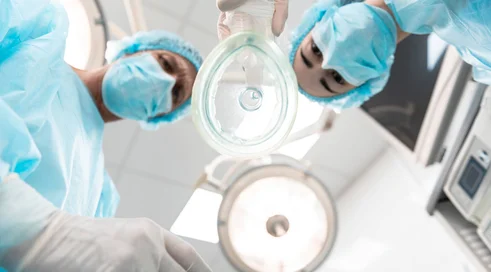
The use of ether for anesthesia in the 1840s began one of the of the greatest revolutions in medicine: thanks to the abolition of pain, more complex surgeries could be performed. And how has anesthesiology and the intensive care that grew out of it intensive care out of it have changed in recent years?
These are the fields that benefit most from technological advances today. Both anesthesiology - which aims to perform procedures safely and painlessly - and intensive care, which specializes in sustaining vital functions when the body can no longer cope on its own and the patient needs to be treated not only causally, but also to keep the body functioning, are developing very rapidly.
Intensive care was basically born and "emerged" from anesthesiology. On the one hand, anesthesiology had tools that allowed monitoring of vital signs during general anesthesia - these were, for example, cardiac monitors that monitored ECG, pulse, blood pressure, blood oxygen saturation. On the other hand, the apparatuses that were used for anesthesia have a design very similar to ventilators: they replace the patient's breathing. So we can say that there was a common source of development of anesthesiology and intensive care. Today, the fate of these fields is beginning to divide: in Poland and much of Europe, intensive care is still handled by anesthesiologists, but in some countries, such as Spain, the UK, intensive care is beginning to be a separate specialty. The amount of knowledge that is needed is already starting to become so large,
that a separate specialty has been created out of it.
We all learned about the importance of intensive care during the COVID-19 pandemic?
Certainly, the situation of covid patients had an impact on the development of awareness of the importance of intensive care. Most of the patients who developed severe forms of COVID-19 pneumonia required a stay in the intensive care unit. Intensive care has methods to keep patients alive when their condition is very severe.
At the time, we heard about the so-called ventilator beds, which were in short supply....
"Ventilator bed" is an unfortunate phrase, anesthesiologists fought it, rightly so, because it does not treat the "bed" or the "ventilator bed", it treats the people who use the ventilator and other devices.
In many countries around the world, intensive care experienced a renaissance during the pandemic, which showed the public how this field is needed. It is a very interdisciplinary field of medicine: no matter what specialty the patient's problem is, he or she ends up in the intensive care unit when his or her condition worsens. In the intensive care unit, the paths of all patients cross: cardiac, oncology, pulmonology, with metabolic diseases, after surgery, after transplants. No matter what the patient is, if his condition worsens, he goes to the intensive care unit.
An intensive care specialist must have a great deal of knowledge not only of how to maintain vitals, but also of patients' other diseases?
Intensive care is fascinating, but also very difficult: no two patients in the ICU are the same. They are very seriously ill, and on the other hand, each has a different disease. Without knowing how to treat a patient's disease, it is impossible to help them well. An intensive care doctor must have a great deal of knowledge, but also must cooperate with other specialties. The intensive care unit cannot function in isolation from the hospital as a whole. It is at a very good level when it can benefit from the knowledge of specialists in other fields who work in the hospital. That is why good intensive care units are usually in large, multi-specialty hospitals.
COVID-19 pandemic has caused even more development of intensive care?
There has certainly been an increased awareness that good intensive care is a prerequisite for the effectiveness of very complex and often expensive treatments. You can have the most expensive drug programs, the finest surgical methods, perform transplants, but if a patient's condition deteriorates, his survival is determined by whether he is saved in intensive care. In this sense, intensive care conditions the effectiveness of other treatments.
As for the development of intensive care in Poland, there are two major problems. The first: intensive care treatment used to be unlimited; now it is limited. To put it in simpler terms: the better we treat, the faster we exhaust the hospital's lump sum and enter the range of over-the-counter services that are not financed by the National Health Fund. As a result, hospitals are not interested in seeing the development of intensive care. The second problem is that the Polish health care system generally does not assess quality. It doesn't matter how we treat a patient, because we always get the same amount of money for treatment. Therefore, investing in intensive care, which improves the quality of treatment but is very expensive, is unfortunately financially unviable for hospitals in the current health care system. To put it brutally: it doesn't matter to hospital managers whether a patient comes out in good shape after a procedure, surgery or treatment or not, because the funding is the same.
The lack of quality assessment is not conducive to the development of intensive care. Quality is the only important parameter that is not assessed and rewarded in the Polish health care system.
During the first waves of COVID, there were times when patients were treated in intensive care units for several months....
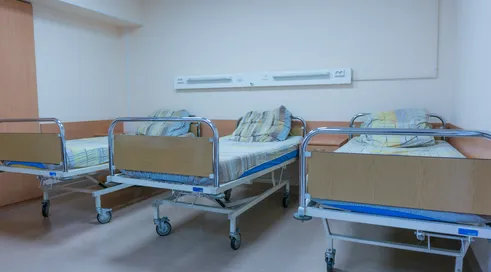
This has meant huge costs for hospitals to save these people. Intensive care is a beautiful field, extremely rapidly developing, as is anesthesiology. They are fascinating, related to a patient's quality of life and chances of survival, but they are very expensive. Unfortunately, our health care system does not support this. We have a very large shortage of intensive care beds: The EU says that 4-5 percent of hospital beds should be intensive care beds. In Poland, they are about 2 percent. Intensive care in Poland is very neglected.
And this means that some patients are not treated as they should be?
In Poland we have very good equipment, doctors have skills. It is only the financing system, the use of limits and lump sums that make it impossible for us to treat as we can. Or public hospitals treat, getting more and more in debt. The better they treat, the more indebted they become, because it is difficult for a patient to refuse care, treatment without pain or intensive care.
A major challenge in intensive care units are patients with septic shock. How does it occur and what are its risks?
Septic shock is the most severe form of sepsis. In the case of sepsis, the immune system's response - for various reasons that are not fully known to us - begins to harm the body. The immune system not only fights the infection, but also begins to harm itself. Sepsis is the body's dysregulated immune response to an infection. The most severe case is septic shock, a condition in which, for various reasons, too little blood, nutrients and oxygen begin to reach the tissues and organs in relation to their needs. As a result of developing sepsis, the heart, vascular system do not work properly.
It is necessary, on the one hand, to treat the infection, and on the other: to stabilize the cardiovascular system with drugs that are not specific to septic shock itself - the same drugs are used in circulatory failure from other causes. Treatment of septic shock requires maintenance treatment. The patient needs treatment to maintain organ function, that is, to ensure adequate blood pressure, adequate oxygen, to maintain or replace kidney function, and to treat the causative infection underlying the sepsis. Treatment and access to medications are very important, but the most important issue is that patients at risk of sepsis are diagnosed early and get to hospitals where they can get the right treatment.
In the case of sepsis, the most important thing is early diagnosis?
We started a campaign that we are now continuing with the Urszula Jaworska Foundation: we recently held a conference on sepsis and directions in the interdisciplinary approach to sepsis. The problem is that patients at risk of sepsis should be detected early; they should be treated without unnecessary delay in a hospital that has an ED, specialized wards and intensive care. Unfortunately, sepsis is often not diagnosed quickly at the pre-hospital stage, and then it happens that the patient waits in line at the ED, while he should be treated as soon as possible.
With sepsis it's a bit like with a heart attack or stroke: we know that if we delay treatment for too long, the damage will be irreversible: the patient will die or be severely crippled by the disease. It's the same with sepsis: if we want to treat it effectively, we have to do it correctly and as soon as possible. In the case of a heart attack or stroke, there is such awareness; in the case of sepsis, not always. On the one hand, there is nonsense information that, for example, sepsis can be contracted in the supermarket, or that it can be treated with large doses of vitamin C. And on the other hand, there is no awareness that it is not vitamin C that saves lives, but quick diagnosis and treatment.