There is one full-time psychologist position at school for an average of 785 people, according to a report by the Grow Space Foundation. Schools are having trouble filling the positions, and in some municipalities vacancies account for as much as 40 percent. Psychologists are not persuaded to work in schools not only by wages, but also by the attitudes of management and teaching staff. Young people suffer from everything, as they have to wait for help at school or seek it elsewhere.
The availability of psychologists in schools is dramatically low. Young people are suffering from this

Published July 26, 2023 10:52
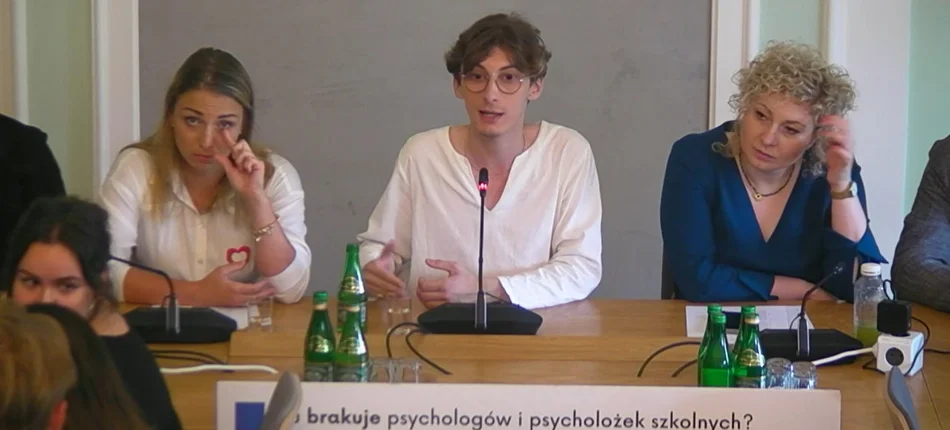
According to data compiled by the Grow Space Foundation based on information provided by 91 percent of Polish local governments, there are about 6.1 thousand full-time positions for psychologists in primary and secondary schools nationwide. There are almost 2.3 thousand vacancies, which means that almost a third of the jobs are unfilled.
- These figures are worrisome, because it means that there is one full-time psychologist in a school for every 785 students. It's unrealistic for him to be able to fully provide support on school grounds. In many municipalities and counties far from large metropolitan areas, we identified the same phenomenon as in the case of subject teachers. At the time, we spoke of so-called "itinerant teachers" who worked at different schools on particular days. Unfortunately, this is what is happening now among psychologists and psychologists. Even in those municipalities and counties where we have nominal full-time staff, this assistance may still be insufficient. If we have one-fourth of a full-time staff in each school, it is not able to provide adequate help. Imagine such a situation where someone needs help on Wednesday, and the psychologist is only available on Mondays. What can we tell such a young person? - Dominik Kuc of the Grow Space Foundation asks.
Moreover, 450 municipalities in the country failed to find any psychologist to work at school before September 1. The worst performing provinces in terms of availability are Podkarpackie, Lubuskie, Zachodniopomorskie and Podlaskie. In Podkarpackie province, the share of staff shortages in the potential number of full-time positions reaches more than 40 percent. The smallest problem is in Warsaw, a city that is still unable to fill 15 percent of school psychologists' positions.
- It is known that local governments are the bodies that run schools, and it is up to their subordinate school directors to find staff to hire. However, we believe that this should be supported centrally, from a systemic level. Facilitate this task, not make it more difficult or shift the responsibility to someone," believes Dominik Kuc.
The problem of the lack of provision of psychological support in schools is directly observed by Mateusz Trzaska, a high school student from Tarnobrzeg and member of the Grow Space Foundation.
- I see what is described in the report on a daily basis among my friends, colleagues and classmates. According to the Supreme Audit Office, there is one psychiatrist for every thousand minors in Podkarpacie. A visit to such a specialist is, of course, a last resort, which is why it is at school that young people should be able to find support so that they can react and solve their problems, rather than waiting until the critical moment when they will most likely not be able to see a specialist anyway, because there simply isn't one," says Mateusz Trzaska.
There is no psychologist at school in more than 40 municipalities in Subcarpathia, he adds, and that's a quarter of the province.
- It is unacceptable that people like me or my classmates should be treated differently, just because we were born in a different place in Poland - in a country where everyone should be equal. We will intervene with the Board of Trustees, which knows about the situation but does not react to it," the high school student announces.
According to Monika Stachowiak-Andrysiak of the Polish Psychological Association, two main factors underlie the problem. The first is unattractive working conditions. The second, on the other hand, relates to a lack of a sense of agency and frequent disregard from management or teaching staff.
- If psychologists end up in school, they are usually young people. They go there because they are looking for employment and agree in an unspecified time unit to earn less. Time goes by, eventually they start thinking about their own apartment, a loan, and it becomes a problem. Interpersonal issues also come to the fore. Often they feel helpless in dealing with the management or teaching staff. They have the impression of being ineffective and not listened to. The fact that they try to do their job to the best of their ability and represent the child and his or her predicament is often met with ignoring. As they say - they clash with concrete. This prompts them all to seek work elsewhere after a while. In turn, colleagues who are more experienced in the profession would probably take a job at the school, but they won't, because they won't give up another good-paying job or their own practice for the low pay offered at the school, Monika Stachowiak-Andrysiak comments.