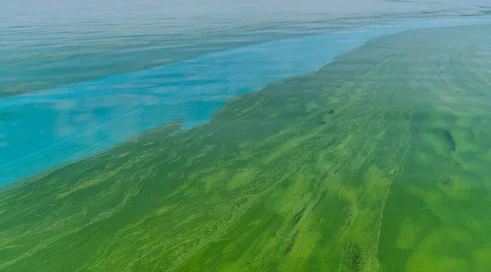
Sanepid has decided to close seven Tri-City seaside bathing beaches due to a blue-green algae bloom. The ban on entering the water is in effect in Gdynia and Sopot. The dangerous bacteria were found in Gdynia's bathing beaches: Babie Doły, Orłowo, Redłowo and Środmieście, and Sopot's: Łazienki Południowe I and II and Kamienny Potok-Koliba.
Blue-green algae bloom in the Baltic Sea. Closed bathing sites

Published July 11, 2023 11:11
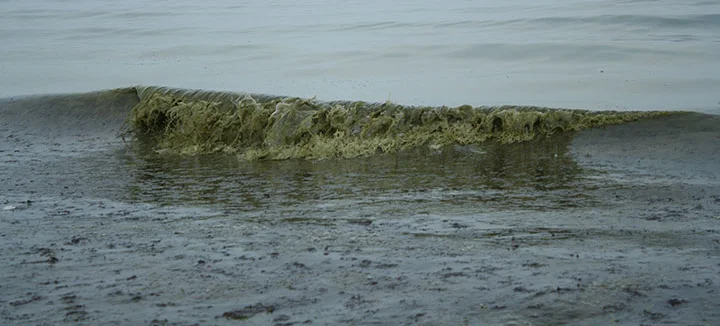
fot. GIS
As the Chief Sanitary Inspectorate reminds, cyanobacteria (cyanobacteria) taxonomically belong to bacteria. Most cyanobacteria show great adaptability to environmental conditions. They can settle in the most inhospitable ecosystems. They are found in soil, on rocks, on tree bark, on glaciers and even in hot springs, where temperatures can reach 90°C. They can be found in both saltwater and inland waters, floating freely in the water's depths among other phytoplankton groups or forming benthic mats on the bottom of reservoirs. They can use a wide spectrum of light, are resistant to poor oxygen conditions, and tolerate high pH values. When the density of cyanobacteria in the water is not too high, they are - along with other groups of organisms - an important component of natural water ecosystems. In addition, they produce life-giving oxygen.
Some cyanobacteria that form blooms in fresh, brackish and marine waters are capable of producing toxins. The cause of this phenomenon is not fully understood. These toxins have caused the death of wild and domestic animals, including pigs, sheep, dogs and fish die-offs in many countries. In humans, a rash has been reported in case of skin contact with water and illness after accidental ingestion of water ( e.g. while swimming). Inhalation of aerosols containing cyanobacterial toxins is also a danger. Cyanobacterial blooms, as well as cyanobacterial drosses, are not always toxic. However, it is impossible to determine from the appearance of the water, the bloom is dangerous or not.
People who have drunk water with the bloom or swam in the algal dross may develop the following conditions: skin rash, itchy and watery eyes, vomiting, diarrhea, fever, and muscle and joint pains
These ailments can occur immediately or several days after swimming in water where there was a toxic cyanobacterial bloom. There have been no human fatalities for a long time, however, in a few situations the illnesses have been very serious. Although blue-green algae blooms are not always dangerous, caution dictates that contact with blue-green algae blooms and water with altered color should be avoided.