A multidisciplinary team of specialists from the University Clinical Center of the Medical University of Gdansk saved the life of 6-year-old Alexander. The absolute havoc in the boy's respiratory system was most likely caused by a fungal infection. His condition was so serious and complicated that even the world's leading centers saw no chance of saving him. - It's a bit of a miracle that he survived and came out of it in such good condition, without any neurological disorders. The whole team did an unbelievable, titanic job, this interaction was downright perfect. Hats off to - emphasizes Professor Piotr Czauderna, MD, head of the Department of Surgery and Urology of Children and Adolescents.
A case unique in the world. UCK doctors saved the life of 6-year-old Alex

Published Jan. 23, 2024 13:03
fot. UCK Gdańsk
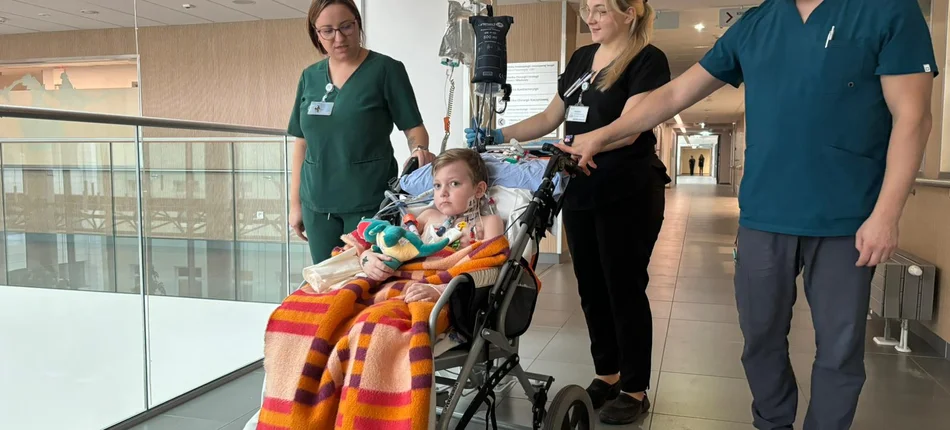
Alex was brought to the University Clinical Center last August with a giant defect in his trachea and esophagus, which gradually grew larger. At first, in the doctors' assessment, the boy's condition offered no chance for improvement and reconstruction. Centers around the world, which our specialists contacted about the little patient, had not encountered a similar case. This was an absolutely unprecedented situation.
Doctors suspected that such havoc in the 6-year-old's body was caused by an Aspergillus fungus infection, which in turn occurred by destabilizing the boy's newly diagnosed diabetes. It was the mold fungus that led to soft tissue breakdown within the breast tissue.
After two weeks of conservative treatment, which did not work, doctors decided to perform reconstructive surgery. Without this decision, the boy would have simply died.
- We saw the disease progressing day by day. It started with a small hole that was getting bigger. At the time we reconstructed the respiratory tree, 7 centimeters of the trachea were missing, the left bronchus almost entirely and part of the right bronchus," recalled Dr. Marcin Losin, M.D., of UCK's Department of Pediatric and Adolescent Surgery and Urology. - There was no way to use an artificial replacement, and the only idea that came to mind was to use his own esophagus. To my knowledge, no one had done this before. We cut it off partially at the top and bottom and used what was left for airway reconstruction. This reconstruction was absolutely something unique," the doctor added.
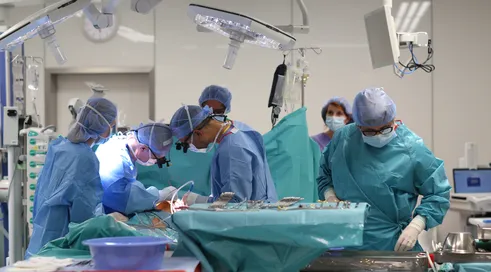
Due to the dramatic condition of the little patient, doctors decided early on to connect him to veno-venous ECMO(Extra Corporeal Membrane Oxygenation - a technique forextracorporeal blood oxygenation). In this way, they replaced the work of the lungs. The use of this solution does not, in itself, cure the failing organ, but it makes it possible to survive the critical period gives the time needed for recovery.
As they emphasize, this was a crucial decision, but it involved a great deal of uncertainty. The team at the University Clinical Center has hundreds of ECMO implantations to their credit, but in adults. - It was a big stress for me, but also one of the biggest successes in my career," admits Wojciech Karolak, MD, from the UCK Department of Cardiac Surgery. - The whole idea of the treatment was to keep Alex from breathing. There were a lot of suture lines there, and the idea was to let it all heal after the surgery. On the other hand, when the lungs don't breathe, they become atelectatic and don't function properly. When they do not receive air, there is more resistance to blood flow. As a result, the patient developed right ventricular heart failure, you could even say that the heart was dying, " says Dr. Karolak.
So doctors decided to convert ECMO - from veno-venous to veno-arterial, which allowed not only to replace lung function, but also heart function. As they point out, this stage also involved major challenges. - It took a very high degree of precision to hit the aorta. We couldn't do a heart echo because the boy didn't have an esophagus. And this is always the way we check whether the cannula is in place. Our colleagues in pediatric cardiology did an ultrasound of the aorta. That's when we knew we had hit the cannula correctly. Alex's management on veno-arterial ECMO was exemplary. Once the lungs and heart started working, we were able to return to veno-venous ECMO. It was continued so that the lungs would regenerate," explains the cardiac surgeon.
The boy was connected to ECMO for 98 days (from 18.08 to 23.11), probably the longest course of extracorporeal membrane oxygenation in a child in the world, and certainly the longest in Europe. What's more, the patient emerged from it without any neurological damage or major complications, thanks to the titanic work of a whole staff of specialists - including pediatric surgeons, cardiac surgeons, thoracic surgeons, cardiothoracic surgeons, anesthesiologists, hematologists, pharmacists, microbiologists, nurses and physiotherapists. For example, only at its reversal, at least 7 people were involved each day. Added to this were, among other things, daily diagnostics, pharmacotherapy, antifungal treatment and many other issues.
- These challenges were many. No one really knows how to treat Aspergillus infection of the mediastinal tissues. We consulted with pediatric hematologists who have experience in treating these infections and benefited from their expertise. It was a very big challenge to improve lung function and gradually restore airflow with very little resistance in the bronchi, which were reconstructed with tissue from the esophagus. This was fortunately successful," says Professor Romuald Lango, MD, of the UCK Department of Anesthesiology and Intensive Care.
- We had to treat and nurse this child for several to several hours a day in the abdominal position, the so-called pronation position. Keeping the patient in the supine position is not conducive to treating this type of disorder. Water moves under the influence of gravity and the lungs become airless in the lowest parts, i.e. near the surface of the back.
Each time, translating a patient to the abdomen with cannulas in large vessels and a tracheostomy tube that could slip out was a very high source of stress for the team, but we knew that translating him was hugely important. Pharmacotherapy, ventilation, the introduction of hemodynamics looks different in such a toddler," the professor points out.
Inhibition of clotting function is also a very difficult issue during ECMO therapy. It is essential to prevent blood from clotting in extracorporeal circulation. However, too much anticoagulation can cause significant bleeding, including catastrophic intracranial bleeding. - We decided to use low doses of drugs that inhibit blood clotting, which proved to be an effective and safe strategy," explains Prof. Lango.
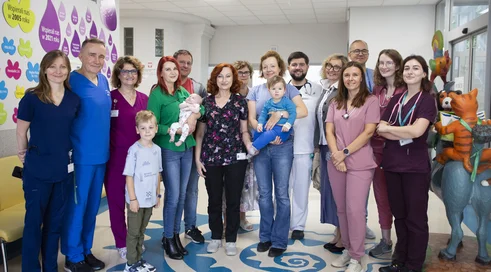
Alex is fully functional neurologically, and has fully retained his memory from before the incident. He still has a tracheotomy tube, but is on his own breathing. He is also being fed enteral nutrition. He is currently in Germany, where he has been transferred for further treatment in one of the hospitals there. The boy still has to undergo esophageal reconstruction, this operation has not yet been performed by Gdansk doctors due to the 6-year-old's family situation - his parents and 2-year-old sister live permanently in Germany. However, earlier in the period of ECMO therapy, none of the well-known German pediatric surgery centers contacted by Gdansk doctors agreed to accept the patient, explaining the lack of technical capabilities.
- I think this little patient could have survived hardly anywhere in the world. You could say that it's a bit of a miracle that he survived and came out of it in such good condition, without any neurological disorders. The entire team of medical staff at the University Clinical Center in Gdansk did an incredible, titanic job; the interaction was downright perfect. Hats off to them," concludes Professor Piotr Czauderna, MD, head of the Department of Pediatric and Adolescent Surgery and Urology.
- It was a very difficult time for us, but thanks to the professionalism of the professors, doctors and the entire medical staff, as well as their support and the support of our loved ones - we made it! Of course, thanks to our brave and strong boy, our Alexander, we were able to get through this journey. We feel a sense of happiness and gratitude. We thank the UCK team for our son! - wrote to UCK specialists Alexander's parents.
Source: press release