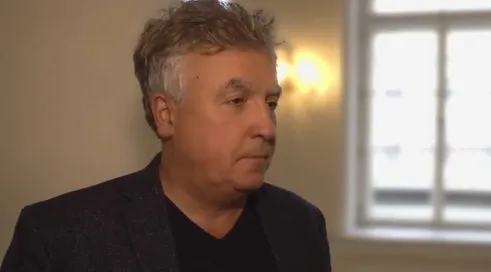
Iwona Schymalla's guest is Adam Boruch, MD, a family medicine specialist and co-chair of the coordinated care section of the Polish Society of Family Medicine.
Coordinated care in primary care: how it works in smaller centers

Published March 28, 2024 09:45
You are the head of a small rural PCP, but also of a PCP in a not-so-large city. We've been discussing coordinated care for some time in the pages of Medexpress, wondering if this project, finally launched not so long ago, has a chance of success. How can coordinated care be implemented if the PCP has one, two or three doctors working there?
Coordinated care is a great opportunity for patients in rural areas, but also in the context of the development of the entire clinic, it is a patient-centric project. It puts the patient at the center, but also takes into account the demands or expectations of both the medical staff and the provider and payer. The idea behind coordinated medicine is that the patient gets comprehensive care and comprehensive diagnostics at his or her home, on site. And it doesn't require exceptional financial outlays at the outset just a very big organizational change. Also, the idea is not to consult each case with a specialist in a narrow field just to meet the patient's health needs right in the primary care setting. And a family medicine specialist and a nurse at the beginning, just to implement this, is completely sufficient.
And if a consultation with a specialist is needed do you have the opportunity and do you manage to get these specialists? The rates and valuations of their services are not very high.
The idea is not consultation per se, while it is necessary in many cases. We, as the Podlaskie Employers' Association Zielonogórskie Porozumienie Zielonogórskie, following the example of other provinces as well, have established cooperation with an entity where clinics are affiliated with our association and can safely use such consultation. I, on the other hand, also use my acquaintances, still from my student days. We have a cardiologist colleague who comes to us once in a while, i.e. once every 3-4 months, to consult patients. But we also use the telemedicine model. For example, a Holter ECG is put on a patient in our clinic. Then we send a description of the Holter test along with a description of the medical problem to the cardiologist. He describes it and sends it to us within two or three days.
The question of obtaining a coordinator is also raised. What does this look like for a small POZ?
We hired the coordinator before the implementation of coordinated care for the reason that even if there is no such coordinated care, it is necessary to have a person who manages the work of registration helps the doctor to manage the schedule of patient admissions, to implement numerous preventive programs. This is a matter of organizational maturity for each clinic.
Is the coordinator satisfied with his salary?
Coordinated care provides opportunities to reward staff for performing certain services, which in an era of wage pressure, inflation, is extremely important. And this budget is even separately set aside by the National Health Fund and can be used.
You mentioned prevention. Does coordinated care also include the possibility of more preventive action? Are preventive solutions also rewarded with adequate funding?
In principle, whether one implements coordinated care or not, every primary care clinic should implement the cardiovascular disease prevention program, which is a guaranteed benefit. Also, whether there is coordinated care or not, everyone should do it. On the other hand, if one has coordinated care, it is much easier to recruit these patients with the help of just the coordinator. And it's very nice that this program is there. The more patients screened, the better the bonus. And in a capital way it also relieves the burden on the medical staff, for the reason that this can be carried out entirely by the nurse (draw blood, analyze tests, educate the patient). The coordinator recruits, the nurse organizes. If there are any deviations in the tests, only then can such a patient go to the doctor.
In one of the conversations in this studio, the concept of EPID was raised. What do you think of this project?
I have heard about EPID. It is such a fresh project of the College of Family Physicians, I think. However, in principle, the main principles of this project already exist. So, if we talk about education, under coordinated care we have an educational benefit given by a nurse or by a doctor. In addition, there are three more consultations given by a nutritionist. We have prevention programs. The cardiovascular disease prevention program, which I have already mentioned, and the tuberculosis prevention program, as well as the "prevention 40 plus" pilot, which is just ending now in June. In general, all the prevention programs that are there should be supported. There is certainly a lack of new ones. Perhaps some such education is missing. I know that Dr. Sutkowski spoke about education in schools. These are all activities that are very valuable and should certainly be undertaken. On the other hand, some of these tasks are already being carried out as part of coordinated care. If anyone is interested in this, coordinated care is worth developing, implementing, because this is what gives our patients a chance to benefit from these services.
As we look at the map of Poland, we can see that there are POZs of different speeds, that there are those that have coordinated care (32.3 percent of medical entities) and the rest who have not implemented it. How would you interpret this? Is it a lot, a little? Do patients who are in regions where there is no coordinated care in POZs have worse care?
Before implementation, the National Health Fund claimed that if 10 percent of providers were involved in coordinated care, it would be a big success. Here we hear that it is more than 30 percent. So this is, I think, an incredible success, a certain revolution. It's not enough to work like 5 or 10 years ago, you have to reorganize the work of the clinics. Assign new tasks to the staff. Here it is a matter of changing the organizational culture, redesigning the processes that take place in our companies, clinics, and convincing patients of this pop.
A good manager must be acquired.
Yes, of course. You can get this manager from the market. And if a doctor runs such a practice by himself or in two-three people, it is already up to him to effectively implement such coordinated care. At first, everyone thought that only large medical centers that have AOS in their structure would get into it. It turns out that most of the providers are small clinics, under 5,000 patients.
How is this rural clinic that you run?
Yes, exactly such. And most of these clinics are located precisely on the so-called eastern wall, far from urban centers. We are talking about Podlasie or Lublin region. Only if the clinic is such a lonely sailor and ship and is not affiliated with the Polish Society of Family Medicine, the College of Family Physicians or the Zielonogórski Agreement, it is certainly more difficult for it to attract specialists to cooperate or even exchange experiences.
Doctor, the issue of health inequality is also raised. A very large number of patients in Poland who live in smaller towns, in villages, are also excluded by transportation, and therefore excluded from access to medical care. Is coordinated care also a way to deal with this phenomenon?
I think that's certainly the case, because under coordinated care, the patient receives an individualized medical care plan. That is, in simplest terms, we eliminate the situation where a patient calls at 5:45 p.m. on a Friday because he has run out of medicine. That doesn't exist. The patient comes to see a family medicine specialist and has a care plan arranged, has lab tests ordered. The coordinator makes sure that these tests are done at specific times and specific places, makes these appointments and helps the patient. From my perspective, patients have to commute from the village, for example, they organize themselves, get a school bus, or rent a car and in three or four neighbors get to us. It's situations where they know that they have to come on Friday at 3:45 p.m., because that's when they're going to have an appointment, that they're running out of medicine, the doctor invites them in advance for a consultation so they're not left without that medicine, that they have to do some tests, it definitely reduces inequality in access to health care. And this is what we as family doctors, as a primary care clinic, can actually do.
In conclusion, what do you think is a barrier for many PCPs? Why don't they enter the coordinated care system? Perhaps you could, pointing to your own experience, provide a clue?
I think such a big barrier is ignorance, or some such mistaken or mistaken perception of this coordinated care as something additional. This is basically our daily work, that is, we examine patients, give them recommendations, consultations, schedule follow-up appointments. And this is the individualized medical care plan. For this we have a coordinator, for which there are additional funds from the National Health Fund. We can use it to give these patients appointments for specific days and specific visits. And this is the idea of coordinated care. Sometimes we can use the consultation of specialists in narrower fields, for example, a cardiologist, diabetologist, pulmonologist. Also in the telemedicine model we have e-spirometers, e-stethoscopes, ECG holsters. Also, patients for such a cool pro-quality service are able to calmly travel about 60 km to, for example, an academic city, if they know that there they will be admitted to a cardiologist who will also perform a heart echo. I also strongly encourage everyone, colleagues, to implement coordinated care at home, not to be afraid of it, to exchange experiences within the framework of, for example, the Zielonogórski Agreement or precisely the Polish Society of Family Medicine.