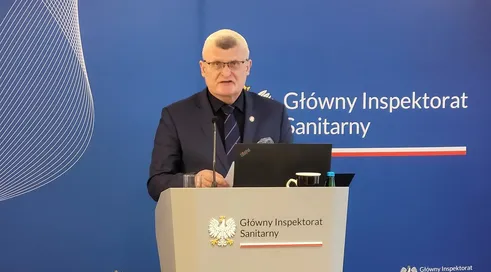
If it's so good, why is it so bad? - asks Dr. Michal Sutkowski, spokesman for the College of Family Physicians in Poland.
Coordinated care in PCP like a European green deal?

Published March 13, 2024 10:41
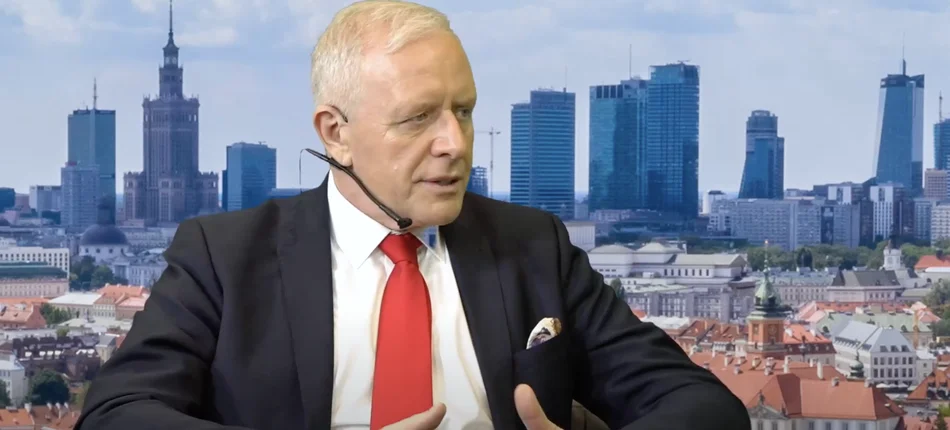
We are going to talk about coordinated care, which has been visiting primary health care facilities for some time. I am curious about your opinion on this topic.
Coordinated care is a bit like the European green deal. A peasant order needs to be introduced and many things need to be improved. It shouldn't be thrown out, of course, but at the same time a discussion needs to be started about something else, something deeper and qualitatively better, something more important. The acronym for these words is EPID, or education, prevention and diagnosis.
What were the beginnings of this care. A bit like a rabbit out of a hat, the goings-on of coordinated care in primary care were pulled out of the hat, yet using family medicine services, we know that it was already working on many levels....
Yes. We, to a large extent, have felt that we are the care coordinators of our patients for years. And I think every family doctor, every PCP feels that way. My sense is that coordinated care has been a political and medical project. And there's no need to be afraid of those words. Political in the sense that there was some resistance from the community and some reluctance from the community to undertake it, and at the same time the persistence of the then Ministry of Health in 2022 to introduce it. The relative success of coordinated care (because I can't say it's not a relative success) is the result, for good measure, of the enthusiasm, work, enthusiasm of initially one person, i.e., the national consultant for family medicine, Professor Agnieszka Mastalerz-Migas, who did a lot of spreading, teaching and clarifying and correcting everything that was done wrong. Time has shown that, indeed, coordinated care is not implemented everywhere, not always and through no fault of primary care physicians. I would like to bring up two important things. First, in August 2022, the eve of coordinated care, doctors were asked in a survey: what do you think about coordinated care? Are you familiar with the premise of coordinated care? 7 percent answered that they knew. Are you in favor of coordinated care entering the PCP. The answer - 5.6 percent were in favor. Are you in favor of increasing the duties of the family doctor? 1.8 percent responded positively. This is not a good starting point. It was asked, once the principles of coordinated care were known, do you think they will be useful? 83.14 percent answered negatively. 83.5 percent answered that they would not be able to isolate a coordinator in their practice. So the beginning was not too interesting. On October 1, 2022, after a conference where we talked about partnership in action, among other things, the College of Family Physicians in Poland this time wrote to the Minister of Health and asked "Mr. Minister, why do we find out about money two weeks before the fact? What is the legal basis for doctor-doctor consultations over the phone? What is the role and who is a (I'm simplifying) nutritionist - a profession until now unregulated? Why (with all due respect to young colleagues) should a cardiology or diabetology resident consult a patient for such a doctor who has specialization and experience? Yet this coordinated care is coming in.
Coordinated care entered, with which there were high hopes. That it was to be the driving wheel of the development of family medicine in Poland, that it was bound to happen, that there would be no queues to specialists, because the POZ was supposed to establish relationships with specialists in diabetology, endocrinology and cardiology. These specialists are not there. They didn't want to provide these services, well, because they were poorly priced by the National Health Fund. It's difficult to get coordinators, because it's also very little money. It's very difficult to fill out an application to report a POZ facility to the whole coordinated care system. So how does it look today?
After a year and a half, it looks like this in numbers: 32.3 percent of medical entities, or 1,963, and we have 6,067 are implementing coordinated care. And as we know, it was supposed to be coordination, but it remained in four or now five areas. It's not that everyone took everything, just one thing, mostly cardiology or diabetology, because that seemed the easiest. In the survey I mentioned, 66 percent of providers from rural areas and towns and cities with up to 50,000 residents participated. What's more, 40 percent of the PCP entities participating in that survey, which rated the start of coordinated care so badly, either had coordinated care commercially in-house or had some kind of contract for specialties. Today we have 32.3 percent. That 40 percent may be the glass ceiling of coordinated care. And that's what it looks like after a year and a half. All the more reason for everyone to behave rationally. And there is additional money associated with coordinated care, but it doesn't compensate for the problems. On February 20 of this year, the College of Family Physicians in Poland wrote to the new minister asking how, if it is so good, why is it so bad? It all continues to fail. There is no help from the National Health Fund to get specialists from the AOS. There is no separate pathway for us to get fellow specialists. We still have doctor-doctor consultations and, for example, dietitians are not paid overtime. Meanwhile, recently the president of the National Health Service said that all overcontracts for hospitals will be paid. I for one don't begrudge the hospitals, but it's not that there is huge money in OPD or, as has been said for decades, that OPD earns a lot. I'll give an example. The National Union of Physicians, a research survey by doctor of economics Ms. Anna Golębicka, in which we read that out of 24 specialties, family doctor ranks 20th (fourth from the end) in terms of the amount of benefits. There are a lot of problems, and they are not due to the laziness of family physicians or of PCPs. Next issue. We are getting "younger and younger in a different way" and adding to our responsibilities must make sense. Because we remember the days of the generation that is 50-60 today, when a family doctor could order all the tests. That was back in the days of the evil system, which we don't want at all. But back then the family doctor could order everything. Today, the generation of 30-, 40-year-old physician colleagues, with all due respect to them, if they get something extra, they can be happy about it, because it's a small step, but you can do more through the EPiD.
Then what should be done? You have the situation analyzed. There are pointed out weaknesses. It seems that this project was, as you said, political, but also a bit literary, because it may not have been based on the experience of doctors.
He didn't resist until the end, because the environment left the work of this team at a certain point, because none of the demands of the PCPs or the College of Family Doctors in Poland were taken into account. So what to do? EPiD i.e. education prevention and diagnosis. I would like to start with the latter. This is the idea to reduce queues and to empower patients. Because today we have two-speed PCPs. One has coordinated care and the other does not. I'll say again that it's not the fault or laziness of the doctors, it's the conditions that are in place. Another point: let's not throw out coordinated care. I will always be an advocate of it and support this type of solution, but let's introduce EPiD. Let's start from the end, with diagnostics. Since we said that in the past it was possible to order everything, this is also needed today. Example: I have a patient with headaches. I do basic tests on him, the ones I can. Through research, I come to the conclusion that the patient needs a CT scan of the central nervous system, but I can't order it for him. I have to refer the patient to a neurologist. The neurologist (with all my respect), without even necessarily looking at this patient and analyzing everything, believe me, will write this referral. A queue of three months to see a neurologist, another queue for a CT scan. A month, a month and a half to the description of fellow radiologists. What is the point of this? After all, it's enough for me to order it. And so the payer will have to pay for it. We don't want money for it. We want this money to be marked up. The payer will give it back to us for a one-to-one examination, to the family doctor. This is already happening in some areas and in some tests. Why not introduce this? It's that diagnostics. Reducing the queue according to my research, analysis in my ZOZ near Warsaw in the Zyrardow and Grodzisk districts, 28 percent of referrals are just for some specific test that could be ordered by a family doctor, capitally reducing the queue. Simple. Next is prevention. Let's go from the end. Let's introduce, for not a lot of money for the nurse, midwife, doctor, the preventive programs we have and want to have, as much as our resources allow. Example - the medical community, the Medical Rationale of State, many different kinds of organizations are talking about HCV. This is a problem. Between 120,000 and 150,000 people are living with type C virus in Poland today without knowing it. We have capital drugs and treatment (cure rate almost 100 percent), diagnostics. Only the patients are not there. They put this test into the family doctor, but there is no program. This test a doctor can't do screening. And let's do the screening screening. The patient comes first to the nurse, has a questionnaire, for which the nurse is also due money. And if from the questionnaire, its questions, which will be capitally arranged together with us by infectious disease colleagues brilliantly prepared for this treatment, it will be clear that the suspicion of HCV is very high, then the nurse will refer to a doctor. The doctor will do the tests. After all, this is how you can introduce various things regarding, for example, obesity, hypercholesterolemia. There are such programs, but only two are working: against tuberculosis and cardiovascular disease. It's still hard to do because of instrumentation and e-bureaucracy. Another problem is education at the nurse, midwife and doctor level. For not a lot of money, you can get something here. We reduce the queues, we educate, we have a healthier population from the very beginning. And depending on the situation and need, education is implemented. The system can also enter flexibly. It's not that the payer will pay very much. Please note that the Ministry of Education recently announced (reported by law.co.uk) that there will be no hour for health. We have been fighting for an hour for health for years. The whole environment is talking about it. The Ministry explains that there is a little in P.E. lessons (I don't quite agree with this) and a little in biology classes. But it's not enough. If it's so good with education, why do we have obesity in children? All this could be introduced at the simple level of a primary care physician. If to all of this, except for the EPiD, which I think is more important, because it should go in for everyone. The optionality of coordinated care, of course, yes. I agree with that as much as possible. Let it stay that way. But the EPiD should go in. If we reduce a little bit of bureaucratic burden on top of that, unnecessary some paperwork that the family doctor has to write out, and a few other little things. Let's use the cadres of my specialist colleagues, who should treat more important cases than minor neurological or minor diabetological cases. Hence my huge appeal to support the EPiD project to fellow family doctors, PCPs and specialists, doctors in the hospital, including those working in EDs, to whom patients come to do this examination guided by their intuition. https://www.klrwp.pl/pl is the website of our organization. An appeal to policymakers, the Ministry of Health, the payer, to sit down and talk, make a list of examinations (not all of them need to be on it), think together about the design of the EPiD.