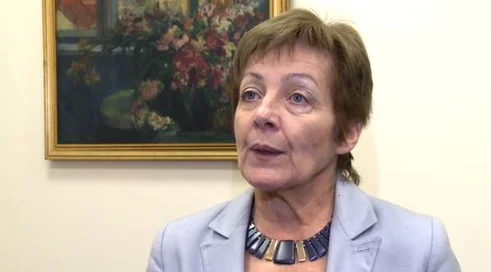
- Thanks to the fact that it is now possible to perform at least a number of preliminary examinations in the PCP, it is possible to assess the patient's health status and determine whether he necessarily requires specialized care or broader diagnosis, or whether he can be successfully managed by his primary care physician," Agnieszka Volchenko of the Association of Patients with Heart and Vascular Diseases "EcoHeart" said in an interview with Medexpress.
Coordinated care in primary care is a step in the right direction

Published Oct. 12, 2024 08:09

Coordinated care in primary care was introduced on October 1, 2022. Of the facilities that have implemented it so far, the cardiology pathway is the most popular, but according to research, there is an interdependence between metabolic, cardiac AND renal diseases. All of these pathways are available as part of coordinated care, which should ultimately result in diagnosing patients at the earliest possible stage. What is your opinion on this model of care and how does it work in practice?
Coordinated care at the primary care level includes cardiac care, diabetes care, nephrology, there is also pulmonology and endocrinology. In my opinion, we are moving in the right direction. In this model of care, we have diagnosis, treatment and consultation, but also patient education already at the primary care level. This is to improve accessibility to the necessary first examinations, which, in my opinion, should be ordered precisely at the primary care level, so that patients who do not require consultation or treatment in specialized clinics are not unnecessarily redirected to AOS, but are successfully treated by POZ. This is a good solution and should improve access to AOS, i.e. specialists. The main thing I have in mind here is, of course, cardiology, as this is the area we deal with. Please note that with any complaints from the heart, cardiovascular system, we as patients are, first of all, stressed, and secondly, we would like to go to a cardiologist specialist right away, and this is not always absolutely necessary. Thanks to the fact that it is now possible to do at least a number of preliminary examinations in the PCP, it is possible to assess the patient's health and determine whether he necessarily requires specialized care or more extensive diagnosis, or whether he can be successfully managed by his GP.
Perhaps this will help reduce queues to specialists. Often it is the case that patients go to cardiologists only to write another prescription for continuing medication. I think this is a waste of specialists' time. There are plenty of really complicated cases where patients need more attention from specialists, and it's these cases that specialists should look at harder.
The cardiology pathway in the PCP is also a sieve that selects cases that are extremely difficult to diagnose and require care already in the AOS, or in some specialized facility such as a hospital. The second group is patients who, even if they have a diagnosed cardiac disease, it is in a stable stage, without exacerbations, and they can safely be managed by the PCP.
You said about that biggest pain of patients, which is precisely the queues to cardiologists. This waiting time is up to several months, and in the case of heart disease, however, this is far too long. The second sore point is that if a patient already gets to a cardiologist, after that first visit he or she has a number of tests ordered and waits in another long queue to have them done. Does the fact that the PCP can already order some of these tests from his level also somewhat solve this problem for us?
Certainly yes, because there are already tools at the level of the PCP that will allow for this very preliminary diagnosis. Through the POZ doctor, you can be referred for analytical tests, you can have an EKG done, an UKG of the heart - these are already very important tests. Of course, an MRI will not be done at the level of the PCP, but if there are indications and the PCP assesses that this is a case that really needs to be redirected already to specialists, he will do so. And this is already relieving the burden on the AOS.
It's been two years since coordinated care in primary care has been in place, and we've said what's right or what has a chance to improve certain situations. It is never the case that perfect solutions are created. These two years of observation are probably enough to point out certain issues, certain areas for improvement as well. Do you see such areas?
It's not for me to judge systemic solutions, because I'm neither an economist nor a clinician, I don't have a medical degree, but from my experience as a patient and from the knowledge that patients give me, I know one thing: the problem is, for example, the availability of specialists at the POZ level. This is also being talked about quite loudly in the media and public space. We have a shortage of cardiologists. If we have these kinds of staffing problems, it is forcibly difficult to get a cardiologist, who should, for example, also be contracted as a specialist at the PCP. AOSs are also burdened, because some cardiologists work not only in outpatient clinics, but also in clinics, in wards so dividing that time they can devote to patients is problematic. These are the kind of problems that, in principle, the patient shouldn't have to deal with and we shouldn't have to think about it. There is also a lack of cooperation with other medical personnel. I am referring here to nurses. Please note that, for example, in heart failure we have educated more than 1.7 thousand nurses who could successfully take over part of the doctor's role: educate patients, inform them, sit down and consider whether the drugs the patient is taking are having an effect.