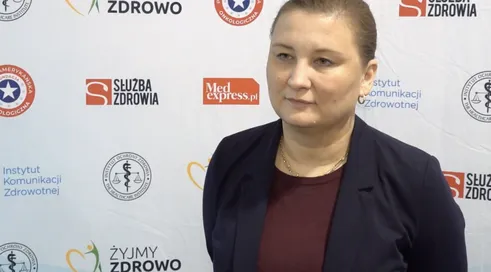
- There is a lack of dialogue and partner exchange of opinions - this is how Michał Byliniak, director of the General Employers' Association of Innovative Pharmaceutical Companies, INFARMA, says about the work on the Major Amendment to the Reimbursement Act. Meanwhile, the new act is being drafted with the intention of being in force for the next ten years. This means a big challenge, because it is necessary to secure the possibility of meeting the needs that will appear even in a few years.
Dialogue is key in the work on the new reimbursement act

Published Nov. 21, 2022 14:00

Fot. Getty Images/iStockphoto
The forthcoming amendment to the Reimbursement Act is an extensive change, made after ten years of functioning of this legal act in its current form. As emphasized by Michał Byliniak, the challenges faced by the pharmaceutical industry after the changes will be numerous, which is why it was necessary to discuss the amendments by each party. However, such a dialogue was lacking.
– The current shape of the project does not fully reflect our thoughts. We referred to him and for a long time we did not get an answer. We were convinced that there would be more of these consultations, but that did not happen. Last week, another version of the draft was published, signed with a date from a month ago, but it is not known whether it is a version that realistically reflects the arrangements made between the ministries. For our industry, this project is very difficult, if only because of communication issues. Conversation by means of letters rarely brings mutual understanding of arguments, says the director of INFARMA.
As Nienke Feenstra, president of the board of the Union of Employers of Innovative Pharmaceutical Companies INFARMA, emphasizes, the subject of a major amendment to the reimbursement act is currently one of the hottest topics for the industry.
- We want all Poles to have access to reimbursed drugs. Although talks with Deputy Minister of Health Maciej Miłkowski have brought a lot of good, there is still much to be done. We must remember that this law will be in force for the next ten years. This means we have to anticipate what will happen. We know, for example, that gene therapies will appear and this must be reflected in the new act. We already have e-health, so we will have more and more data. Their use must also be included in the law. We should think about what will be needed to make all achievements available to Poles, says Nienke Feenstra.
Meanwhile, the deputy health minister last week said he wanted to review the current law and look at how it has operated over the last ten years. According to the president of INFARMA, it is necessary to wait for the results of this analysis, because without it it is difficult to talk about the new act.
The act on clinical trials is to be of key importance for the development of clinical trials in Poland. As the Minister of Health, Adam Niedzielski, informed last week, government work on this act has already been finalized and it is to be adopted at the next Council of Ministers. According to the announcements, it would apply from 2023.
– Theoretically, it should be operational from the beginning of January. However, looking at the dates we have ahead of us, for it to enter into force in January, everything would have to be carried out extremely quickly. It should be emphasized that Poland stands in clinical trials. The geopolitical situation means that clinical trials will be located in Poland even more, due to the fact that Ukraine, Russia and Belarus will not have a chance to conduct clinical trials there in the coming years. The condition for Poland to be included in them in a very smooth and effective way is that the rules for submitting applications are the same everywhere. This was the idea of European regulations - assesses Michał Byliniak.
- We don't have enough people in the entire health system to waste time and do things inefficiently. If we really work on this as partners, we will be able to do it more efficiently and we will do something that will work for all of us,” adds Nienke Feenstra.
As Michał Byliniak emphasizes, the Medical Research Agency, established in 2019, plays a very important role in the area of clinical trials.
– On the ABM side, we can see an unusual openness to arguments and the search for common solutions. The agency primarily focuses on non-commercial research, but together we came to the conclusion that there should be one standard. We are working on it together,” he adds.