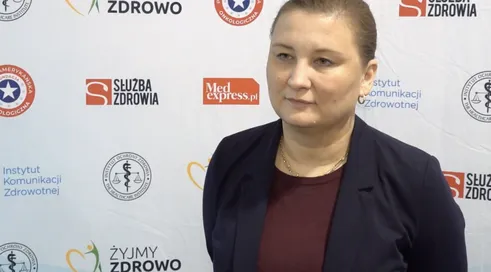
A conversation with Aleksandra Łacko, MD, from the Department of Oncology at the Wrocław University of Medical Sciences
Dr. Aleksandra Lacko: Patients want to know what drugs are valuable

Published April 7, 2023 08:12
Fot. Getty Images/iStockphoto
What is the current situation of Polish breast cancer patients, both in terms of diagnosis and access to modern treatment?
I believe that reducing the problems of breast cancer treatment to the availability of various drugs is a shortcut. This is a question that keeps coming up in discussions about the state of Polish oncology. Implicit in it is probably the firm belief that the availability of new technologies is the cure for all evil. Well, it isn't. It is only an element, I agree that it is an important one, of a strategy aimed at improving treatment outcomes. In a sober assessment of the situation, really not all dramatically expensive technologies are of equal value, and few change the natural course of the disease. I know this is very unpopular, but it needs to be made clear, not everything can be afforded. It's clear that I would like to be able to offer patients all the best therapies, especially those that give them a chance of a cure, and in the case of advanced disease, long survival with good treatment tolerance, etc. But in the situation we are in, with regard to the limited availability of very expensive drugs, I think the priority is to finance the most valuable methods and create mechanisms that, without unnecessary bureaucracy, curse doctors, provide access to them for those patients who can benefit from treatment.
And coming back to the situation of Polish patients, I think that the problem of the system is in many places too long a diagnostic path, lack of access to some imaging tests, lack of a sufficient number of specialists and perhaps lack of cooperation. It is a bit difficult for me to talk about such problems from my own perspective, since I work in a large center, retrofitted, with an excellently organized Breast Unit, where consiliums are not a fiction, with a real multidisciplinary approach, good diagnostics, including molecular, dedicated specialists, etc. Of course, we also face various shortcomings, but this is not the perspective of a center where the problem is the performance of mammograms, lack of specialists, diagnostics, and a poorly blazed patient path.
How has the awareness of breast cancer patients changed over the years? Do they want to know more about the standard and treatment options for their disease?
Access to information is plentiful, and the problem is not so much the scarcity of information, but rather finding reliable sources. There are no red asterisks on the Internet that say "caution, source/data needs verification." The devil is often in the details. It's obvious that patients should know as much as possible about the disease itself and treatment, and should be aware of what they can expect, which may be important to them. However, assessing the value of knowledge from the Internet requires a critical approach. Most of the information, and the very compelling information that appears in browsers immediately after typing in the phrase "cancer treatment," is about alternative medicine. Sometimes it gets really dangerous. It is certainly necessary to talk to the sick. On the other hand, knowledge about new treatments and their availability is undoubtedly greater than it used to be. Patients want to know not only what the standard of treatment is, what treatments are available, but also what drugs are valuable, but not publicly funded, for example.
When discussing the standard of treatment for female cancer patients, we often overlook the issue of their quality of life. However, anticancer treatment can be less burdensome in some cases. What does this look like from a clinician's point of view?
Rather, I would say that the pandemic has formally enabled us doctors to reduce the frequency of visits by dispensing medications for longer treatment, when justified, of course. For example, if a patient tolerates treatment well, has a long-lasting response, and has no symptoms related to the disease or treatment. This is of great importance to some patients, such as elderly women living far from the center, dependent if only on working relatives for transportation. On the other hand, I strongly disagree with the claim that we have so far overlooked the aspect of quality of life, including the form of treatment and its place. We have been saying loudly for years that the vast majority of cancer patients can and should be treated in Day Care Units. The indications for hospitalization are in fact narrow. For many reasons, so-called outpatient treatment is superior to hospital treatment. A hospital is not the most welcoming environment. Everyone prefers to spend the night in their own bed. In addition, hospital stay is associated with various risks, such as infections. And finally - it is the most expensive hotel, which we do not want to dream about at all. Coming back to quality of life, she is a very important, even crucial aspect of treatment. Especially in the case of long-term, often years-long therapy. And believe me, we have paid and continue to pay attention to her. The fact is that until a few years ago we did not have many currently available drugs in oral or subcutaneous form, with significant efficacy, not bad tolerance, better accepted by patients than, for example, intravenous chemotherapy. Quality of life is an integral parameter for assessing the value of drugs in clinical trials. Since its evaluation is multidimensional, we do not formally assess it in practice, but we do assess the "well-being of patients," the presence of symptoms, complications of treatment, the ability to return to work, to participate in various aspects of life. We appreciate the importance of all that makes up "normal life" in the broadest sense. Of course, it is not always possible to use these best-tolerated and accepted drugs, or the response to treatment with them has been exhausted. The choice of treatment always takes into account its potential tolerability and possible impact on patients' daily lives. However, there are no drugs without side effects, and not every patient can receive treatment during which she will lead the same life as before the disease. This depends most heavily on the biology of the cancer.
Particularly in patients undergoing non-radical treatment before choosing the next lines of treatment, one of the two fundamental questions we ask ourselves is about the tolerability, comfort and acceptability of the treatment. The other fundamental question is, of course, the question of its effectiveness. And when it comes to radically treated patients, the standard of treatment is somewhat more rigid, the stakes are high, and the choices between less and more toxic methods are more limited. But believe me, for example, in elderly, ailing patients, treatment tolerance is still a key issue.