The Federation of Polish Entrepreneurs, continuing the activities initiated in 2022 as part of the "Straight About Prostate" project, is expanding its involvement in the field of urooncology. During the debate entitled. "Modern urooncology: interdisciplinary perspectives," experts stressed that delayed diagnosis and barriers to access to treatment have been the main reasons for the lack of improvement in therapeutic outcomes for 30 years. The Federation, together with clinicians and patient representatives, will prepare system recommendations for policymakers to optimize the treatment pathway for the urological cancer patient.
FPP: Experts call for urgent systemic changes in bladder cancer treatment

Published Dec. 8, 2025 09:13
Fot. Thinkstock / Getty Images
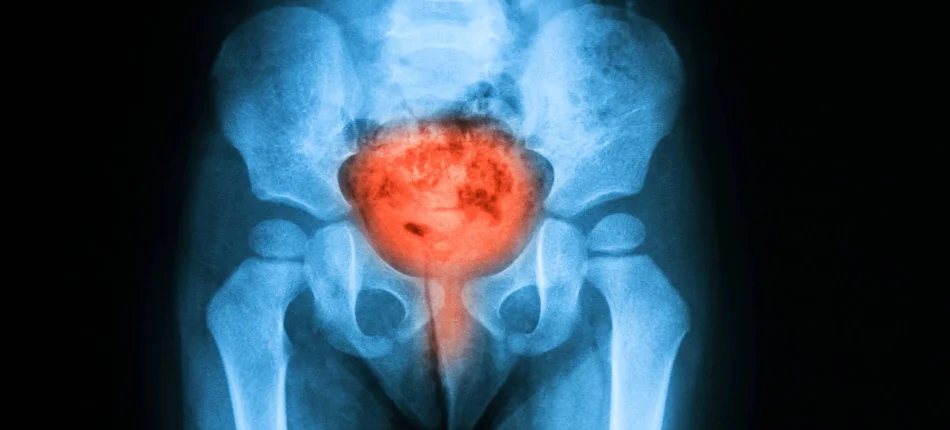
In Poland, prostate cancer is the most commonly diagnosed cancer in men, and bladder cancer affects more than 5,000 men a year - making it the fourth most frequently diagnosed malignancy among Polish men. These statistics clearly indicate the need for urgent systemic action in the area of urological cancers.
Participants in the debate "Modern urooncology: interdisciplinary perspectives" organized by the Federation of Polish Entrepreneurs noted that urological cancers often affect active people (50-60 year olds). Statistics also show that as many as one in two patients with bladder cancer get to a urologist too late.
Prof. Piotr Chłosta, MD, head of the Department of Urology at the Jagiellonian University Collegium Medicum, head of the Clinical Department of Urology and Oncological Urology at the University Hospital in Krakow, pointed out that the time from the onset of the first hematuria (drop of blood) to the moment of the first diagnosis is crucial. It should not take longer than six months. Unfortunately, in many patients this period is prolonged, which drastically worsens the results of treatment.
- If they had come earlier, we could have helped them effectively, often in a minimally invasive way, and without dramatic consequences. But they don't come, because it's still embarrassing, it's nothing, it will pass on its own. They are afraid of the diagnosis. A urologist is to many what a dentist used to be, in the 1980s. You only go when you can't stand it. And in urooncology, that is far too late," said Prof. Dr. Piotr Chłosta.
One of the reasons cited for later diagnosis and greater challenges in treatment, is the requirement for a referral to a urologist. Anna Kupiecka, president of the OnkoCafe Foundation - Together Better, and vice president of the National Federation of Oncology, described this requirement as a "brake threshold."
- [Referral to a urologist - note] This is the threshold for having to go to someone else for a referral. It's also, from my perspective - maybe I'm wrong - a cop-out for the PCP not to order a good initial diagnosis and prepare the patient, he just writes a referral to a urologist and has the patient out of his head. He doesn't have to delve into his problems, because he hands him off and delegates him to a specialist, let the specialist take care of it. So perhaps then there are too many patients waiting in that queue to see a urologist, and some of them could have already been dealt with in some way by diagnosis earlier, at the PCP level.
As he adds: - At the end of this cascade, of course, are drug therapies and introducing them as soon as possible and in the first lines, and as early as possible for reimbursement, so that after all this cascade of positive events, ultimately the clinical outcome is the best, preserving also the quality of life of the person.
A key breakthrough in the treatment of bladder cancer, especially at the disseminated stage, is combination therapies. These therapies, when used in the first line, produce a better clinical outcome and a better quality of life for the patient. Knowledge about optimal treatment is publicly available - for doctors contained in clinical guidelines (national and international), and for patients mainly through artificial intelligence models. However, the current design of the drug program deviates to some extent from the recommended treatment standards.
- What we are seeing in terms of systemic treatment, which is the implementation of the current first-line treatment of vedotin enfortumab together with pembrolizumab doubles the survival of our patients, the median survival. This is a huge difference, because it's the difference between: to live one year with a piece, and to live almost three years with bladder cancer at the disseminated stage without deterioration of quality of life. Hence, it seems to me that if there is publicly available knowledge at the moment through Chat GPT, Gemini and other models, if a clinical oncologist tells his patient that he can treat him in a suboptimal way, he loses that patient's trust and it is very difficult for him to regain that trust," said Lukasz Kuncman, MD, from the Department of Teleradiotherapy, head of the Stereotactic Radiotherapy Laboratory, M. Kopernik Regional Multispecialty Oncology and Traumatology Center in Lodz.
Experts participating in the debate also highlighted the tremendous advances in technology, pointing out, among other things, the introduction of minimally invasive flexible cystoscopy and treatment with the assistance of a surgical robot, which has significantly improved functional outcomes, including preservation of potency and the ability to urinate naturally. The discussion also highlighted the role of the development of computational methods and artificial intelligence (AI), which has made adaptive radiotherapy clinically feasible. It involves adjusting the treatment plan to the anatomical conditions of the bladder each day, allowing precise targeting
and sparing healthy tissue.
Interdisciplinary collaboration is also cited as one of the biggest breakthroughs in recent years. Prof. Luke Kuncman described the current stage of uurooncology treatment, especially in the context of multidisciplinary teams (MDTs), as a transformation: - I feel that we are at a stage where the ugly duckling is changing plumage at the moment. We have a chance to do something great, that this swan will finally fly for us. And we are able to do it at the moment, we are doing it together, we are doing it thanks to the excellent will of the whole environment.
The Federation of Polish Entrepreneurs will use the conclusions of the debate to actively support efforts to improve the health care system in urooncology. To this end, a document with recommendations for action in the field of urooncology will be developed based on the reported needs of the medical community and patients.
The most urgent system solutions identified by experts to improve the situation of urological cancer patients:
- Removal of the requirement for a referral to a urologist.
- Improving access to modern systemic therapies - rapid implementation of treatment in accordance with international guidelines (including NCCN and ESMO), from the first line of treatment, which has the potential to significantly extend patients' lives (e.g., reimbursement of combination therapy in the first line, optimization of access to immunotherapy in perioperative treatment).
- Implementation of highly specialized units (reference centers) - treatment of advanced forms of bladder cancer should take place in centers
with experience and multispecialty facilities. - Improving coordination and diagnostics - ensuring completeness of diagnostics (including MRI, whose timelines often exceed 30-40 days), using diagnostic checklists, and improving the quality of multidisciplinary consiliums (MDTs), which are a statutory obligation, although their quality is uneven.
Source: press mat.
Topics
Prof. Piotr Chłosta / interdyscyplinarna opieka zdrowotna / refundacja terapi / leczenie urologiczne / rak pęcherza moczowego / radioterapia adaptacyjna / diagnostyka urologiczna / rak gruczołu krokowego / sztuczna inteligencja / uroonkologia / Piotr Chłosta / terapie skojarzone / diagnostyka