Hacker attacks on healthcare facilities are on the rise, experts in the field of cybersecurity alarm. Criminals demand ransom and threaten to make intercepted data about patients public. This, in turn, could trigger an avalanche of damages.
Healthcare facilities targeted by cybercriminals

Published Oct. 5, 2022 08:42
Fot. Getty Images/iStockphoto
SENSITIVE DATA INCLUDED IN THE PRICE
Data from Critical Insight show that in the United States alone, in 2021, the personal data of 45 million patients was stolen. For comparison, a year earlier it was 34 million and in 2018 14 million. The problem is also present in Poland. According to the information collected by CERT Polska, the team at the National Research Institute of NASK, analyzing security incidents, throughout 2019, 53 cybersecurity incidents concerning the healthcare sector were registered in Poland, over 90 of them were recorded by the end of the third quarter of 2020.
Healthcare facilities keep sensitive and extremely valuable data. The circumstance that prompts cybercriminals to act is primarily the awareness that data leakage or blocking devices may paralyze the functioning of the facility. This puts pressure on managers, increasing their tendency to accept criminals' demands. Often the problem is also an insufficient IT security system.
PENALTIES CAN BE SEVERE
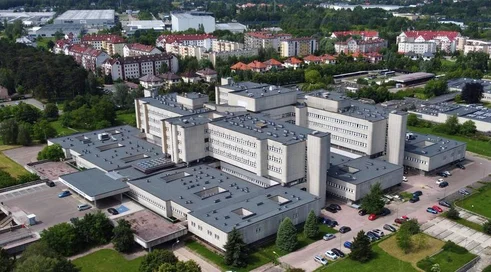
The data of patients who used swabs towards SARS-CoV2 has recently leaked from the hospital in Gliwice. These were, among others names, surnames and PESEL numbers. Such data can be used by fraudsters, for example, to take out loans. Such incidents may result in the payment of high penalties and damages.
- The Polish Act on the Protection of Personal Data provides for lower penalties for entities in the public finance sector than in other countries. In the case of hospitals up to 100,000 zlotys. However, it is still a significant amount for the budget of any medical facility. And the problem should also be analyzed taking into account the aspect of compensation. Patients whose data has been compromised may file lawsuits seeking redress for the effects of cyber attacks, says Aleksander Kostuch, Stormshield expert, European leader in the IT security sector.
CRIMINALS CALL FOR RANSOM
As the expert adds, the frequency of attacks on health care facilities results, among other things, from the fact that these institutions do not have adequate IT resources and their employees are not always aware of the risks.
- The lack of awareness among network administrators is also a challenge that not only workstations and servers, as well as any other device connected to the Internet can be targeted at attack - says Aleksander Kostuch, Stormshield engineer.
Attacks on healthcare are primarily ransomware. Malware infection leads to hardware failure or data encryption. The criminals, knowing that the lack of access to medical records or life-saving devices constitute a serious disruption of the facility's smooth operation, count on the managers to accept the ransom demand.
Criminals are becoming bolder and their actions are no longer limited to blackmailing health care facilities. In 2018, data from patients of psychotherapy centers in Finland were stolen. The facility refused to pay the ransom, so criminals began blackmailing patients, threatening to make public data about their diseases.
Experts in the field of IT point to the need to constantly adapt the IT infrastructure to the requirements of cybersecurity. Employee awareness is also very important. Often, a corporate network is infected, for example, after staff open a suspicious file attached in an e-mail.