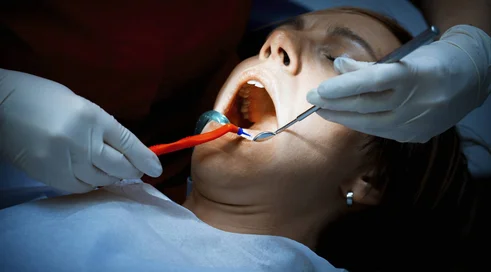
The end of the year is fast approaching, and with it comes a lavish New Year's Eve party and... a list of New Year's resolutions. Many a person will make the decision to quit smoking for the first (or next) time. And rightly so, because it is an extremely unhealthy addiction. "Yellowed teeth are the main visual effect that prompts people to quit smoking, but few people are aware that this addiction causes much more damage to the oral cavity," says Dr. Agnieszka Laskus, a specialist in periodontics and general dentistry.
How does cigarette smoking affect the oral cavity? Yellow teeth are not everything

Published Jan. 8, 2024 10:33
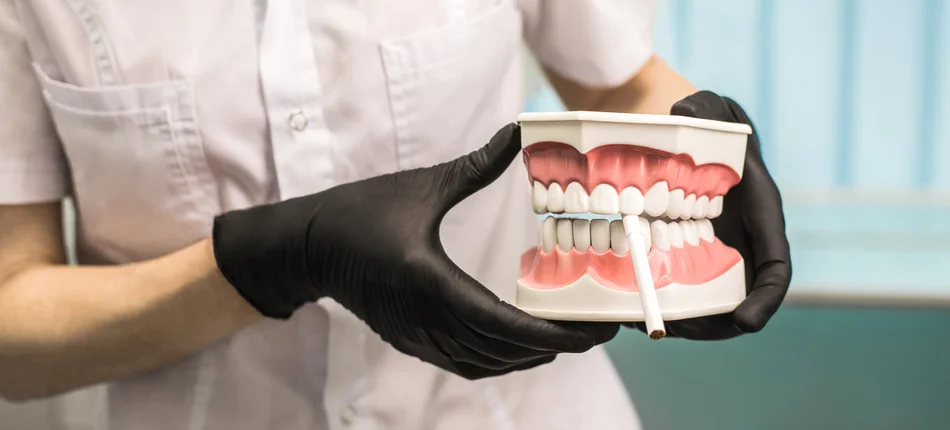
fot. iStock
Smoking cigarettes is unhealthy - everyone knows this. You would be hard pressed to find a smoker who hasn't for a moment in his life thought about what his addiction could lead to. Numerous educational campaigns in Poland and around the world, as well as a number of studies conducted, leave no illusions - smoking has a disastrous effect on the health of the entire body - it destroys the lungs and heart, promotes the development of many cancers, accelerates aging and leaves its mark on our appearance, such as making our complexion gray and teeth and nails yellow.
"How unhealthy this addiction is is also evidenced by the drastic steps that are being taken in some countries. Already last year, New Zealand passed a law that tobacco and cigarettes cannot be sold to people born since January 1, 2009. This means that 14-year-olds and subsequent younger generations will never legally buy cigarettes in this country in their lives. Decision-makers there acted decisively, and their decision has reverberated around the world," - says Dr. Agnieszka Laskus, a specialist in periodontology and general dentistry and co-founder of the Dr. Laskus Foundation, which promotes healthy behavior and oral hygiene education. In October of this year, the UK government announced that it intends to push through similar changes to the law in its country. The measure is expected to lead to the complete elimination of smoking among young people by 2040. "History is happening right before our eyes," the expert comments.
Effects of smoking on the oral cavity
According to the Centers for Disease Control and Prevention (CDC - an agency of the U.S. federal government that is part of the Department of Health and Human Services), tooth decay is more common in cigarette smokers. More than 40 percent of adults between the ages of 20 and 64 who currently smoke cigarettes have untreated tooth decay. Moreover, adults aged 65 or older who smoke cigarettes are twice as likely to have untreated tooth decay as those who have never smoked, and about 43 percent of adults aged 65 or older who currently smoke cigarettes have lost all their teeth.
"These are truly frightening figures, and although they come from America, the situation is no better in our country. We observe this in dental offices. Smokers are definitely more reluctant to visit the dentist, and the problem is not just yellow teeth and the vision of a moralizing lecture from the doctor. People who smoke pay less attention to their oral health," says Dr. Laskus, based on his experience. "We really don't judge, our job is to help, to educate," he adds.
Although awareness of the dangers of this habit is growing and the number of smokers is decreasing, there are too many smoking-related deaths each year. However, most people don't think about how smoking negatively affects oral health. And it's not just about stained teeth or bad breath. "Smoking can cause a weakened sense of smell and taste, cause discoloration on teeth and lead to halitosis. The immune system of smokers is weakened, which also leads to weaker defense mechanisms against oral diseases and longer recovery from dental surgery. If you smoke, you have a higher risk of oral mucosal diseases (leukoplakia-like lesions classified as precancerous conditions often occurring on the cheeks, tongue, palate), gum and periodontal diseases, gum recession, tooth loss, development of oral ulcers and even cancer. These are the facts," lists Dr. Laskus.
We already know a great deal about the health effects of smoking, but new reports continue to emerge. A long-term study, conducted by researchers at NYU Langone Medical Center and published in the International Society for Microbial Ecology Journal, found that smoking cigarettes drastically alters the proportions of more than 600 species of oral bacteria. "The study found that cigarette users have significantly higher amounts of streptococci in their mouths than non-smokers, and it is these bacteria, among others, that are responsible for the development of caries. It has also been established that smokers have fewer proteobacteria, which help break down toxic substances found in tobacco smoke," Dr. Laskus explains. What does this mean for smokers? First of all, a higher risk of developing oral diseases and caries.
"However, there was one optimistic conclusion from the study. It turned out that in people who had not smoked for 10 years, the oral microflora was similar to that of never-smokers. This means that it's never too late to make the decision to quit smoking, and I encourage everyone to do so - not only on the occasion of the approaching new year." - concludes Dr. Agnieszka Laskus, a specialist in periodontology and general dentistry and co-founder of the Dr. Laskus Foundation, which promotes pro-health behavior and education in oral hygiene.
source: press release