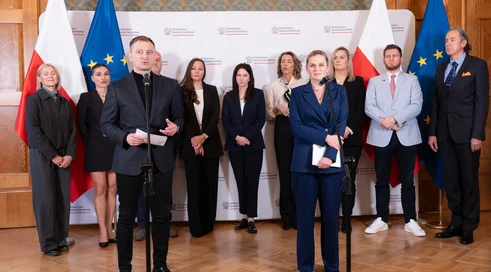
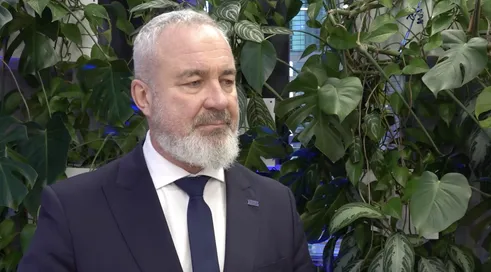
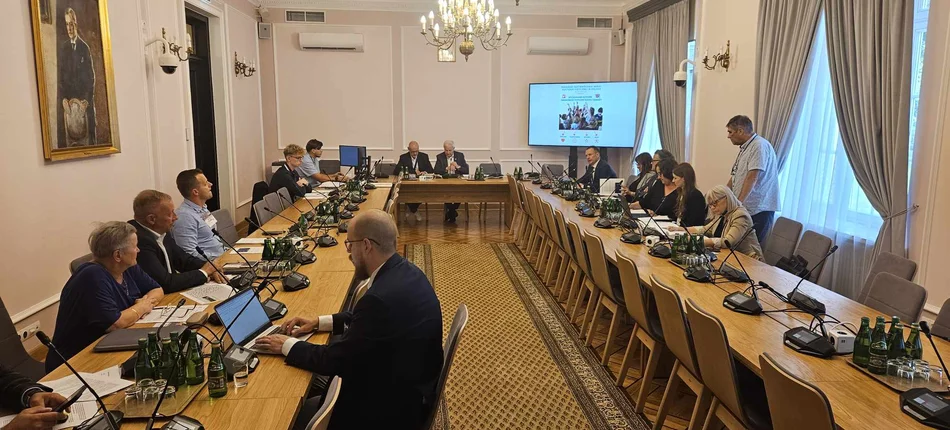
- One-third of children and adolescents are in what is known as complete immobility, meaning they do not do any physical activity. According to a WHO report, in order for a child to develop well from an early age, a minimum of one hour of physical activity a day is needed," said Deputy Sports Minister Piotr Borys during a meeting of the Parliamentary Standing Subcommittee on Sports for Children and Youth and Sports for Persons with Disabilities. Suggestions were made on what to do to make school in particular a place for the propagation of physical culture.
How to restore the stature of physical culture?

Published Sept. 13, 2024 13:25
fot. Piotr Wójcik
- About half of the Polish population has a problem with overweight and obesity. To effectively combat this, we need to improve physical and motor fitness, apply and watch diet and preventive measures, the deputy sports minister pointed out.
Piotr Borys added that the survey has been completed, with more than 95 percent of schools participating.
- Preliminary results indicate that children's performance in the long jump is deteriorating. The same is true in shuttle running. In general, children's motor competence is deteriorating," he admitted, and stressed that the manifestations of his ministry's activity in combating the problem are programs: Active School, Little Champion or School Sports Club.
Former volleyball player, now MP Malgorzata Niemczyk noted that all the additional activities implemented at the sports ministry are aimed at a narrow group of children who want to participate in sports.
- We need a fashion for activity. Movement needs to be extended to all school children. I, personally, am worried about the huge funds that go from the Ministry of Sports to such a narrow group," said Malgorzata Niemczyk.
Dagmara Korbasinska-Chwedczuk, director of the Health Equity Department of the Ministry of Health, stressed that physical activity is also a very important element of prevention also in emotional disorders and depression. It is also the basis for raising a healthy generation of Poles.
- If we do not focus on developing certain attitudes in children, it will be much more difficult to activate those in older groups as well. The issue of child obesity is being systematically evaluated by the Mother and Child Institute. We are seeing the first symptoms of some improvement. Between 2022 and 2023, we noticed a decrease in obesity among children and adolescents. It is difficult to say today whether this is a continuous change or an effect of the fact that the pandemic period is over," Dagmara Korbasinska-Chwedczuk noted.
The primary environment of the child, next to the family, is the school. It bears a heavy burden of shaping pro-health attitudes in the youngest. According to Minister of National Education Katarzyna Lubnauer, the core curriculum of physical education lessons is already remodeled in such a way as to stimulate activity among all students, rather than competition, promoting the fittest ones.
- However, we see the physical condition of children and adolescents deteriorating, and this is a very broad problem, present not only in Poland. One of the tasks we have undertaken is a new subject, which will be health education. It will largely involve stimulating a child's responsibility for his physical activity. The other strongly present element will be the issue of nutrition. Removing health education from the core curriculum of PE lessons will allow us to focus more on the activity itself in these lessons. Still, a great deal also depends on how the PE teacher approaches his professional duties," pointed out Katarzyna Lubnauer.
Dr. Dariusz Sarnowski, a former basketball player and basketball coach, presented a proposal for changes to restore the status of physical culture in Poland.
- For the past five years I have been soliciting meetings with those responsible for physical culture in Poland. In 2019, I included my thoughts in a program that has evolved over time," he said.
In his opinion, what is needed above all are no-cost and low-cost solutions that should be implemented immediately. These include compulsory cooperation between PE teachers and sports clubs, optimal use of the sports base of schools, introduction of PE teachers in grades 1-3, and MEN's support for young athletes by increasing scores for them in the qualification criteria for schools and universities. There is also a need for sports clubs to become active and change attitudes toward physical culture at the family level. Measures should also be taken that will lead to a mass effect in popular sports. However, this will not be achieved without investment in training children aged 4-12.