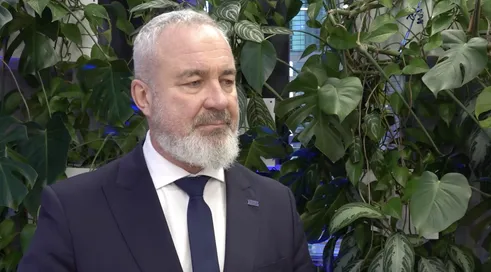
- It is worth getting vaccinated. Keep in mind that especially in seniors, immunity is declining. It is similarly weak as in children, who do not yet have a mature immune response. Seniors, on the other hand, unfortunately, already have immune system cells at an advanced age - weaker - and therefore we are more susceptible to infections and the complications of these infections," said Prof. Tomasz Targowski, head of the Geriatrics Clinic and Polyclinic at the National Institute of Geriatrics, Rheumatology and Rehabilitation in Warsaw, national consultant in geriatrics, in an interview with Medexpress.
Immune resistance in seniors declines

Published Oct. 18, 2024 12:48
We are living longer and longer, sometimes even a hundred or more years, and the calendar of mandatory immunizations actually ends in the first dozen years of our lives. Why such a disproportionate hole between the calendar and, and our age?
It is indeed the case that we are at risk for a number of infectious diseases. And yes, from the age of thirty onward, mortality from pneumonia, for example, is increasing. Those pathogens that cause pneumonia in adults are most often pneumoniae (streptoococcus pneumoniae), influenza and respiratory syncytial virus (RSV). In seniors, we have recommended vaccination calendars, developed by scientific societies. It is worthwhile to get vaccinated. Let's keep in mind that especially in seniors, immunity is declining. It is similarly weak as in children, who do not yet have a mature immune response. Seniors, on the other hand, unfortunately, already have immune system cells at an advanced age - weaker - and therefore we are more susceptible to infections and the complications of these infections. The infection itself, the respiratory involvement itself, is one thing, but there are also distant complications, such as cardiovascular disease, strokes or dementia syndromes.
The immune system is weaker in seniors, yet they often say that they have already been sick so much in their lives that they are not at risk....
This is untrue. In the history of our species, it was infections that were the most deadly. The fact that there was depopulation of the human race was mainly due to various pandemics, whether smallpox or even COVID-19, which swept the world in recent years. In Poland alone, there were more than 200,000 excess deaths due to the COVID pandemic. Some of these deaths, about half, were directly related to COVID cases, and some were indirectly pandemic-related deaths - due to the lack of availability of health care, as the entire health service was involved in the fight against the pandemic.
Has the COVID-19 pandemic taught us something as a society, or the opposite?
In general, from a medical perspective, it has taught us so much that there have been very rapid advances in the development of techniques, both for diagnosing various viral and bacterial diseases. On the other hand, progress has accelerated rapidly when it comes to the production of various vaccines. It's a bit like war, which is always a driver of progress and development of various techniques
As for adults, we don't vaccinate particularly readily. Medical workers don't vaccinate willingly either. So how do we convince seniors to want to take advantage of these recommended vaccinations?
Educate, persuade, persuade. You have to start by changing the very attitude of medical personnel. There are studies that say that there are seniors vaccinated where their doctors vaccinate them. Perhaps this is also due to ignorance, as little attention is paid to vaccinations in medical school curricula. Maybe it should resonate strongly during education so that doctors are not afraid to recommend vaccinations. When I talk to my patients, they sometimes say that their family doctor advised them against vaccination because they have a lot of concomitant diseases, that maybe it's better not to vaccinate with these conditions. And the opposite is true. It is precisely necessary to get vaccinated. To our seniors I have such a fervent appeal: get vaccinated dear ones, because you also have a chance through this to have a better quality of life, that if you get sick, you won't be so severely ill, and thanks to vaccination you also protect your grandchildren.