Wider access to sublingual immunotherapy in children with inhalant allergies can not only improve the health of the little ones, but also significantly ease the burden on families. As Hubert Godziątkowski points out, effective treatment means not only fewer symptoms and doctor visits, but above all, real prevention of bronchial asthma.
Sublingual immunotherapy - a chance for a healthy child and peace of mind for the whole family

Published Sept. 5, 2025 07:56
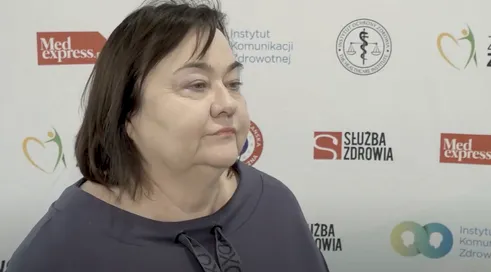
How could wider access to sublingual immunotherapy in children with inhalant allergies affect the quality of life for entire families?
Of course, the first aspect, the most important, is to improve health. There are two aspects to treating inhalant allergies with allergen immunotherapy, commonly known as desensitization.
The first issue is the reduction of symptoms, reduced periods of hospitalization, and of course vacations and sick leave for caregivers. Meanwhile, the second issue, the most important, is the prevention of bronchial asthma, because according to the allergy march or atopic march, untreated or poorly treated inhalant allergy ends in asthma.
The second issue, of course, also very important, is economic. And this is in terms of household economics, as well as the costs incurred by the health care system. Here, proper treatment, causal treatment, first of all, will reduce the already high costs incurred by the household. We conducted a survey on this topic, and 57% of our respondents, our families responded that this impact on the household budget, the costs associated with the treatment of inhalant allergy, is very high.
Returning to asthma prevention, proper treatment not allowing this young patient to develop asthma should consequently reduce system costs by reducing the number of hospitalizations and the entire process of treating acute asthma, which is already a clinical problem, quite complex and difficult.
The third issue is vacations, absenteeism, but also the number of medical visits. We are talking here about such sublingual therapy. This therapy differs from subcutaneous therapy, that is, administered by injection, precisely because it can be administered at home by caregivers. Allergen therapy, the one administered subcutaneously, can be said to exclude a very large proportion of patients, since injections are given at least once a month and one has to commute to the facility. While in large cities this may not be such a problem, in smaller towns, villages, it's already a trip. One has to travel, for example, 200-300 kilometers for such an appointment, which may already be impossible for very many families.
Does it happen that families forgo treatment for this reason?
Yes, it happens. This is also what we checked in our survey, and in fact I think about more than 70% of respondents (mostly mothers), answered that if there was more access to reimbursed sublingual therapies, they would choose to treat their child.
Thank you very much for talking to us, and remember, it is not only the child who gets sick, but the whole family.
Yes, thank you exactly, and let's wish that these youngest patients will have access to modern sublingual therapies in the near future.