On November 22, the Diet began work on the first bill of this term. The coalition, preparing to seize power, chose, symbolically, a bill on public funding of in vitro.
In vitro in the Sejm: Law and Justice's "soft" stance

Published Nov. 23, 2023 08:09

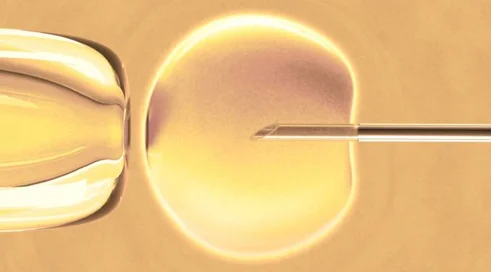
Thinkstock/GettyImages
In vitro was already reimbursed in Poland, a decision made by Donald Tusk's government in 2012. After the Law and Justice party took power, the then Health Minister Konstanty Radziwill announced the termination of the program in his first weeks in office (this occurred in mid-2016). Officially due to cost, in reality - for worldview reasons (which the minister himself did not hide). The IVF method was supposed to be "controversial," unlike the Church-approved naprotechnology.
The civic project "Yes to in vitro," which has gathered more than half a million signatures, stipulates that the Minister of Health will be obliged to prepare, implement and finance the in vitro fertilization procedure. It further stipulates that each year a minimum of PLN 500 million will be allocated from the state budget to finance IVF. The Minister of Health will be obliged to present an annual report to the Sejm on the implementation of the law. The bill - as pointed out by some Law and Justice deputies, including Health Minister Katarzyna Sójka - is not detailed. And it doesn't have to be, because the health program itself will be regulated by a health ministerial decree.
The draft went to the Sejm in March, but since civic projects are not subject to the principle of discontinuation, the new Sejm could take over work on it - and that's exactly what happened.
Agnieszka Pomaska (KO) presented the project on behalf of the Legislative Initiative Committee. - The program wasn't abolished because there was no money, you wanted to look into the consciences of Polish women and men," she said, stressing that while it's true that the Law and Justice government ran a health program dedicated to couples suffering from procreation problems, it hasn't accounted for it so far.
Speaking during and after the club debate (more than 80 MPs signed up to speak), representatives of the parliamentary majority did not hide their joy and pride that they would be able to contribute to the passage of the law restoring funding for IVF. Many of the MPs who spoke emphasized that the 2015 decision primarily affected less affluent Poles who could not afford to spend 10-20 thousand zlotys.
Predictably, a representative of the Confederation spoke - Grzegorz Braun frontally attacked the IVF method itself, those who use it ("professors from hell") and also politicians who support the project. For his words about "embryo selection" and comparisons to the "Auschwitz ramp", Deputy Speaker Dorota Niedziela (KO) apologized to all who had to listen to them.
By far the most interesting is the attitude of the Law and Justice club. For years, the party's politicians - including President Jaroslaw Kaczynski - have opposed the IVF method (in 2012, when the Tusk government introduced funding for the program through an ordinance, PiS demanded that it be regulated by law, knowing that there was no consensus on the issue within the PO itself), comparing it to abortion and eugenic procedures. And there was no shortage of such voices in this debate either (e.g., Maria Kurowska of Sovereign Poland). However, the club's position can be considered "soft." Józefa Szczurek-Zelazko announced that the club supports referring the project for further work. The Law and Justice party did not impose discipline in this vote, and prominent MPs - including Minister of Digitization Janusz Cieszynski - even declared that they could speak in favor of the project once it was clarified.
Nor will there be, all signs point to it, a presidential veto: Marcin Mastalerek has already publicly announced that Andrzej Duda will most likely sign the bill, after reviewing it, of course.