Around the world, due to persecution and ongoing conflicts, much larger numbers of people than in the past are forced to flee and seek safe haven. Today, globally, the number of refugees has reached 100 million and is equivalent to the population of the fifth most populous nation in the world, or the combined population of Germany and the Netherlands.
World Refugee Day
It's not just that we speak the same language

Published June 20, 2023 13:02
Despite the different circumstances of each country and the varied responses to the refugee crisis, one thing is certain. Integration is essential, both in terms of securing the needs of refugees and the ability of host countries to meet the growing demand for infrastructure, particularly health services. Implementing innovative solutions, such as employing skilled refugees in the health care system, that benefit both the refugees themselves and their host communities can help.
"Countries in the WHO European Region are addressing the influx of huge numbers of displaced people, facing a challenge they haven't faced in decades," explains Dr. Gerard Rockenschaub, Regional Director for Emergency Operations in the WHO European Region. "We know that in the future more and more people may have to abandon their own country if only because of the consequences of climate change, which is why it is so important that health systems have the capacity to adapt and innovate to be able to effectively meet the needs of both refugees and their host communities."
Here we have the opportunity to meet health workers who are using their own refugee experiences to help others, and talk about how what they do has allowed them to better integrate into their host communities.
Cultural mediator
When refugees arrive in a new country, they have an urgent need to access information and assistance to meet their basic needs, such as housing, food and health benefits. Cultural mediators help and advise them on how to navigate the unfamiliar systems operating in host countries, including the health care system.
Dian fled his native Guinea at the age of 15 after a brutal military coup in 2008. He initially intended to get to France, assuming it would be easier to integrate because of the language. He eventually made his way from Turkey to Greece and decided to stay there, learn the language and, in time, pass the Greek baccalaureate.
He currently works as a cultural mediator and translator. Every morning she commutes on a motorcycle to the refugee camp in Schisto.
"I work in a refugee camp where I come into contact with many people with special needs, wheelchair users, the blind, the chronically ill, children, pregnant women and many others. The specialists I work with provide personalized health care services to refugees, as well as psychosocial support and mental health services."
"I feel that my work has a huge impact on the lives of refugees arriving in Greece. Knowing my experiences, they feel safe with me. They know that I care and that I want to make a difference in their lives."
"People trust me. They know that we share similar experiences. I understand what they feel, what they need, and they sense it. It also helps that I am a black African myself. The people I work with feel they can safely express themselves, and I can fully communicate their needs because I know their culture. Cultural mediators play a key role in building trust. I am trusted by both the beneficiaries and the medical staff."
Dian also realizes that his situation is an inspiration to others. "What I went through made me stronger, more able to adapt to challenges and more independent. Now I give people courage myself. I've learned the language, I've integrated, and I'm doing a job that is respected and that allows me to have a certain standard of living. Looking at me, they see how far one can go in this country. I think my example gives people hope, especially young people and children."
Psychologist
Maryna Riabenko had to leave her home in Kharkiv, Ukraine in the spring of 2022 when it was hit by a rocket shell. She came to the Czech Republic, where she quickly found an apartment and, with the help of a local family, began learning the language so she could look for work.
After formal recognition of her professional qualifications and a degree in child psychology, Maryna began working at a support center for refugees fleeing Ukraine.
"At first, I suggested that in addition to individual counseling, therapy through art and relaxation classes should also be introduced. Several of the children had previously been under the care of a psychiatrist in Ukraine or worked with a psychologist, so the stress of the war and the fact that they had become refugees led to a rapid deterioration of their mental state. They needed medication and psychological support," Maryna explained.
"Other children have behavioral problems because they have had very difficult experiences behind them. Some were separated from their parents or their homes were destroyed. We are working with schools to help these children. We are participating in developing strategies to help schools improve conditions so that the children can better adapt in their new place."
"I immediately realized that I was able to establish a deeper connection with Ukrainian children. It's not just that we speak the same language, but that I am also a refugee, so I understand how they feel and can identify with them. I know what kind of support they need, because I've been in that situation myself."
Doctor
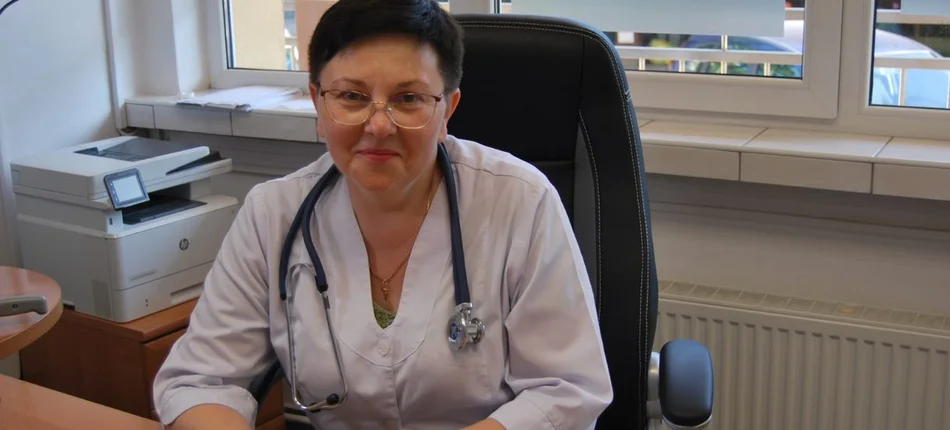
Dr. Svitlana Borisenko came to Poland with her daughter and grandson in March 2022.Their family home in Kramatorsk, Donbas was near the front line. Her husband and son-in-law, also doctors, stayed behind to bring aid to soldiers wounded in battle.
"At first I thought we would stay in Poland for a month or two, not longer. When my daughter and I realized that we wouldn't be back home for a long time, we knew that we had to work somehow, live somehow. We understood that we had to survive."
"We are both physicians, so we filled out and submitted applications for the right to practice medicine in Poland, which was not easy at all. The procedure was quite demanding. After my documents were approved by the Ministry of Health, I had to pass an exam and pass an interview, and then I started working under the supervision of another doctor. We are in a different country, so both the system and customs are somewhat different. But the diseases and health problems that patients come in with are the same, regardless of their background or nationality."
"In Ukraine, I completed four specializations: in physiotherapy, rehabilitation, nephrology and family medicine. I work in two places - at the hospital in Lubartov in the lung disease department of the internal medicine clinic and at the local outpatient clinic. In Lubartow I see mostly Polish patients, while at the outpatient clinic I see mostly Ukrainians."
"When Ukrainian patients come to me and suddenly realize that the doctor is also a refugee, they are very happy. It's simply easier for them to talk about their problems, because we share not only a common language, but also a common experience. I receive many Ukrainian patients with mental health disorders, depression, anxiety. During the war, every second or third person experienced severe trauma."
"I'm from the east of Ukraine, and I don't know what I'll think when I return home. It's really difficult that we don't know how long the war will last. But I'm proud of what I've achieved since I came here. I'm not a young woman anymore, so getting my license to practice in another country is a huge success for me."
"If I had to give practical advice to other refugee doctors, I would say that the most important thing is to start learning the language. When I came here, I didn't speak any Polish at all, but through study I have mastered the language at the A1 level, and I'm working on getting to the B1 level."
"If I were to give more personal advice to other refugee doctors, I would say that if you want something badly enough, sooner or later you will achieve it. Anything can be done, but you have to want it badly enough. You can't put your hands down and give up, you can't stop believing in yourself."
"These stories clearly demonstrate that integration has multidimensional benefits for both refugees and their host communities," said Dr. Gundo Weiler, Director of Country Support Systems at the WHO Regional Office for Europe. "The WHO Regional Office for Europe, together with the entire UN family, would like to thank the Member States that have done everything in their power to welcome refugees and facilitate their integration into host communities, both professionally and personally. The beneficial effects of the measures taken are clearly visible, particularly in terms of health and well-being."
Source: WHO