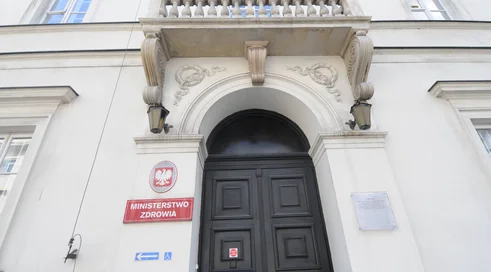
Has the bill on the restructuring and modernization of hospitals, announced by the Ministry of Health as the foundation for reforms of the entire system, been buried at the stage of works in the ministry, or will it appear in more than a week, but any month? There have been conflicting signals in recent days and the truth seldom lies in the middle.
Felieton
Małgorzata Solecka: The act on hospitality like a zombie?

Published April 1, 2022 08:10

What do we know for sure? At the end of January, the stage of public consultations on the project was completed. Consultations announced by the Minister of Health, Adam Niedzielski, in the presence of Deputy Minister Sławomir Gadomski, who was responsible for the preparation of the reform and the project. The consultation report was not published - it is not surprising since it received over 2,000 comments. Nota bene - a few times less, but also a great many, i.e. several hundred, were submitted to the bill on quality in health care: in the case of this bill, consultations ended in the summer, and there is still no report with comments. It is not a coincidence: the Minister of Health has repeatedly emphasized that both projects must be read together, because they complement each other and together they are to constitute a new, nomen omen, quality.
The delay in work on the bill on the modernization of hospitals is associated with the departure from the ministry of Deputy Minister Gadomski (currently vice president of the Medical Research Agency). And although the Ministry of Health from the beginning of February more than once or twice upheld the declaration on the continuation of the work (in recent days, during one of the meetings of the Health Committee, Deputy Minister Piotr Bromber spoke about it), in the parliamentary lobby and in the voices of experts, there was more and more doubt whether the project in will be referred to the Seym at all.
During the Tuesday meeting of the board of the Association of Polish Poviats, which dealt with the situation of poviat hospitals in the context of the prepared analysis of the effects of the act on the restructuring of hospitals - if it had been adopted in the form in which its draft was presented - for institutions run by poviats. This analysis shows, inter alia, that only every tenth hospital run by a poviat (or previously transformed from SP ZOZ into a commercial law company) could, taking into account the data from 2020, count on category A. Half of the hospitals are in category B , while in categories C and D - which would cover decisive actions by the Hospital Development Agency - a total of as much as 40 percent. (although the vast majority are category C). SP ZOZs are doing slightly better (more percentage of hospitals in category A and less in category D) than hospitals transformed into companies.
Local government officials and experts evaluate the bill negatively, paying attention firstly to extreme centralization, and secondly - to the lack of systemic solutions for financing the health care system, including hospitals. During the meeting on Tuesday, they expressed their hope that the lack of visible progress meant that the project would de facto freeze. These hopes were definitely fueled by the speech of the MP Tadeusz Chrzan (PiS), at the same time the vice-president of the Association of Polish Poviats. He stated that in the opinion of many MPs from the parliamentary majority, the discussions on the bill concern something that in practice no longer exists, because with the departure of Deputy Minister Gadomski from the Ministry of Health, the bill on hospitality "died a natural death". According to the deputy, who also sits on the Health Committee, even if it turns out that it will go to the Sejm, in the form in which it was prepared by the Ministry of Health, there is practically no chance for its adoption.
Will the act on hospitals have its "life after life"? The Ministry of Health signals there are delays, but work will continue in the second quarter.