Will the government decide to significantly reduce the health premium? Ryszard Petru, MP for Poland 2050, stressed in an interview with RMF FM on Tuesday that there is a coalition arrangement on the issue, but there still needs to be a "deal." The closest opportunity for this is expected to be on Thursday, during a meeting with the Finance Minister.
Feature
Malgorzata Solecka: What about the premium?

Published Aug. 6, 2024 21:44
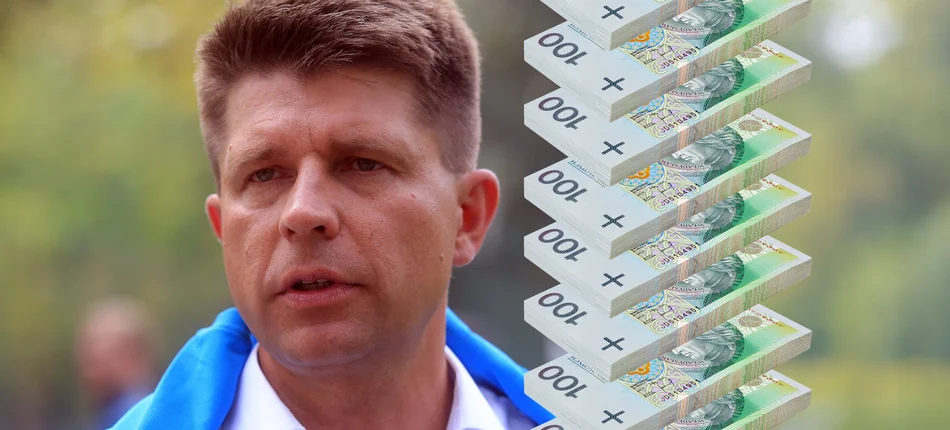
Petru spoke of the need to fix the Polish Deal, which, it is worth recalling, increased the NFZ's revenue from the health contribution from entrepreneurs by as much as PLN 10 billion. Only that the Fund practically didn't feel the improvement, because in 2022 a law was passed that shifted the obligation to finance tasks previously paid for by the state budget to the payer. For proponents of lowering the premium, this is an additional argument - the payer had higher revenues, but the availability of services for patients did not increase?
The logic of this reasoning is quite breakneck, while there is no doubt at all that the Polish Deal contained solutions that were, to say the least, just as logical, led by the taxation of entrepreneurs' income from the sale of fixed assets. And the withdrawal of this solution has already been announced by the Finance Minister - this will leave about PLN 4 billion in the pockets of entrepreneurs.
The Third Way coalitionists, however, are not satisfied with this. Poland 2050 wants to push for a flat rate contribution for all citizens. Its amount would depend on income, but in general almost everyone (or virtually everyone) would be expected to pay less. So how would the Fund's budget come together? The premium, explain politicians and advisors to Szymon Holownia's group, cannot be the only source of funding for the health care system. The second pillar must be the state budget, and the third - private funds of citizens.
The Central Statistical Office (CSO) recently released preliminary information on current spending on health in 2023. For the first time ever, we have broken through the 7 percent of GDP mark (total spending, public and private, public spending counted together with local government), while what may come as a surprise is the decline - visible, though not drastic - in private spending, both in terms of the nominal amount and as a share of total spending. However, what we should above all keep in mind is the distance that separates us even from the OECD average (9.2 percent). Even, because this average is also shaped by non-European countries, where - globally - 4-5 percent of GDP is spent on health. If we consider only the countries of the Old Continent, we look much, much worse.
Politicians promised voters a lower health premium. They also promised - all of them, the Third Way as well - to fix and clean up the health care system and increase its financing so that it would begin to better meet citizens' health needs. Health and health money are worth talking about. Seriously.