When the full-scale war broke out, hundreds of Ukrainian hospitals had no supplies, no communications and no clear information on where help would come from. Today, despite shelling, supplies of equipment and medicines arrive within hours even. This is the result of building the health system's resilience amid the chaos. NGOs, technology transfer and support coming from abroad - including Poland - have played an important role in this process.
Ukraine's medical backbone has strong support. How do donors support the health care system?

Published Dec. 14, 2025 07:03
Fot. Getty Images/iStockphoto
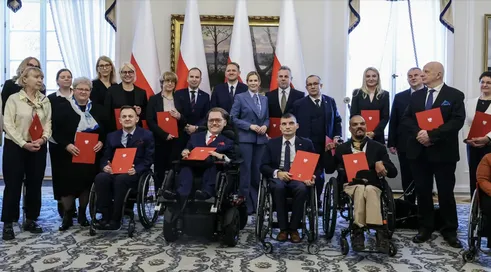
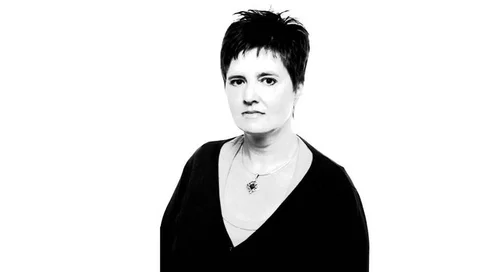
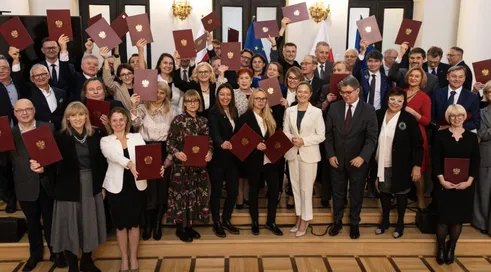
The Zdrovi National Humanitarian Aid Agency Foundation supports the medical sector in wartime conditions. Natalia Tulynova, CEO and founder of this organization has devoted 20 years of her professional life to the development of Ukrainian medicine, and since the first weeks of Russia's full-scale aggression has been providing critically important equipment and medicines to hospitals. - It supports doctors in the frontline regions, and implements psychosocial initiatives," Iryna Mykychak, advisor to Ukraine's Minister of Health, mentioned at the "Health Care System in Times of War" conference held at Warsaw Medical University on December 5.
- Before the war, the Zdrovi Foundation carried out educational activities and information projects in the field of health care reform. Today there are new important challenges. With full-scale Russian aggression, problems have arisen, such as where health care facilities are to take funds and resources from. The search for off-budget revenues from international partners and donors continues to the present," Natalia Tulynovna said at the beginning of her speech.
At first, efforts were duplicated
The main challenge the Ukrainian health care system faced right after the war broke out was the lack of reserves and supplies in most hospitals. Information chaos also did not help in organizing health care. Almost 400 hospitals turned to the foundation for help at the time. The greatest problems were faced by facilities from cities already reached by Russian invaders: Kherson, Sumy, Chernigov, Kharkiv. It was virtually impossible to keep track of the real needs of the hospitals, due to the loss of communications. The lack of communication also made it impossible to distribute support properly.
- We did not accept help from individuals. We decided that donors could only be legal entities, organizations. Their efforts were duplicated. Everyone wanted to help, but the result was that double aid was going to the same region. This was a big problem, as hospitals had to bear the cost of disposing of accumulated supplies that had expired. The biggest challenge in the state was the fuel shortage, so the fluidity of transportation to frontline hospitals became a priority for us. Our first investment decision was to contract with New Post, which was provided with fuel supplies so that it could deliver cargo to all locations in Ukraine," Tulynovna explained.
As the situation developed, the organization she led began to play the role of an emergency response hub during the war. This was made possible, among other things, by a letter in which the health ministry confirmed the foundation's credibility. This was a very important step, as donors were often afraid to donate aid because of the risk of corruption. Today, Ukraine's medical sector is already being helped by 70 donor partners, and the aid flowing from them is estimated at $27 million. Such support allows deliveries to be made, regardless of the situation on the frontlines. Even during shelling, rapid-response kits (allowing to build up a week's supply) reach those in need in as little as 6-8 hours. To date, the foundation has made more than 3,000 deliveries to nearly 1,000 facilities.
Engage compatriots living in exile
As Natalia Tulynovna emphasized, one of the first steps the organization she led took after the outbreak of war was to compile a list of potential donors and make contact with them.
- First of all, there were the Ukrainian diaspora funds. So if you know of such centers where the Polish community lives, it's better to get in touch with them now, rather than later, when some challenges may arise. Second on our list were hospital networks. All over the world there are large centers equipped with equipment that, for various reasons, they do not use. Today these resources are directed to Ukraine, but can be shared among other countries around the world if necessary. Manufacturers of equipment, medicines and furniture have also been of great help. They donated everything necessary to Ukraine free of charge and covered logistics costs. We were also supported by large global companies, which were able to donate part of their profit. In addition, international humanitarian partners: foundations, philanthropists, and IT companies proved invaluable. All of them made it possible to provide the Ukrainian health sector with everything it needed," listed the CEO of the Zdrovi Foundation.
We even responded on a daily basis
Organizations ready to support the freedom-fighting Ukrainians were not lacking in Poland either. On April 12, 2022, just after the outbreak of full-scale war, the Totalizator Sportowy Foundation was established. - We were established to bring aid, but also to become an umbrella that can feed other NGOs in need of our financial support and with the possibility of better outreach," said Foundation Chairman Marek Orzechowski.
- Social responsibility is one of our three strategic pillars. We have focused on social welfare, supporting those affected by war, providing food, clothing, medicine, hygiene products, and organizing humanitarian transports. We also worked to strengthen intergenerational and inter-environmental solidarity and cooperation. In 2022-23, we partnered with many international organizations. We acted quickly. It wasn't that we gave grants once a year. We did it every month, and sometimes we even responded every day if our partners needed help," explained Dr. Kateryna Grabczewska, project coordinator at the Totalizator Sportowy Foundation
The organization also implemented, among other things, the "Win Development" assistance and development program, created jointly with Manpower, under which 4,000 people from Ukraine were given the chance for a new job. Another important undertaking is the Business for Ukraine Center initiative - implemented in cooperation with the Union of Entrepreneurs and Employers. It aims to support the development of Polish-Ukrainian economic relations.
- The war is in its fourth year. About one million refugees remain in Poland, and we are trying to respond proactively and adapt to the situation. We understand that most of the people who want to stay also need help on the labor market: retraining, upgrading skills. That's why we have started to launch grant programs in this direction," added Kateryna Grabczewska.
- We helped when there was a large wave of emigration, when people lost literally everything and had great needs. Today we support our friends abroad who are still in dire straits. I'm talking about both the public and the medics. We also help Ukrainians who are in Poland. These are people who have been traumatized and have to live with it, they have to work through it," Orzechowski stressed.
"We supported training for female medics and feldspersons".
The Foundation operates as an umbrella organization, bringing together partners implementing various types of assistance to struggling Ukraine. - The first beneficiary of our programs, was the Signs of Remembrance Foundation, with which we have been working since 2022. Together we joined the humanitarian mission "Turn on the light to Ukraine", which provided material aid, including medical and food. Initially, our partner focused on refugees in Poland, but as the situation developed, it began to deliver aid to the western regions of Ukraine. The following year, when the war was gaining momentum, he went to the central and southern parts of the country, and last year and this year he has already reached the front line," said Kateryna Grabczewska.
Assistance from the Totalizator Sportowy Foundation focused on providing funding. Thanks to it, generators, powerbanks or light sources were purchased, which went to hospitals and made it possible to save lives.
- Convoys of food, adult diapers and many other personal hygiene items were also leaving. Since there were difficulties in purchasing tactical first aid kits, the Signs of Remembrance Foundation decided to prepare them on its own. With our support, trained volunteers made a thousand such first aid kits. One saves four people. In three years we managed to transport 3,500 first aid kits," she added.
The second important partner is the Live Healthy Foundation, with which we have been working since 2024. - We supported training for female medics and feldspersons from Ukraine. The project consisted of preparing them on how to behave in an emergency situation, bombing, shelling. They also gained practical life-saving skills in wartime conditions. Importantly, the women who came to Poland also received psychological assistance. After all, it is impossible to avoid post-traumatic stress, being on the front line. We will continue this initiative next year," Grabczewska declared.
In its three years of operation, the Totalizator Sportowy Foundation has supported more than a hundred projects to help Ukraine, for which PLN 12.5 million has been spent.
"Still in use is a pen and a piece of paper."
Support for the struggling Ukraine is also being provided through technology transfer. An example of this is the digital triage solution developed during a hackathon organized by Zebra Technologies. The idea was to create a device that would wirelessly transmit pressure, heart rate and saturation data of wounded soldiers to a medic's tablet.
- I have found that because of drones, the face of war has changed dramatically. Now medics are transporting five times as many soldiers as they can handle, while using technology from the last century. A pen and paper is still in use. When the influx of people continues, a lot of data has to be recorded," said Howard Hunt, a medic working on evacuations of the wounded during the war in Ukraine, who took part in the hackathon [he spoke in a video shown at the conference in Warsaw].
Participants in the aforementioned programming marathon succeeded in developing a biomedical sensor. It's a digital cuff for measuring blood pressure, pulse rate and saturation, which can send data to a receiving device, namely a medic's tablet, which can assess whether a wounded person's life is in danger. With the data collected from the sensor, artificial intelligence algorithms can be created that predict 20 minutes in advance that a soldier may be at risk of shock from blood loss. This is the time in which a blood supply can be arranged and his life saved.
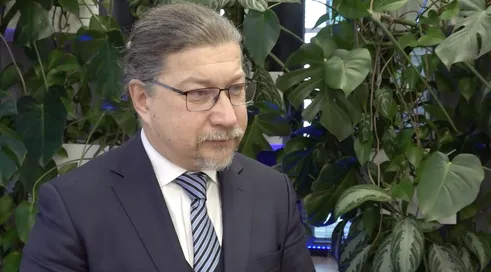
- We plan to complete the testing phase in mid-2026. They are being conducted in three volunteer medical teams in Ukraine. We are collecting data and after evaluation we will move on to tests related to medical records," said Jacek Zhurovsky, Zebra Technologies' regional director for Central Europe.
Instead, Ukrainians already use an ERP system that allows real-time tracking of all stages of aid delivery. If cargo crosses the Ukrainian border or funds are purchased within the country, special QR codes are placed on packages.
- At the moment, a five-step system of mandatory reporting is turned on: a photo, a video, a letter of thanks to the donor, a social media review, and a deed of receipt that confirms the donated aid. Both we and our donor can see everything in the cloud, we don't need to send additional reports or links," explained Natalia Tulynovna of the Zdrovi Foundation. The system itself is also a gift that the organization's director had to seek.
- Its value is $35,000, but I didn't have that much money to pay IT specialists. So I went to them and said that I only had 11 thousand hryvnia, or $350. Their representative said that it was impossible to create this system for this money, because at their place "the best IT specialists work and are now being transported to Barcelona." I said that building this solution, could be their social contribution to help health care. He looked me in the eye and understood everything. After three weeks we got the system and are using it until now," said Tulynovna.
Conclusion for Poland: time for drug sovereignty
The experience of embattled Ukraine has shown how important continuity of supply of medicines and medical supplies is in times of crisis. A country that is self-sufficient in this field can not only better ensure its own security, but also support countries where there are deficits. - We appeal to the Polish government and the European Parliament to speed up work on the return of production of the most important active substances (APIs - ed.) and medicines to Europe and Poland. Only this, in a time of crisis or economic war with Asia, will ensure that our patients have access to essential pharmaceuticals," said Barbara Misiewicz-Jagielak, director of external relations of the company, POLPHARMA SA, vice president of the board at the Polish Association of Employers of the Pharmaceutical Industry - National Drug Manufacturers.
Meanwhile, it's still a long way from saying that Poland and Europe are drug sovereign. As much as 90 percent of APIs are imported from China. - We have factories in Poland, and manufacturers are ready to cooperate with the government to produce pharmaceuticals in increased quantities in Poland. The COVID experience and what we hear from Ukrainians show that it is not enough to have a stockpile of drugs, because they will never be enough. It is necessary to have readiness to produce them locally, and it takes years of intensive work to bring about such readiness. We are open, the government is slowly preparing an offer for us. I think that in a few years we will be self-sufficient and will also be able to help Ukraine," stressed Barbara Misiewicz-Jagielak.
***
- In the chaos of war you can build a system, in the midst of mistrust you can build trust, without resources you can engage millions, and the most important thing you need is a team, a mission and technology - with this thought-provoking message Natalia Tulynova of the Zdrovi Foundation ended her speech.
The organizers of the conference "Health Care System in Times of War" were the Department of Emergency Medicine at WUM and the Institute of Health Care.