On Thursday late in the evening, the Sejm rejected the Senate's veto to amend the act on the professions of doctor and dentist, which means that next year there will be less money in the National Health Fund's coffers - even by PLN 13 billion. There was no discussion, but there was a huge discipline in the PiS club.
Money for health: the Senate vetoes, the Sejm rejects the veto

Published Dec. 16, 2022 08:40

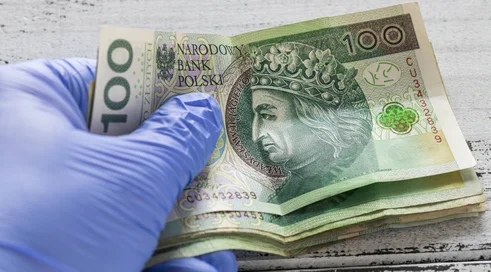
Fot. Getty Images/iStockphoto
Only one MP from Law and Justice was missing from the vote - Mateusz Morawiecki. They all voted to override the Senate's veto. Since they were supported by five more deputies (two from the Polish Affairs circle, two non-associated and Wojciech Król from the Civic Coalition), a total of 232 deputies voted for the rejection of the veto. On the side of the opposition - apart from one KO vote - there was discipline, because practically all those present voted against rejecting the Senate's veto. In this balance of power, the absence of ten opposition deputies did not matter much, because 232 votes (or even 231 if the KO deputy voted by mistake) would be enough to override the veto even if there were 460 deputies in the room.
Previously, the Senate by a majority of 51:47 adopted a resolution rejecting the bill. It took literally a few minutes for the Health Committee to give its opinion on the Senate's resolution, most deputies of course voted to override the Senate's veto - and already at this stage the great discipline and determination of the United Right was visible.
The act will now be signed by the president. In addition to substantive arguments (Andrzej Duda could take into account, for example, the position of the social side of the Social Dialogue Council, trade unions and employers' organizations unequivocally opposed the adoption of the regulations), there are also serious objections of a constitutional nature (including insufficient time for the president to decide on the act and lack of social consultations on the project). It is not known, however, whether Andrzej Duda will not be able to convince the government that the act does not change anything, because the amount of expenditure on health is guaranteed by the act of 7 percent. GDP for health - the problem is that, as evidenced by experts and as shown in the report of the OECD and the European Commission, this act, especially in conditions of high inflation, does not guarantee an increase in expenditure, which in relation to real GDP remains below 5%. – in this situation, several billion zlotys is not an insignificant amount.