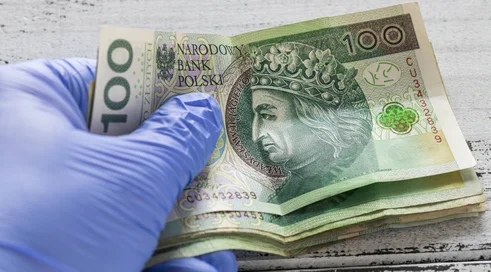
The Supreme Audit Office has negatively assessed purchases and use of medical equipment during the COVID-19 pandemic. The auditors point to excessive and undocumented purchases, lack of uniform procedures, unclear legal regulations and real financial losses amounting to hundreds of millions of zlotys. According to the NIK, the state was not systemically prepared for rational management of strategic reserves.
NIK on covid purchases: what about medical equipment?

Published Dec. 8, 2025 07:34
The Supreme Audit Office has given a negative assessment of how medical equipment and apparatus were purchased and used to combat the COVID-19 epidemic. According to the audit, the state spent at least PLN 1.8 billion on purchases, much of which proved excessive and wasteful. Among the audited units were: Prime Minister's Office, Ministry of Health, Ministry of State Assets, Government Strategic Reserve Agency, seven provincial offices and seven hospitals.
After the end of the epidemic, at least PLN 350 million worth of equipment, or 19.3 percent of the total range purchased for COVID-19, remained unused in the strategic reserves. In the audited medical facilities alone, 14.1 percent of the equipment obtained from the reserves was also unused. Moreover, even after the cancellation of the epidemic emergency, purchases of more equipment continued - under the pretext of countering COVID-19 - to the tune of some PLN 70 million.
No return policy and loss of control over equipment
One of the key problems highlighted by the NIK was the failure to establish clear rules for the return of equipment to strategic reserves after the end of the epidemic. In practice, apparatus worth at least PLN 1.2 billion was not guaranteed to be returned to the state's reserves, despite the fact that it was reusable apparatus with a high unit value and long service life.
It also resulted in the non-refundable transfer of equipment to medical entities - including private ones - without analysis of whether it is still needed in the reserve system. The total value of the assortment distributed in this way is about PLN 65 million.
Legislation that created chaos
The NIK has been highly critical of the legal changes made during the pandemic. Particularly problematic were the amendments to the Law on Strategic Reserves and the Law on Prevention and Control of Infections and Infectious Diseases in Humans.
The auditors stress that:
"the issue of using strategic reserves to combat or prevent emergencies has been completely regulated by the Law on Strategic Reserves, and Article 46d is a breakout in the reserve management system."
According to the Chamber, the new regulations have led to duplication of powers, circumvention of procurement regulations, and the creation of excessive reserves without a real analysis of needs.
Purchasing without analysis and documents
The audit found that the Ministry of Health did not have documents proving reliable analyses of medical equipment needs. It is unclear how the number and type of equipment entered in subsequent reserve creation orders were determined.
As a result, thousands of devices of the same type were stockpiled, despite the fact that the real needs of the health system had already been met.
Four months after the cancellation of the epidemic emergency, among other things, remained unused:
- 77 percent of operating tables,
- 66 percent of marker analyzers,
- 68 percent of laryngoscopes,
- 55 percent of video laryngoscopes,
- 35 percent of X-ray machines,
- 23 percent of ventilators,
- 81 percent of equipment for transporting infectious patients.
Equipment purchases "under the pretext of COVID-19"
The NIK draws attention to a particularly controversial thread of purchases after the formal end of the epidemic emergency. After July 1, 2023, "under the pretext of countering COVID-19," eight MRIs and 11 CT scanners worth a total of PLN 69.8 million were purchased.
The decisions did not clearly indicate the obligation to return the equipment, nor did they safeguard the interests of the Treasury. Moreover, as the NIK points out:
"Information about providing high-value medical equipment to medical entities appeared in 2023 during the election campaign for the Polish Parliament and Senate."
Hospitals did not use the equipment
The audit also covered specific medical facilities. Examples show the scale of the problem:
At the Specialized Hospital in Krakow, equipment worth PLN 2.4 million remained in storage.
At the Regional Specialized Hospital in Legnica, nearly 30 percent of donated equipment was unused.
One ward had 81 pieces of unused equipment worth PLN 4.6 million, including respirators, a CT scanner and a mobile X-ray machine.
Some of the equipment was stored in factory cardboard boxes, without inventory numbers, and their use would require costly infrastructure upgrades.
Lack of coordination and lack of procedures
The NIK was also critical of the actions (or lack thereof) on the part of the Prime Minister. Uniform procedures were not developed for the management of equipment after an outbreak. Governors acted according to their own interpretations, which led to numerous irregularities.
Examples:
- The West Pomeranian governor also handed over equipment to private entities on a non-refundable basis, despite the lack of legal grounds,
- the Greater Poland governor issued 2.3 thousand pieces of equipment to non-public medical entities on a non-refundable basis.
NIK's conclusions - key recommendations
The Supreme Audit Office found that urgent systemic changes are needed. In particular, the NIK requests:
Repeal of Article 46d of the Law on Prevention and Control of Infections and Infectious Diseases in Humans, which allows the Minister of Health to create and make available reserves outside the system of the Strategic Reserves Law;
Repeal of Article 23 of the Strategic Reserves Law of 2020, which allows medical equipment to be made available for a fee even when there is no real emergency.
According to the NIK, only consistent, unambiguous regulations and constant monitoring of resources can prevent a repeat of the mistakes revealed after the COVID-19 pandemic.
Source: NIK