Some of the decisions to purchase COVID-19 vaccines were grossly wasteful actions, according to the Supreme Audit Office. The inspections carried out by the Supreme Audit Office also showed a lack of reaction or reactions that were a year late to signals of quality defects in two batches of preparations that reached the Polish market.
NIK on National Vaccination Program against COVID-19: Gross mismanagement and risky decisions.

Published Sept. 28, 2023 15:30
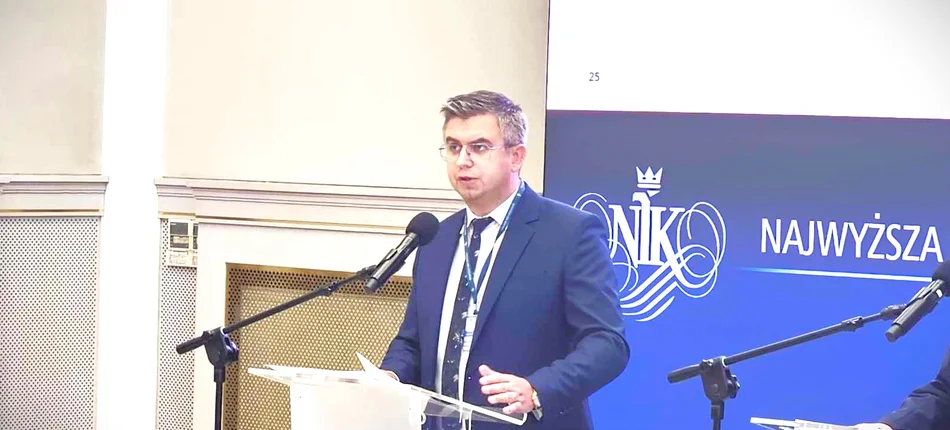
fot. Piotr Wójcik
The Supreme Audit Institution evaluated the National Immunization Program, whose strategic goal was to achieve a level of immunization of the population to bring the pandemic under control by the end of 2021, while maintaining the highest safety standards.
Referring to the audit conducted at the Health Ministry, the auditors found that the head of the ministry decided to proceed with seven contracts for the purchase of COVID-19 vaccines, which allowed the contracting of 201 million doses of vaccines with an estimated value of just under PLN 14 billion. The Supreme Audit Institution negatively assessed the contracting of a portion of the vaccines, with an estimated value of 8.4 billion zlotys.
- The rationale for such an assessment was that the Minister of Health, despite having contracted 109 million doses of COVID-19 vaccine at the end of April 2021, which had already enabled the entire Polish population to be vaccinated several times, concluded three more contracts from May to November 2021 for the purchase of an additional 92 million doses of COVID 19 vaccine, with an estimated value of the aforementioned PLN 8.4 billion. According to the NIK, the above actions should have been assessed as grossly wasteful. The decision to purchase the questioned vaccine doses was made by the Health Minister on his own, despite having information that the vaccination rate was being reduced, said Michal Jedrzejczyk, counselor to the NIK president, during the presentation of the report on the matter.
The Supreme Audit Institution also noted that, according to the Ministry of Health's explanations, entry into one of the three contested contracts was for political, rather than substantive, reasons. The COVID procurement team did not recommend the purchase of the vaccine from this manufacturer, pointing out, among other things, the technology of its development.
- Nevertheless, due to the information from the European Commission that Poland is the only country that would not opt to join the future contract with this manufacturer, the Minister of Health, due to the sensitive and internationally political dimension of this issue, accepted to join this order," indicated Michal Jedrzejczyk.
The contracting of excess vaccine doses, according to the NIK auditors, resulted, among other things, in the out-of-date and consequent disposal of more than 13 million doses of vaccines, with an estimated value of more than PLN 900 million. In addition, in order to reduce the effects of over-purchasing vaccines, attempts were made to dispose of or donate them, and by December last year the Government Strategic Reserve Agency had transferred more than 27 million doses of vaccines to other countries, with an estimated value of one 1.4 billion zlotys. In total, more than 40 million doses of vaccines with an estimated value of PLN 2.3 billion were disposed of, disposed of or donated, accounting for more than 20 percent of all contracted vaccine doses to Poland.
The General Pharmaceutical Inspectorate's supervision of the NPS was also audited. As the NIK found, 17 pharmaceutical wholesalers were involved in the distribution of the COVID-19 vaccine. Despite the fact that the National Vaccine Program placed the GIF, as the authority responsible for the country's pharmaceutical security, under a specific supervision obligation, according to the findings of the NIK, the Chief Pharmaceutical Inspectorate had no knowledge of which pharmaceutical wholesalers were distributing the COVID-19 vaccine and obtained this knowledge only from media reports.
- It seems that this is not how the body that is responsible for the country's pharmaceutical safety should exercise supervision. It is also worth noting that the failure of the Chief Pharmaceutical Inspector Ewa Krajewska to properly supervise the National Immunization Program was mainly related to the adoption of an erroneous interpretation, penned, incidentally, by the Minister of Health, according to which the distribution of the vaccine for COVID-19 is not turnover within the meaning of the pharmaceutical law. Consequently, the distribution of the vaccine is neither subject to serialization procedures, nor to pharmaceutical wholesalers' reporting of stock levels to the Integrated Monitoring System for the Circulation of Medicinal Products, as well as to regulations on verifying the authenticity of medicines, the adviser to the NIK president said.
As the report's authors assessed, in practice this meant that both the GIF and the Minister of Health deprived themselves of the possibility of having information about potential irregularities, related to the distribution of the vaccine, they did not have information about the stock of pharmaceutical wholesalers that distributed the vaccine, as well as information about the data on the batch number and expiration date of the vaccine, which, in the case of receiving a report of a suspected quality defect in the vaccines, triggered the possibility of risking the lives and health of patients.
- The General Pharmaceutical Inspectorate received eight reports of suspected vaccine quality defects for COVID-19, of which two reports were of extreme importance. In the first case, the report concerned the occurrence of a class one quality defect in a series of vaccines from one of the manufacturers. The quality defect could have posed risks to patient life and health. In the second case, the GIF received information from the European Medicines Agency about a suspected class two quality defect in a series of COVID-19 vaccines already in use in Polish patients at the time. Such a defect could result in illness or inadequate performance of the product, Michal Jedrzejczyk said.
According to the inspectors, the information was received in April 2021, and the GIF did not forward the information to RARS until a year after obtaining the information, requesting action to identify distribution channels and notify recipients of the situation. However, it turned out that in the meantime the entire batch, or 117,600 doses of the vaccine, had already been administered to patients.
The NIK's post-inspection report included an assessment indicating that Ewa Krajewska, the Chief Pharmaceutical Inspector, was unjustified in her position due to the GIF's blatant failure to supervise and monitor the circulation of vaccines.
The NIK also looked at the government's plenipotentiary for the NPS. This function was performed by the then head of the Prime Minister's Office, Michal Dworczyk.
- The activities of the Prime Minister's Office and the Government Plenipotentiary for Immunization Affairs consisted primarily of running a campaign to encourage Poles to vaccinate. Despite the fact that there were many more of these duties, more than 115 million zlotys were spent for this purpose, without defining yardsticks to assess the effects that were to be achieved by such an allocation of money," the counselor to the President of the NIK pointed out.
In the opinion of the NIK, the appointment of a government plenipotentiary for vaccination, whose tasks could have been carried out by previously functioning state bodies, such as the Ministry of Health, should have been considered unjustified.
The Chief Pharmaceutical Inspectorate responded today to the allegations made by the authors of the NIK report.
Below is the content of the statement:
GIF's position on the Supreme Audit Office's audit speech
"Implementation of the National Immunization Program against Covid-19".
The Chief Pharmaceutical Inspector, during the implementation of the National Immunization Program, with the primary concern for the welfare and safety of patients during the difficult and unprecedented time of the Covid-19 pandemic, exercised effective supervision over COVID-19 vaccines.
Patient safety is our overriding value, so any suspicions of irregularities in the areas under GIF supervision, including quality defects in vaccines, were given priority by us. The GIF implemented orders issued by the Ministry of Health, which is responsible for implementing the Program.
GIF actions during the Covid-19 pandemic.
The role of the Chief Pharmaceutical Inspector in the National Vaccine Program (NPSz) is defined on page 15 of this document: "Distribution and logistics will be subject to special supervision by the GIF and ARM to exclude the risk of theft or adulteration of vaccines. Vaccination will be carried out free of charge at designated vaccination centers - there will be no possibility of vaccination outside the official circulation and purchase of vaccines on the pharmacy market." Therefore, we monitored and analyzed reports of suspected quality defects and adulteration, as well as information about theft from Europol, and analyzed all reports of irregularities in the distribution of vaccines, and carried out control measures if necessary. To ensure effective supervision of the quality of COVID-19 vaccines, operating under special pandemic conditions and time pressure, the GIF used all available tools and proactively cooperated with national and international institutions (including the European Medicines Agency, the European Directorate for the Quality of Medicines, foreign competent authorities).
Specifics of safety surveillance of Covid-19 vaccines
Covid-19 vaccines distributed in the EU are centrally registered with the European Medicines Agency. This means that the EMA therefore assumes the role of coordinating and overseeing issues related to the safety of vaccines used by European patients. This task is also due to the fact that only the European Medicines Agency has all the documentation, in which the quality standards, methods and manufacturing conditions necessary for the evaluation of the drug's target quality parameters are recorded. The manufacture of all COVID-19 vaccines available in Poland was carried out outside of Poland, so the competent authority to inspect the manufacturing site is the authority representing the country on whose territory the drug factory is located.
The EMA, taking the lead in assessing the safety of vaccines, communicates with other member states through communications, meetings in working groups, information sent through a special system, the so-called Rapid Alert, which operates continuously, 24 hours, 7 days a week. We have received and complied with all EMA recommendations in this area.
Referring to the cases identified by the Supreme Audit Institution in its post-audit statement:
And the case:
In April 2021, GIF received information through the Rapid Alert system from the European Medicines Agency (EMA)
about concerns regarding insufficient control over the conditions of manufacture of the active substance of one of the vaccines. Let us make it clear that the information did not concern a suspected quality defect in the product; it is one thing to suspect possible non-compliance with Good Manufacturing Practice requirements and another to suspect a quality defect in a medicinal product.
It is also necessary to make a clear distinction between two issues: emails sent in the Rapid Alert system (information that drug agencies exchange) and the Rapid Alert document (sent in the same system), because they cause different kinds of consequences for competent authorities - drug agencies. Rapid Alert is a binding document, obliging drug agencies to take action according to the deadlines imposed by the EMA.
Importantly, the EMA did not recommend that agencies responsible for drug safety withhold the product from patients. Poland, like other member countries, followed the EMA's recommendations and did not stop the distribution of the series in question in the country. Let us emphasize - there were no grounds for questioning the safety of the medicinal product due to the risk of a quality defect. Taking into account the EMA's recommendations, the analogous attitude of European drug agencies, and the fact that vaccines were the only medical form of counteracting the spread of the SARS CoV2 virus at the time, the GIF had no grounds for deciding to suspend the distribution of this medicinal product.
A year later, in April 2022, as to the same vaccine series, the Belgian agency issued a Rapid Alert document to European drug agencies. The GIF asked RARS - the umbrella institution over the NPSZ with full and reliable knowledge of the distribution of all vaccines covered by the Program - to provide the necessary data. RARS provided information that the series is no longer in distribution in our country.
Let us emphasize that at no stage of the verification of the situation was the safety of this vaccine series questioned.
II case:
In April 2022, the Spanish drug agency issued a Rapid Alert that a foreign body had been found in a vial of the vaccine. The GIF applied to RARS indicating the need to take action to identify distribution channels
and notify recipients of the situation, and to stop vaccination with this product series. The vaccine series in question was not transferred for distribution by RARS after GIF's intervention. The vaccines were secured and properly labeled. Thus, none of the vaccines in the series were distributed to vaccination centers. The defective series was 100% secured and returned directly from RARS to the manufacturer.
At the same time, despite the fact that the European Medicines Agency is responsible for the marketing authorization and testing of COVID-19 vaccines, the GIF - going beyond the standard pattern of cooperation with the National Institute of Public Health - National Institute of Hygiene - made sure that each vaccine batch was subjected to pre-series inspection and that compliance with the quality requirements was confirmed by an appropriate ruling of an authorized inspection unit belonging to the Network of State Control Laboratories for Medicinal Products (the so-called OMCL). At the level of provincial pharmaceutical inspectorates and the Main Pharmaceutical Inspectorate, each report of a suspected quality defect in COVID-19 vaccines was recorded, reliably analyzed and acted upon. These activities were certified by evidence submitted during the inspection of the Supreme Audit Office and were not questioned by the inspectors.
Distribution of vaccines during a pandemic
GIF monitored the distribution of vaccines across the country using a system built by RARS for this purpose. Importantly, the data from this system is updated on an ongoing basis, unlike the data from the ZSMOPL system. In this context, the NIK's allegation of a lack of monitoring of vaccine distribution through the ZSMOPL system is a curiosity. The GIF used a tool that was faster and more efficient and thus adapted to the extraordinariness of the pandemic. It did not act in a template fashion and showed the utmost concern for ensuring patient safety.
The GIF, each time it became aware of potential irregularities at a wholesaler involved in the distribution of COVID-19 vaccines, took immediate action to secure compliance with Good Distribution Practice requirements. Ultimately, the GIF's actions confirmed that there was no risk to patients' health.
Under the Law, the GIF conducts inspections of pharmaceutical wholesaler entities either as part of periodic inspections or on an unannounced and ad hoc basis. Entities subject to GIF supervision - in this case, pharmaceutical wholesalers - are legally required to meet a number of requirements set forth in the Pharmaceutical Law, including meeting Good Distribution Practice, having appropriately qualified personnel, and having adequate infrastructure.
The strategic goal of the National Immunization Program was to vaccinate as large a patient population as possible within a specific time frame, while maintaining the highest safety standards. This was the only viable way to combat the spread of the SARS CoV2 virus. The wholesalers that participated in the Program were entities that had previously been authorized by the GIF to conduct business, and their comprehensive preparation to provide activities in accordance with DPD requirements was confirmed by a certificate.
Other EU member states also did not define special inspections at wholesalers distributing COVID-19 vaccines as the main tool for vaccine safety surveillance, deeming such action - extraordinarily in the conditions of a global pandemic - ineffective.
Thanks to the special supervision of vaccine distribution carried out by the cooperation of RARS and GIF, the rapid response to the changing regulatory environment, the responsible attitude of the entities involved in the distribution of vaccines, we have avoided as a country - under these extreme conditions - procedures of adulteration of vaccines and cases of administration of defective vaccines to patients. In summary, during the implementation of the NPSz, there was no situation where patients' lives were endangered as a result of the GIF's actions.