Staff shortages, direct coercion in violation of the law, abysmal premises conditions, and failure to protect examination records from unauthorized access - these are just some of the findings of the NIK audit of the availability and scope of psychiatric and psychological care for children and adolescents in the Wielkopolska province.
NIK: Inaccessible help for young patients in crisis

Published Sept. 5, 2023 10:04

In the first quarter of 2023. The NIK Delegation in Poznań completed an ad hoc inspection, during which it checked the availability and scope of psychiatric and psychological care for children and adolescents in the Wielkopolska Province. The audit was conducted at two psychological and pedagogical clinics, two schools - one primary and one secondary, four medical entities operating three centers for community psychological and psychotherapeutic assistance for children and adolescents, two mental health centers for children and adolescents, and two psychiatric wards of Poznań hospitals.
Key findings of the audit
- Direct coercion in violation of the law - one of the findings of the audit concerned the failure to comply with the rules applicable to the use of direct coercion, i.e. actions used against the will of people with mental disorders. Direct coercion was applied to patients almost exclusively in the form of immobilization. At the K. Jonscher Clinical Hospital, the cases examined included cases of immobilization lasting continuously for at least 100 hours. Among them, direct coercion lasted from 160 to 1,413 hours (63 days) in half of the cases. These patients spent between 70% and 99% of their hospitalization time in immobilization, and immobilization was used repeatedly. When applying direct coercion in the hospital, illegal measures were acted upon, i.e. these measures were extended for successive periods without the doctor's personal examination of the patient, and the patient was immobilized in the corridor of the ward without being covered by a screen, which restricted the patient's right to respect for his dignity and intimacy. In both hospitals inspected, direct coercion was extended by doctors who were not psychiatrists, so they had no formal authority to do so. In connection with the irregularities found, the NIK Delegation in Poznan forwarded a notice to the Regional Ombudsman for Professional Responsibility on the professional misconduct of doctors using direct coercion in violation of the regulations, as well as a notice to the prosecutor's office on suspicion of committing a crime by five doctors providing medical services. The notice to the public prosecutor's office relates to an act under Article 160 § 2 of the Criminal Code, which involves exposing a patient to direct danger of loss of life or serious harm to health by prolonging immobilization of a patient eleven times without personally examining him.
- the problem of unclaimed children - two of the hospitals audited had patients whose prolonged hospitalization was not due to medical indications, but to legal problems in determining where the patient was to go after discharge. Hospital staff had to make arrangements with social welfare centers and courts. In one of the hospitals audited, at least four patients were hospitalized after the indications for continued hospitalization had ceased. Because of this, one of the stays was extended by 3 months, meaning that the patient stayed in hospitals for a total of more than a year.
- Lack of experienced psychologists and psychotherapists in schools - the NIK audit found problems with the availability of these specialists in both schools covered by the audit (elementary and high school). At the high school, the NIK inspectors found high staff turnover among psychologists, for whom the scale and severity of the problems, especially when it came to students' suicidal behavior - were too much of an emotional burden. In contrast, the elementary school periodically lacked a school psychologist, forcing students to seek support outside the institution. A major problem at both schools was the low staffing level of therapists. Another worrying sign was the lack of effective cooperation between schools and psychological-educational counseling centers. Children and adolescents most often received psychological-educational assistance due to the recommendations of the counseling center in elementary school. Often the students themselves applied for help, which in the most difficult cases was in the form of crisis intervention (in the secondary school). Both schools had problems implementing the recommendations of the counseling center indicated in the rulings and opinions, because they did not know how to adapt the educational content to the student's abilities.
- long waiting time for psychological assistance - the number of specialists providing assistance to children, adolescents, their parents and teachers in the counseling centers was disproportionately small in relation to the number of schools operating in the area of operation of the audited psychological-pedagogical counseling centers and the number of students in these institutions. Correspondingly, there were seven and six psychologists, seven and three pedagogues and one speech therapist (including, in the case of one counseling center, a ½-time employee) for 65 and 69 educational institutions and 19,200 and 12,700 students attending them. Psychotherapists were not employed at all. The activities of the counseling centers mainly boiled down to issuing decisions and opinions on the basis of diagnoses carried out on young patients. In more than half of the surveyed cases, the entire procedure - from submitting an application for assistance to obtaining an opinion or ruling - took more than 61 days, and in extreme cases (about 5% of the surveyed cases) it exceeded 201 days.
- Architectural barriers and premises restrictions - the accessibility of psychological and pedagogical assistance provided at both audited schools was limited for people with mobility disabilities. In the case of one of the clinics (Psychological and Pedagogical Clinic No. 5 in Poznań), a child moving in a wheelchair had to be brought into the building by parents with the help of staff. It happened that psychological and pedagogical assistance was provided to children and adolescents with motor disabilities in the parking lot under the windows of the dispensary, as it was not possible to bring the patient into the building. In addition, the counseling center did not have an independent entrance. Soundproofing was also not provided, so that conversations held in the offices could be heard in the waiting room. In addition, there was no natural light or windows in the waiting room, making it impossible to ventilate the room. Also in violation of the law was the failure to secure sensitive data. In one case, student data was stored outside the dispensary in a room of the school dormitory, which was accessible to the public (it was closed only during the NIK inspection). As a result, the Chamber is preparing a notice to the President of the Office for Personal Data Protection regarding the violation of personal data protection.
- problems of the newly established centers for community psychological and pedagogical care - a major problem was the low employment of experienced specialists, especially certified psychotherapists. Of the 14 psychotherapists employed at the centers, only one was certified as a psychotherapist. In addition, for new patients, the availability of psychological and psychotherapeutic care was significantly limited. As many as 90% of the patients were in therapy. In addition, centers for community psychological and pedagogical care reported problems with settling contracts with the Regional Branch of the National Health Fund. The centers pointed to constant changes and uncertainty about the methods of financing and settling the contracted services. The funds they received allowed them to finance the basic costs of financing the services, while they were not enough to purchase an adequate number of psychological tests, consumables or to finance higher operating costs.
- Negligible availability of treatment providers - The NFZ branch has been taking steps to introduce a new model of psychiatric care in Greater Poland, i.e. to implement the three reference levels[1] specified in the regulation on guaranteed services. However, in part of the competitions - in the opinion of the NFZ due to staff shortages - no entity came forward. As a result of the competitions held in 2020-2022 and the transformation of existing contracts, 16 centers providing services at the first reference level and 12 mental health centers for children and adolescents were opened in Wielkopolska. Among them, three day wards were in operation. Most of the reference level I and II centers were located in the same cities. The centers were 30 to as far as 100 kilometers apart, which severely limited the availability of treatment. Further complicating matters was the fact that there was no hostel operating at any of the three day units. The availability of treatment according to the model of the three reference levels was therefore negligible in Wielkopolska.Consequently, young patients also used adult mental health clinics. Between 2020 and 2022, the number of minors receiving health services in such facilities doubled, i.e. from about 15,500 people in 2020 to more than 31,200 people in 2022 (by November 30).
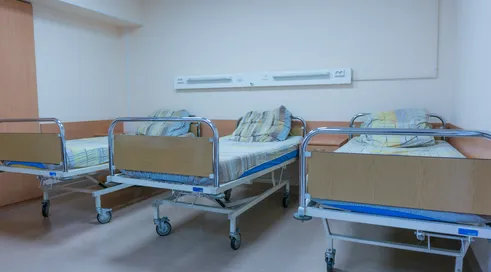
- Limited availability and high demand for treatment at the Clinical Hospital - in 2020-2022 at the K. Jonscher Clinical Hospital, 95% of patients (1,603) were admitted on an emergency basis, i.e. without waiting in line. The waiting time for the start of scheduled services was up to 262 days. The demand for psychiatric care for young patients exceeded the capacity of the child and adolescent units. As a result, 11% of underage patients were hospitalized in adult wards, and in children's wards, beds with patients were also placed in corridors. Only in 2020, i.e., at the beginning of the COVID-19 epidemic, when admissions to wards were stopped at the Hospital, bed utilization did not exceed 100%. The widespread placement of beds (extra beds) in the corridors was not only illegal, but also did not ensure that patients' intimacy and dignity were respected. There were days when almost ¼ of the beds (11) were located in the corridors of both of the hospital's functioning child and adolescent psychiatric wards. Due to lack of places, patients were often sent to other facilities. In addition, the NIK inspectors found that the psychiatric wards were overcrowded, with insufficient space for therapies and discussions with patients. Five doctors had their employment contracts terminated due to inadequate working conditions. Continuity of psychiatric care for children and adolescents was ensured by salary increases for staff and a promise to change the organization of psychiatric care provision at the hospital.
- Closure of the psychiatric ward for children and adolescents in Gniezno - the actions of the Marshal of the Wielkopolska Region to maintain the ward proved ineffective and in August 2022, despite the high demand for psychiatric care for children and adolescents, the last such ward in the Aleksander Piotrowski Provincial Hospital for the Nervously and Mentally Ill "Dziekanka" in Gniezno was closed. The reason was problems with the employment of psychiatrists. The establishment of a ward or mental health clinic for children and adolescents was also not planned in the newly built local government pediatric hospital in Poznań.
- Problematic organization of the new psychiatric ward - the solution to the low availability of psychiatric care in Wielkopolska was supposed to be the creation of a psychiatric ward for children and adolescents at the HCP Medical Center Ltd. However, this entity had no experience in psychiatric care for children and was struggling with serious staffing problems. Due to a shortage of physicians at HCP Hospital, the facility did not have an outpatient clinic for children from the beginning of the contract concluded with the Wielkopolska Regional Branch of the National Health Fund, i.e. from July to December 2022. The hospital did not inform the NFZ of this situation. Admittedly, the hospital did not receive funds for its services as a result, which does not change the fact that patients could not use the clinic's services during this period. It was only in the course of the NFZ inspection that the WOW NFZ asked the hospital to explain the situation and called for the immediate implementation of the contract. Such a situation lasted for almost six months, which, given the small number of psychiatric outpatient clinics, significantly reduced the availability of these services for young people. Since the HCP Hospital did not have an emergency room for children and adolescents, patients were forced to use the emergency room of another Poznań hospital. It was there that the patients were qualified for hospitalization, set up an initial treatment plan and pharmacotherapy, and then transported to HCP Hospital. This situation also applied to patients who had a referral to the hospital. The necessity for young patients to move between hospitals had a bad effect on their psychological state, if only because it unnecessarily prolonged the - already stressful for the child - process of admission to the hospital.
Staff shortages among doctors employed at the Child and Adolescent Psychiatry Unit were the cause of other irregularities: it happened that the unit's doctors did not order medication for patients, and there was limited access for parents and guardians to information about their children's health. The Patient Ombudsman received complaints from parents about the inability to contact any doctor at the child psychiatric ward to obtain information about their child's condition. What's more, the Patient Ombudsman himself, in explaining the complaint, had trouble locating doctors at the Unit.
Conclusions of the NIK
- to schools and psychological-educational counseling centers about:
- reliable recording of data on students with judgments and opinions in the school's information systems;
- Covering students with special education evaluations with all forms of assistance recommended by the counseling center at school;
- Timely issuance by psychological and pedagogical counseling centers of judgments and opinions;
- Ensuring the availability of psychological and pedagogical assistance for people with physical disabilities;
- Ensure the necessary protection of personal data, located in the documents produced in the course of the substantive activities of the dispensary.
- to community psychological and psychotherapeutic care centers for children and adolescents o:
- Ensuring the provision of services in a building adapted to the needs of people with mobility disabilities.
- to child and adolescent mental health centers and psychiatric wards in centers, among others, o:
- employing physicians with the required specialties and in the required size, and providing the ability to account for staffing levels;
- Conducting supervisions for day ward staff in the required number and frequency.
- To the psychiatric wards, among others, about:
- conducting a personal examination of the patient by a psychiatrist before extending direct coercion on the patient for the third and subsequent time;
- Maintaining the interval required by the regulations between successive examinations of a person subjected to direct coercion in the form of immobilization, as well as the reliable maintenance of direct coercion charts;
- Provide patients with hospitalization conditions in which their rights to intimacy and dignity are respected;
- Developing individual rehabilitation plans for each patient;
- Ensuring that patients have access to organized activities to improve their social adaptation on their days off;
- Ensuring reliable accounting of working time by hospital employees;
- functioning of the emergency room for children and adolescents to the required extent and allowing patients to make appointments for hospitalization based on referrals directly at the treatment entity, bypassing other entities;
- employing physicians with the required specialties and in the required size, and providing the ability to account for staffing levels.
Source: NIK