Prevention 40+ will become an obligatory program, implemented as part of occupational medicine, and the sugar fee will be followed by other pro-health solutions, the revenues from which will contribute to the health care budget? This is the result of the statement by the Minister of Health, Adam Niedzielski, who participated in the European Economic Congress in Katowice on Monday.
Occupational medicine: Prevention 40+ obligatory program?

Published April 26, 2022 08:22
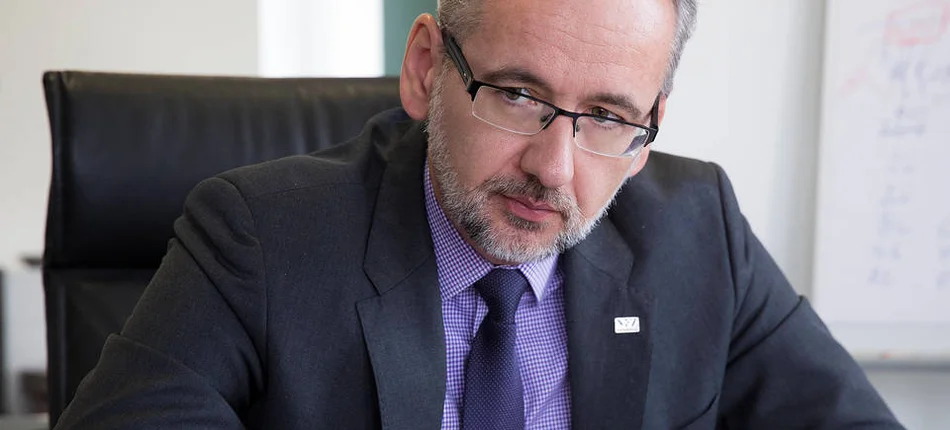
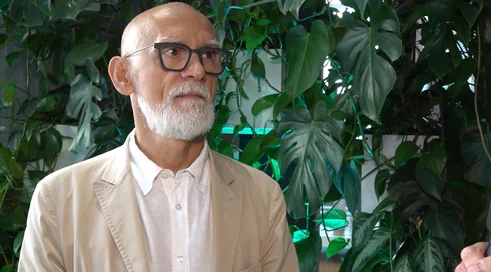
Fot. Wojciech Górski
The Minister of Health assessed that in recent years - including those before the pandemic - Poland has made a big step towards building a shock-resistant health care system. As proof, he primarily indicated decisions increasing the financing of health protection (before the pandemic - up to 6% of GDP, recently - up to 7%, which are to be achieved in 2024).
- All additional tasks that burden the system are not financed from the health insurance contribution, but from budget funds or special funds that are set aside for these purposes - said the head of the Ministry of Health. - They will finance these additional tasks, which is so important that it does not deplete the resources that should be allocated to treatment. This minimizes the effect of limited availability for other patients - said Niedzielski.
The minister explained that another important element for stability is the issue of diversifying the financing system. - The vast majority of the system is based on a contribution that is charged on our income, but in recent years we have taken a very interesting step, namely the introduction of the sugar levy. The effect is great. Not because they contribute to the health budget to a large extent, but because the consumption of these high-sugar drinks was reduced very quickly. We had drops of 30 percent. year on year when it comes to their consumption - said the minister, recognizing that this is "opening a path on which further pro-health fees may appear, which on the one hand are to fund the health budget, and on the other hand are to shape the right consumption patterns" .
The topic of medical staff was also appreciated - apart from increasing the number of places for studies, the attractiveness of practicing the medical profession has increased due to the guarantee of minimum wages, which will increase again, clearly, from July. The government also attracts medics from outside the EU to the country - Adam Niedzielski emphasized that Poland is following the example of countries that "have been draining our staff for years" and opens the possibility of practicing a profession to, for example, Ukrainians or Belarusians. The new regulations meant that 1.5 thousand people started working in the system within a dozen or so months. doctors.
The main challenges for the system were recognized by the minister as the necessity to pay off the health debt that had accumulated during the pandemic. - This is not a debt that we will make up for in a simple way by speeding up, say, the service of the queue to specialists, which is also a challenge, but it also applies to the preconfiguration of the health care system in such a way that it provides the patient with as much value as possible. Therefore, when we think about the upcoming change plans, we are actually talking about a certain package of changes that will introduce new system solutions - said Niedzielski.
This package is primarily a quality act, which is to fundamentally change the health care financing system by moving away from paying for the very performance of the service. - There is no management if there is no measurement. Therefore, there must be registers, therefore a measurement culture in units must be introduced, therefore there must be a no fault system that should encourage the reporting of adverse events that must also be measured and which also reflect the quality of services provided, and this is the first step that changes the philosophy he said.
These are also organizational changes - such as the National Oncology Network and the National Cardiology Network (the minister announced the extension of the pilot project to five provinces), but it is also a fundamental change in the approach to prevention. - For example, the 40+ prophylaxis program, which unfortunately was not as popular as we would expect. That's why we decided to reformat it. We are currently conducting research to change the formula, but we conclude that voluntariness is not a good solution. It will be necessary to build mechanisms that will make prophylaxis a kind of compulsion and that is why we want to associate it with the issue of occupational medicine - he announced.
The minister also spoke about the "constitution of hospitality", that is the act on the restructuring and modernization of hospitals. - We received 2,600 comments on the draft, which is probably a record number for any legal act consulted by the ministry - he said, announcing that the work on the act would not be carried out in a pandemic mode, i.e. it would not be passed hastily.