- It fills us with great pride that we are on the European podium in the care of patients with spinal muscular atrophy," said Prof. Maria Mazurkiewicz-Bełdzińska of the Medical University of Gdansk during a panel on rare diseases during Priorities and challenges in Polish and European drug policy 2024. However, this does not mean that there are no challenges in this matter. One of them is the expansion of indications for therapies, especially gene therapy, in the context of patients with four copies of the SMN2 gene.
We can be proud of the SMA treatment model. However, there are unmet needs

Published June 13, 2024 11:51
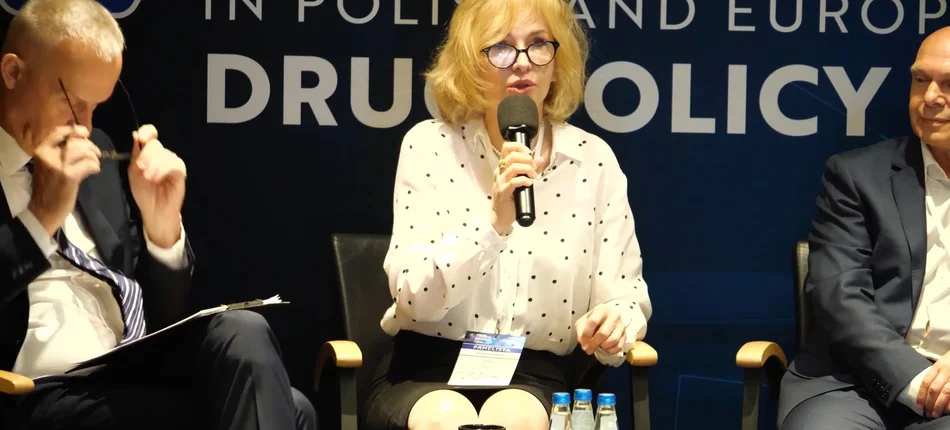
- Diagnosis and therapy are two key elements in the care of patients with rare diseases. Scientific advances are making it possible to diagnose patients very effectively and to look for points of entry for specific therapy. This has worked wonderfully in the case of gene therapy for children with SMA," said Deputy Health Minister Ursula Demkow.
The starting point for gene therapy is newborn screening. At the end of March 2022, all Polish newborns are covered. The introduction of screening has made it possible to diagnose the disease in the majority of patients in the first weeks of life and implement therapy at the asymptomatic stage.
- After a very long period of waiting for medicines and coordinated care, for newborn screening, everything, except perhaps coordinated care, has been achieved. There is neonatal screening, we have three therapies reimbursed, and we hope to expand reimbursement for these therapies. We also have access to clinical trials of brand new molecules to improve the functioning of SMA patients," Prof. Maria Mazurkiewicz-Bełdzinska mentioned.
Gene therapy can be administered in Poland to patients diagnosed in the screening program who are under 6 months of age and weigh less than 13.5 kg. This applies to patients who have two or three copies of the SMN2 gene and do not have antibodies to the AAV9 virus. Screening catches between 95-97 percent of SMA children who have the most common change in the SMN1 gene- a deletion of exon 7. It is its detection that researchers focus on in screening. In the remaining 3-5 percent, a deletion and a point mutation may be present.
- We must not lose vigilance and must think about patients with point mutations. An unmet need is patients with four copies of the gene, for whom one therapy is for now. Discussions are underway, and it would be good if this expansion of indications were for the other two therapies, including gene therapy," indicated Prof. Maria Mazurkiewicz-Beldzinska.
Meanwhile, the SMArtCARE1 study, which is a prospective, multicenter, non-randomized registration and outcome study, part of which is to collect longitudinal data on all available SMA patients, regardless of their actual treatment regimen, found that in a large cohort of 268 symptomatic patients with four copies of SMN2, the median age of onset was only 3 years. More than half of the patients developed their first symptoms before the age of 3, and by the age of 18, about 95 percent of patients were already affected. It can therefore be concluded that in most patients with four copies of the SMN2 gene, the amount of SMN protein is insufficient to prevent motor neuron damage in the long term. Hence, the right path may be to start therapy early, as early as in infancy. If the diagnosis is made at the presymptomatic stage, motor neuron death can be prevented.
Topics
SMA