Work has begun on two "quality" projects. On Tuesday morning, the Sejm held the first reading of a draft amendment to the Law on Patients' Rights and Patients' Ombudsman, introducing a system of compensation for medical events, in the evening the Health Committee completed the first reading of a bill on quality. On Wednesday, the Sejm will take it up in plenary session.
The parliament will adopt a quality package this week?

Published June 14, 2023 09:15

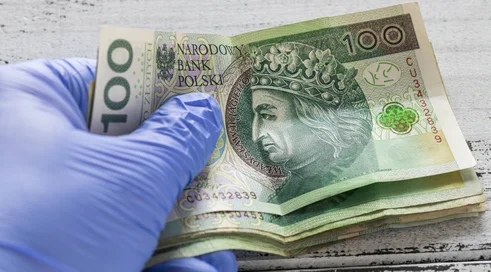
Fot. iStock/Getty Images
The two parliamentary bills on which the Sejm has just begun work replace the government's bill on quality in health care and patient safety, which was finally rejected by the Sejm in April. The Health Minister opted for the parliamentary path to speed up the procedure and bypass consultations - and all indications are that the "parliamentary machine" has started. Will it jam again?
- The main protagonist of this law is the patient as the most important link in the health care system," said the representative of the applicants Czeslaw Hoc. - It will make it possible to measure the effects of treatment and, above all, to supervise quality and eliminate adverse events to avoid them in the future, he added. - I am glad that the project is once again on the health committee, in the Sejm," echoed Deputy Health Minister Waldemar Kraska, presenting the government's position on the project. - I don't think there is a person in the room who doesn't want quality to be the overriding goal of service delivery. This project does not have the controversial provisions that have stirred up a lot of emotion. I hope it will be quickly reprocessed by the committee and implemented, as it is expected by patient organizations and has full approval from the government," he added.
- Upper-case words have been spoken, which are supposed to take care of everything. We believe that the law on quality in this form is unacceptable," assessed Elzbieta Gelert, making the change of the club's position conditional on the adoption of amendments (all of which were rejected). - When this law was originally being processed and there were elements related to criminal liability and other solutions - better than what is in the current legal order - we heard that without them this law would be perfect, wonderful, desirable and expected. These elements are absent, and it is still bad," commented committee chairman Tomasz Latos. Why it's bad was explained by dissenter Wojciech Maksymowicz, stressing that in an astonishing way, despite more than thirty years of regime transformation and a quarter-century of changes in health care, the solutions proposed in the draft are rooted in a regime long gone, in the People's Republic of Poland.
After Tuesday's work, it can be expected that at least the bill introducing the Medical Events Compensation Fund should pass through the Parliament without a problem - even if the opposition's amendments already signaled during the first reading are rejected, MPs are unlikely to vote against its passage, at least in part. On the other hand, it is unclear how the fate of the Quality Law, which - among other things - introduces authorization of medical entities and bonuses for those that meet quality criteria, will turn out. The discussion at the meeting of the Health Committee was very sharp, there were fundamental accusations against the bill, questions about the fate of hospitals, which, struggling at the moment with a huge debt of already more than PLN 19 billion, will not be able to cope with the new obligations. The opposition's motions to reject the bill in the first reading were defeated, and similar fate was shared by its amendments - it can be expected (without prejudging the outcome) that there will be no opposition consensus on this law to pass. The question of whether Law and Justice will mobilize a sufficient majority for passage remains open. The Sejm's work schedule shows a plan to pass both laws this week.
The position of the Senate also remains open, because aside from the removal of provisions on the criminal liability of medical personnel for adverse events, the drafts have not been "fixed" in any way, given the charges of unconstitutionality leveled against the government bill in the spring. Even the withdrawal of plans to abolish the CMJ - because this unit is to remain only formally, the vast majority of its tasks will be taken over by the National Health Fund anyway.