We discuss the role of cancer prevention, the reasons why women do not come in for cytology and mammography, but also the development plans of the National Institute of Oncology with the director of the NIO, Prof. Beata Jagielska.
Prof. Beata Jagielska: Prevention doesn't hurt. It allows us to react quickly

Published Feb. 9, 2024 08:30
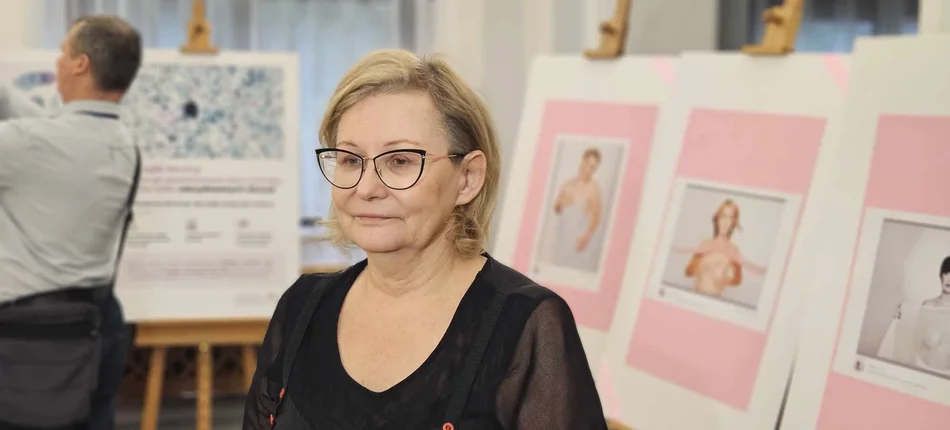
fot. Piotr Wójcik
We have access to mammography, we have access to cytology, we have further reimbursement decisions that make the most modern therapies reimbursable. At the same time, too many people are still dying of cancer. What's not working?
I think many factors. Probably the most dangerous one is the emotional one. We realize that preventive screening is needed, but fear prevents us from doing it. So the right message should go to the little ones, to young adults, as well as to the adults themselves. They need to be told that a preventive examination does not hurt, does not bring a verdict, but instead gives the opportunity to act early. A few days ago there was a White Saturday at the National Cancer Institute. Only 270 people showed up. Someone may say that it was as many as 270 people, but unfortunately in our perception it is still only 270 people. We need to invite people to examinations, we need to inform people about the role of prevention. About the fact that it is a prescription for health, a very important one, one that is not written by a doctor, but by the patient himself.
There is still a lingering belief that cancer is a sentence. It turns out that if detected early, it can be treated effectively.
Detecting cancer at an early stage is a good chance for radical treatment, that is, treatment that removes the disease. Detection of cancer at an advanced stage is, unfortunately, already remedial oncology, because the disease has already taken over the body. It cannot be indicated that patients then have no chance. Thanks to modern therapies, we are extending survival time, reaching a stage where the disease becomes chronic. However, we don't want to talk about this stage, but detect the disease at an early stage and treat it radically, so that the patient returns to full strength, to vital, social or family functions. That's why prevention is so important.
Cancer diseases are no longer spoken of as fatal diseases, but more as chronic diseases. They are also increasingly spoken of as rare diseases. The role of molecular diagnostics is therefore important.
Definitely, because we are starting to treat not the disease as a localization, but the disease in terms of the molecular abnormality. But let's remember that this is still the latter stage, that is, we are treating advanced disease, and we want to go back and treat radically. I will say more, we want to detect pre-cancerous conditions, the removal of which and taking action will result in the abnormal cell not transforming into a cancer cell.
You recently took over as director of the National Cancer Institute. This is the most important cancer center in Poland. What goals do you set for it and for yourself in this role?
The National Cancer Institute is an unusual place because it combines two areas: scientific research and clinical research. As director, I am very pleased to see the development of translational research, the kind that combines knowledge from basic science with clinical experience. This is a direction that certainly needs to be developed. Collaboration with our scientists is very important, because we can translate research experience from various projects into clinical activities.
The institute is a place that receives many patients. Our data from recent weeks show that last year we admitted about 500 thousand patients. Breast cancer patients accounted for about 100 thousand. This is a huge number of patients. Our role is to work in such a way that cooperation between centers will result in the possibility of treatment in a center with a so-called lower reference level, but this does not mean of lesser quality, with the cooperation of the NIO. As a result, the treatment will happen faster, the patient will not have to wait in queues of many weeks, which are caused by how many people come to the NIO.
The institute is also a unit that should continue to develop. The location structure was created in the 1970s. We have an important challenge ahead of us, which is to improve working conditions for our doctors, but most importantly, the conditions for providing services to our patients. The institute has been in operation for more than 90 years. We have many meritorious employees, with great knowledge and experience, top-class specialists. I think it's a very good time to get young cadres, young scientists, young doctors, young lady nurses, and the Institute's support staff. We want to be able to give them our experience, our skills, and show them such an attractive career path that they will want to tie their professional fate to us.