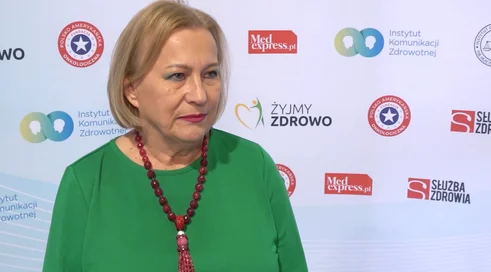
- Piloting comprehensive care for patients with early arthritis will help ensure coordinated care, secure the consultation of necessary specialists and facilitate safe management in the system, Prof. Brygida Kwiatkowska, national consultant in rheumatology, head of the Early Arthritis Clinic, deputy director for clinical affairs at the National Institute of Geriatrics, Rheumatology and Rehabilitation in Warsaw, said in an interview with Medexpress.
Prof. Brigid Kwiatkowska: as many rheumatological diseases as possible should be covered by coordinated care

Published March 31, 2023 09:00

Please identify the main challenges of proper care for patients with inflammatory arthritis in Poland. What good things have happened recently in this therapeutic area?
There are two truths that we must face. These are, first, the growing number of patients who are beginning to suffer from inflammatory rheumatic diseases. Second, it is necessary to take care of patients at the earliest possible stages of the disease. This guarantees the greatest effectiveness. Of the good things, it is necessary to mention the appearance of the pilot, which I have been fighting for ten years. It is about comprehensive care for patients with early arthritis. This will allow us to provide them with coordinated care, secure the consultation of necessary specialists and facilitate the safe management of the patient in the system. This will be guaranteed for each patient.
You are overseeing this pilot. At what stage is its implementation? What are the assumptions and goals of the project? Which patients can benefit from it?
We are at the stage of completing public consultations. After them, the program will be launched in 15 centers in the country, located in 11 provinces. Any patient who begins to face swelling of at least a single joint will be able to take advantage of it. Further stages of care will include patients who suffer from rheumatoid arthritis and the entire group of spondyloarthropathies, i.e. the most common inflammatory rheumatic diseases that can be diagnosed and managed in an outpatient setting.
Systemic lupus erythematosus is a serious autoimmune disease that causes a chronic inflammatory process in many tissues and organs. What factors contribute to the development of lupus?
In systemic lupus erythematosus, as in other inflammatory rheumatic diseases, we have genetic factors (40 percent) and environmental factors. The disease can manifest itself in multiple organs. In 30 percent of patients, it begins with joint swelling. The problem with this disease is the long diagnostic delays. Patients often arrive already with organ symptoms that are irreversible. Any organ can be involved, and the disease mainly affects young women. It is extremely important to get the right treatment and take it at the early stages of the disease.
Young people, mostly women, suffer from lupus. What are the consequences of this disease especially in women? Is there a chance to improve patients' quality of life? Do patients in Poland have access to modern biological treatment?
It must be brutally said to ourselves that systemic lupus erythematosus is a fatal disease.To date, we have not been able to prolong the lives of patients. This is mainly due to the fact that we are doomed to long-term use of glucocorticosteroid therapy, as we have not had an effective treatment so far. At the moment, there is an opportunity to use drugs that can reduce or completely allow the withdrawal of glucocorticosteroids, and this will definitely improve the quality of life of patients.
What direction should the further development of coordinated care in the field of rheumatology take?
First of all, other diseases should be covered. We are conducting a pilot on the most common inflammatory diseases. This is the largest population group. We also have a number of other diseases and patients that need to be taken care of. This care should be partially implemented in the hospital setting, because these are very complicated diseases.
Thank you for the interview.