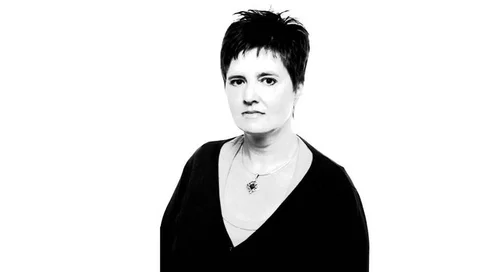
An interview with Prof. Marcin Czechem, president of the Polish Pharmacoeconomic Society.
Prof. Marcin Czech: Most vaccinations should be repeated every so often

Published April 28, 2023 13:38
Fot. MedExpress TV
European vaccination week is underway. It is an initiative of the World Health Organization. One of the topics is the idea of life course immunization. What is behind this concept?
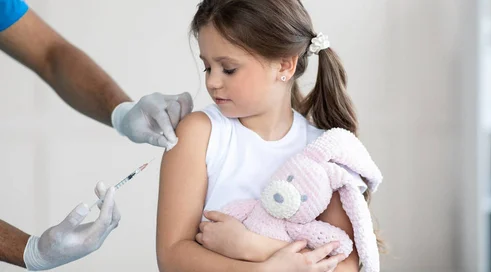
This is the concept that vaccinations should be given throughout life. In other words, vaccinations should accompany people throughout their lives. The idea is to prevent infectious diseases, and it is through vaccination that this is possible. Both across Europe and in Poland, therefore, it is encouraged that there is harmonization of national practices and procedures in terms of how to protect the largest possible population of people from infection with as many diseases as possible.
Why is it so important to remember to vaccinate not only during childhood, but throughout life?
Not all vaccinations will not work for life. There are some vaccines that will protect us for life. It is believed that the hepatitis B vaccination, if you take the entire regimen, should work that way. However, the protective effect of most vaccinations expires. We vaccinate children because they are the most vulnerable population and one that we take special care of. If we look at the immunization calendar, we can see that most vaccinations should be repeated from time to time. We should remind our immune system that it needs to be in readiness to respond. I, for my part, will remind you that at the moment we have the opportunity to vaccinate adults against COVID 19. I encourage everyone to take another dose of vaccination. This is a virus that mutates, changes a lot, and subsequent vaccines will chase the genotype of the virus, as it were. We have the seasonal influenza vaccination, which is free for the 75 plus population and 50 percent reimbursed for the 65 plus population, and even full-price is not expensive, so it's worth reaching for. There are also many other vaccinations that could potentially serve people of all ages, including the elderly, such as against herpes zoster.
Health benefits are, of course, the primary pillar, but it is impossible not to also mention the economic dimension....
Vaccination is indeed an important part of the health care system in economic terms as well. If we look at the number of people who have contracted influenza and had flu-related complications, if only during this season, which has been particularly troublesome, we can see that if we had been able to prevent it, we would have saved a lot of money. U.S. data shows that up to 80 percent of the costs associated with vaccine-preventable diseases can be avoided. In the European Union, meanwhile, it is said that every euro invested in vaccinating adults over the age of 50 yields four times the amount of future economic income over the rest of their lives, i.e. the return on investment is as much as four times. These are, of course, model calculations, so one must have some distance from them. Nevertheless, it seems that both in terms of direct medical costs and indirect costs, the vaccination campaign in adults is as profitable as possible. I would also add that in Poland we spend very little on immunization. About 2-3 euros per person.