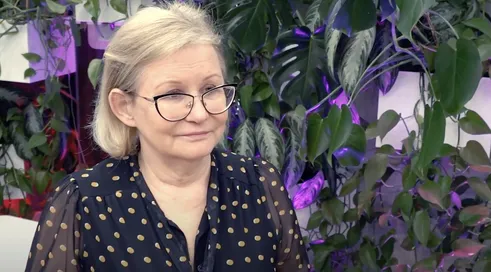
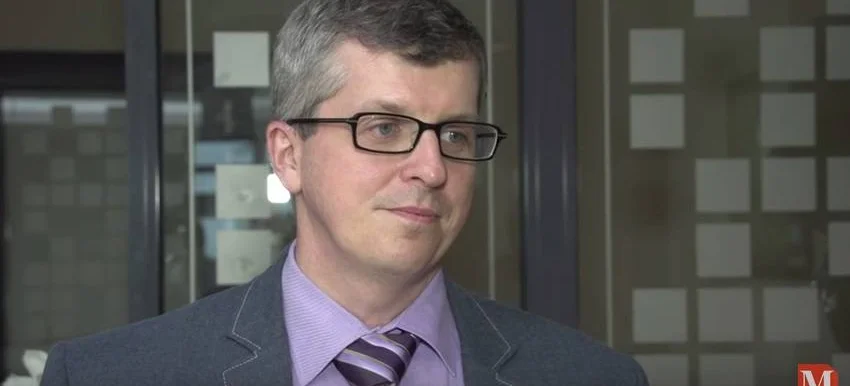
Professor Piotr Rutkowski of the National Cancer Institute, chairman of the Health Minister's Team for the National Oncology Strategy, and president of the Polish Oncology Society, talks about the most important tasks for oncology.
Prof. Piotr Rutowski: Tasks for Polish oncology in 2025

Published Jan. 24, 2025 09:16
Fot. MedExpress TV
The most important task for Polish oncology in 2025, according to Prof. Rutkowski, will be the implementation of the National Oncology Network. Success depends on several critical points, which are still in question. The first is the launch of the electronic DILO card, which every doctor will have access to. The amendment to the KSO law, which is needed to implement e-DiLO, is being delayed and provisions for the card are to be attached to some other legal bill. However, the Health Ministry has not yet made final decisions on the legislative path. It is likely that once the e-DiLO card is implemented, there will be a one-year transition period during which two forms of the card will operate simultaneously. The electronic card is to be set up primarily for new patients.
What is still lacking is a teleinformatics system for exchanging information between cancer treatment centers. Among other things, it is necessary for organizing e-consultations, teleconsultations and monitoring the patient pathway. The IT system created by MInisterstwo Cyfryzacji has not been transferred to the health ministry or reviewed at the centers.
The accreditation process for pathomorphology laboratories, which covered about 60 percent of SOLO 3 centers, has stopped. In addition, the accreditations granted so far will expire at the end of 2025.
The Health Ministry still has not published the indicators and metrics by which monitoring centers will collect data on the treatment of cancer patients. The NIO forwarded proposals for some 65 indicators almost two years ago, but so far the Health Ministry has not made a decision on the matter. There is also currently no system for collecting and monitoring data. In the future, data management will be the responsibility of the e-Health Center.
The NSO has not yet established a system for collecting data on healthy people who have undergone preventive screening. It is necessary, according to Prof. Rutkowski, to establish a national screening registry. Currently, there is a lack of coordination and quality control of the tests performed. Enrollment in preventive examinations is poor, among other reasons, because there is no system of direct invitations - we do not use IKP accounts for this, although they could be very useful. There is a lack of intersectoral coordination in this area, even though funding is provided. High hopes are being pinned on the launch of a national oncology portal, scheduled for February 4, 2025, which could also serve to strengthen the "I Plan for a Long Life" campaign that the Health Ministry has been running for the past six years.
According to Prof. Rutkowski, public awareness of cancer, including risk factors, the importance of preventive testing and lifestyle, has "somewhat" improved. High hopes for further improvement can also be pinned on the development of coordinated care and consistent funding of modern diagnostic, drug and treatment technologies.
Source: Journalist Health Promotion Club