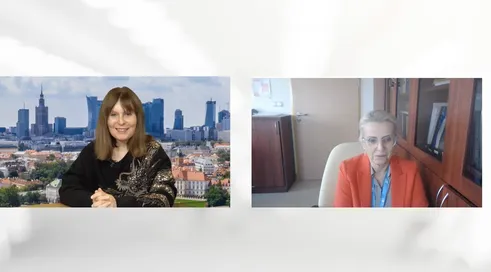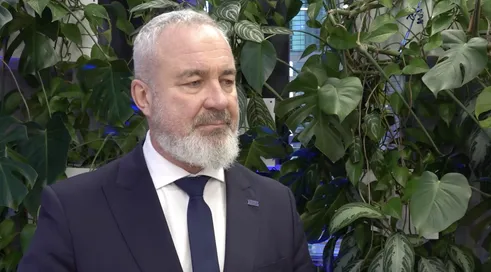
Interview with Prof. Zbigniew Żuber, head of the Department of Pediatrics at the Andrzej Frycz Modrzewski Krakow Academy, chairman of the Expert Council on Rare Diseases of the Medical Council of State.
Prof. Zbigniew Żuber: Newborn screening allows early detection of rare diseases and stops their progression

Published June 26, 2023 11:30
How do you assess access to modern diagnostics, therapies and medical devices that allow patients to maintain the highest possible quality of life, but also to be socially active?
I must say that we have seen tremendous progress in the availability of new therapies, but also of new technical materials. These are, for example, freeze-dried catheters for children with urinary disorders. It would be worthwhile now to think about extending their availability to people over the age of 18. For someone who has had the opportunity to use high-quality technical tools, going back to bad solutions is very painful, not only figuratively, but also literally. On the other hand, we are pleased with the improved availability of new therapies. This is a huge advance. In many disease entities, new therapies are increasing every year, and I can say with all responsibility that we are moving in the right direction. Like the rest of Europe and the civilized world, we are increasing their availability. However, the problem with us is good diagnostics, and thanks to it, the detection rate of rare and ultra rare diseases can be higher. There is a need for training of doctors, but also a need for normal daily work with access to modern diagnostic management algorithms, perhaps also artificial intelligence solutions. There is also the problem of good use of those therapies we have. It's about patients' accessibility to reference centers that can offer them better care and use of the latest therapies. Such an example is Wilson's disease, where although better therapies are available, they are not fully utilized. Going back to diagnostics, there is a need to expand the newborn screening program. This is a fantastic idea, of which SMA diagnosis and treatment is a great example. The screening plan, which was spread out over years, has been accelerated and we have excellent results from it.
How important would newborn screening be in optimizing treatment for rare diseases?
At present, newborn screening is a very important part of diagnosis. Please keep in mind that we cannot cure many genetic diseases. However, we can halt the progression of the course of the disease. So the earlier we detect the disease, the better. Newborn screening makes it possible to do this at a very early stage. We see excellent results in phenylketonuria, cystic fibrosis or the aforementioned spinal muscular atrophy.
After all, we already have the ability to treat certain cardiac, central nervous system or kidney defects in the fetal period. Gigantic medical advances are happening before our eyes.
How does screening affect the continued life of patients with Pompe disease?
Exactly the same, because the earlier we detect the disease in a patient, the better. Of course, like any disease entity, Pompe disease can have different forms. We have a very early neonatal form, with a very severe course. We also have milder, juvenile forms or a late form. However, the progression of the disease is always dangerous for the patient. If we are going to have a person with the disease even with a mild course, it is important to make them aware of the risks and what care should look like. It is important to have access to a referral center, because with the care it can offer, one manages to avoid both muscular and cardiac or pulmonary problems that progress and destroy the patient's life. Early detection of the disease avoids such problems, but also the costs resulting from hospitalization and misdiagnosis. The diagnostic odyssey often lasts from several to as long as a dozen years.
As a demonstration of empathy towards children with spina bifida, both the experts of the Medical Rationale of State, but also you personally, supported efforts to gain access to coated hydrophilic catheters. This has been successful, but when there is a transition to treatment in adult centers, the problem returns. What should we do for these patients?
The Medical Rationale of State has done a good job, because thanks to it the problem has been taken seriously and children already have access to hydrophilic catheters. It's just that the disease doesn't end at the age of 18, and as in many other areas, there is the problem of transit. It seems to me that with only a small number of patients really, extending access to hydrophilic catheters, which allow catheterization painlessly and without causing secondary infections, is just a simple solution. To deprive them of such an opportunity would be downright inhumane. The entire Medical Rationale of State will stand with a wall behind this solution, because I can't imagine it could be otherwise. There cannot be half-hearted successes, or successes up to the age of 18. Sometimes we hear that we take too much care of our patients. No, we care for them well and with satisfaction, both for them and for us.
In Wilson's disease, as you mentioned earlier, we have a drug program, but many more people could be included in it than actually are now. How do you assess this program?
It's fantastic that this program is there, and the matter should be made clear. If old treatments are less effective, less beneficial to patients and fraught with many side effects, then we should use new therapies. Drugs that have been discontinued in many areas cannot lead the way in treating metabolic disorders in patients with Wilson's disease. These are both hepatic and neurological problems, and they need proper treatment: good diagnosis and good treatment, without side effects. It's painful that we have access to better drugs and we don't use them. This drug program should be more widespread. It needs to be shown that the new therapies are safe, effective, and offer savings due to the reduction of side effects and avoidance of complications. They make the patient's life more comfortable and make it less difficult for doctors to care for patients.