Public dentistry in Poland is on the verge of collapse, warns Pawel Barucha, vice president of the Supreme Medical Council for dentistry. He points to growing underfunding, the exodus of small practices from the NFZ system, educational neglect and the risk of market monopolization. According to the professional body, the situation is becoming "dangerous and harmful" to patients.
Public dentistry is disappearing. "The system resembles a makeshift". - alarms vice president of the NRL

Published Nov. 17, 2025 08:31
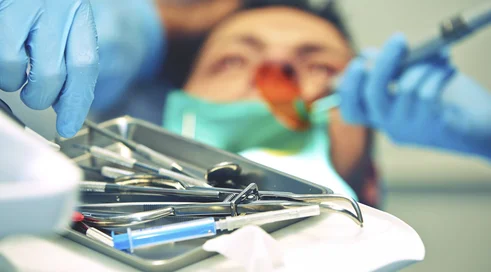
Fot. Thinkstock/Getty Images
The most visible problem is the chronic underfunding of dental services under the National Health Fund. According to the NRL, for many years it has remained at a level that makes it impossible to maintain treatment standards and the stable development of dental staff. As a result, more and more individual, family-run practices are opting out of contracts with the NFZ. Instead, the market for public services is being taken over by large medical networks.
According to the local government, this change in structure carries serious risks. The disappearance of pluralism in access to public services could lead to monopolization of the market - and this, as Barucha points out, always reflects on the patient. A monopolist "imposes its conditions, which will not necessarily take into account the welfare of the patient."
Corresponding with this trend is the Health Ministry's decision to expand the scope of tasks of dental hygienists, who are to perform some of the activities previously reserved for dentists - and without the need for physician supervision. According to the NRL, this solution is mainly beneficial for large entities, and not for patient safety. The local government also draws attention to plans to allow nurses to perform general anesthesia and the simultaneous expansion of indications for dental treatment under anesthesia, which, according to Barucha, adds up to a disturbing whole.
The system's financial problems are also taking a toll on the training of future dentists. Insufficient funding for public dental care means limited student access to clinical practice. According to the NRL, this could result in both a decline in the quality of education and a real shortage of specialists within a few years.
The situation is also worsened by the gradual disappearance of systemic preventive programs, especially for children and adolescents. For years, Poland has been among the European leaders in terms of caries rates among the youngest. The lack of dental surgeries in schools and the limited scope of educational and preventive activities exacerbate the problem, and the shift in emphasis from prevention to restorative treatment generates much higher social and health costs.
Another problem, according to the NRL, is the lack of real dialogue between decision-makers and the medical community. Doctors, universities and the professional self-government have specific proposals prepared and analyses ready, but their voice "remains unheeded," despite the fact that they are the ones who face the problems of patients and the functioning of offices on a daily basis.
The growing number of patient complaints about care provided by large healthcare providers confirms that commercialization and the "factory" model of operation are not conducive to safety. As Barucha points out, treating health care like a market commodity risks losing fundamental standards and values.
"Polish dentistry increasingly resembles a system built of makeshift solutions - we react to the symptoms instead of treating the causes. There is a lack of strategy, vision and stability." - says Pawel Barucha, vice president of the Supreme Medical Council for dentistry.
In his view, dentistry - like any other medical field - requires a coherent, long-term health policy based on knowledge, dialogue and accountability. If the current trend continues, public dental care could become just a formal part of the system, devoid of any real meaning for patients.
Source: NIL