The National Atomic Energy Agency is developing a map of the country's radiation situation - the map portal publishes the results of measurements of the ionizing radiation level of thirteen new PMS stations belonging to the PAA, as well as the results provided by the stations of the Institute of Meteorology and Water Management.
Radiation map of the country - why is it worth following?

Published Jan. 5, 2023 11:34
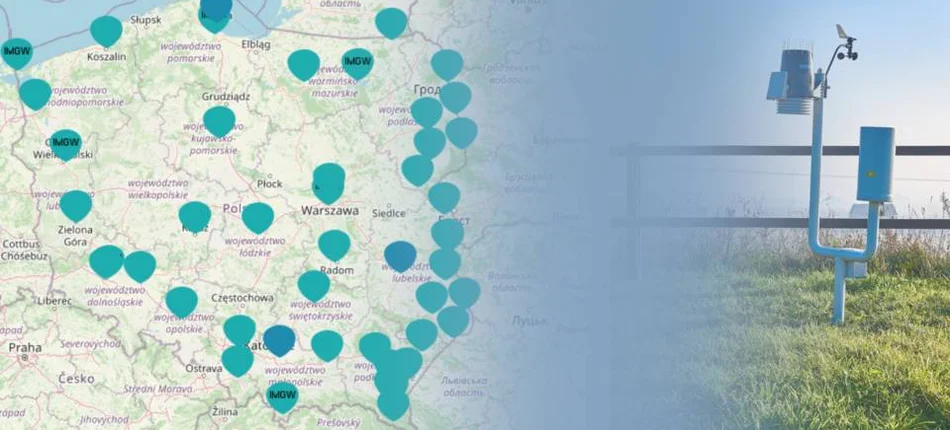
From now on, anyone interested can read the indications of the Permanent Monitoring Station, owned by the IMGW. The stations of the Institute of Meteorology and Water Management are located in nine locations: in Warsaw, Mikołajki, Gdynia, Świnoujście, Gorzów Wielkopolski, Legnica, Zakopane, Lesko and Włodawa. In addition, the map also includes the results provided by 13 new stations that belong to PAA .
To see the indications of individual stations, just in the Menu in the window "stations for early detection of radioactive contamination" expand "PMS stations", "IMMW stations" and then select "Dose rate". PAA PMS stations are marked with blue dots, while IMGW devices are marked with blue dots with the inscription IMGW.
Interested people can use the available, various map bases, which are to help in obtaining the most complete spatial information. The results of the measurements of the IMGW station can be interpreted analogously to the results published for the PAA station.
How to read the radiation map of Poland?
Results of individual stations for early detection of radioactive contamination provided on the map are given in microsieverts per hour (µSv/h). Station indications vary depending on the location and conditions in a given area (landform, geological structure, etc.).
In most cases, stations installed as part of Polish radiation monitoring show values below 0.1 µSv/h. Single devices record a dose rate of over 0.1 µSv/h in dry weather. During rain, especially after a long period without precipitation, the natural background of ionizing radiation may temporarily increase to 0.2 µSv/h, and even in some cases to almost 0.3 µSv/h.
Important! These values are normal and should not cause concern.
The range above 0.3 µSv/h in Poland requires verification of the origin of the increased level of ionizing radiation. Let us remember, however, that in many places in Europe 0.3 µSv/h is the natural background level. It should be remembered that in the event of an increase in the level of radiation above the standard, PAA will issue an appropriate message. Currently, the radiation situation in the country is normal - there is no threat to human health and life or to the environment. The Agency constantly monitors the radiation situation in the country - 24 hours a day, 7 days a week.
press info
Topics
promieniowanie