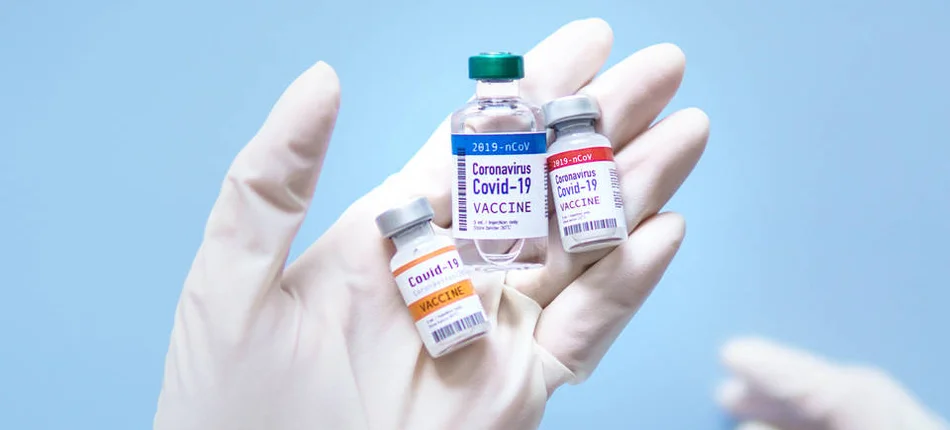
The results of a large study in the United States of vaccine persistence of protection against COVID-19 have been published. The researchers compared vaccines from Janssen, Pfizer and Moderna.
Scientists compared three COVID vaccines. How long (and specifically against what) do they protect us?

Published Jan. 11, 2022 15:19
Thinkstock/GettyImages
The study was funded by Janssen and conducted in collaboration with the Aetion Research Department and the Pharmacoepidemiology Laboratory of the Brigham Harvard Medical School Women's Department of Medicine.
The study looked at the protection profiles of all three vaccines authorized (or approved) in the US. For all three preparations, the same methodology was used for the following three parameters: breakthrough infections (ie, cases of sickness in vaccinated subjects), hospitalization, and admission to intensive care units [1].
To date, comprehensive studies on the protection period of vaccines approved or approved for use in the US have been limited, and many have focused on high-risk groups [2], [3], [4], [5] or specific geographic or geographical areas or individual states. [6], [7], [8]
This time, however, we are dealing with an extensive study of the durability of protection against COVID-19 under real conditions in the USA. This is the first study of its kind to analyze the durability of the initial protection up to 6 months for all three vaccines authorized or approved in the US against the following three parameters: COVID-19 breakthrough infections, hospitalization and admission to intensive care units. .
Researchers used national claim data, laboratory and hospital data from 168 million people to conduct a follow-up clinical trial between January 1 and September 7, 2021 for 17 million fully vaccinated people classified by vaccination dates, three-digit zip code , age, sex, and rates of comorbidities. [1]
The study focused on the durability of the protection that vaccination provides. Odds Ratio (OR) measurements were made, which in a fully vaccinated person estimate the likelihood of breakthrough infection, hospitalization or admission to the intensive care unit each month, compared with the probability of such an event occurring in the month following full vaccination. [1] Odds ratio values greater than one indicate that the protection provided by the vaccine declines over time [1].
The authors of the study make a reservation that odds ratio comparisons between individual preparations should not be made, as the results may be influenced by baseline differences (such as the initial efficacy of three vaccine cohorts) [1].
MRNA vaccines (two-dose) showed declining efficacy in protection against hospitalizations and breakthrough infections [1], with a single dose of Janssen vaccine being less effective than mRNA vaccines given in two doses [1].
For all three preparations, no decrease in the degree of protection against admission to the intensive care unit was noted, which proves the presence of permanent protection against severe cases and critical illness. [1]
Detailed test results:
Janssen vaccine against COVID-19 (single dose)
Janssen vaccine against COVID-19 has demonstrated durability of protection up to 6 months for hospitalizations and admissions to intensive care units throughout the study period - with a slight increase in breakthrough infections starting at month 4 [1].
The initial efficacy level at 1 month after full vaccination was found to be 81% (95% CI: 76% -82%) for hospitalization and 74% (95% CI: 72% -75%) for breakthrough infections. 1]
Durability of protection:
There was no evidence of waning protection from COVID-19-related hospitalization during the study period (OR = 1.25, 95% CI [0.86, 1.80] at Month 5+) [1]. anchor
Similarly, there was no evidence of declining protection against breakthrough infection in the first three months of follow-up, with a moderate reduction in protection against breakthrough infection observed at month 4 (OR = 1.16, 95% CI [1.04, 1.29]) and at month 4. 5+ (OR = 1.31, 95% CI [1.18, 1.47]). [1]
There was no evidence of declining protection against COVID-19-related ICU admissions at any point in the study (OR = 1.40, 95% CI [0.43, 4.55] at Month 4) [1 ]
The follow-up period was insufficient to account for a category of 6 months or more for breakthrough infections and for hospitalization [1].
Vaccine efficacy BNT162b2 [Pfizer] (two doses 21-42 days apart)
In the case of BNT162b2, there was an increase in hospitalizations and breakthrough infections from month 2 - with no decrease in effectiveness from the perspective of admissions to intensive care units during the study period [1].
The initial efficacy level at 1 month after full vaccination was found to be 89% (95% CI: 88% -90%) for hospitalization and 88% (95% CI: 87% -88%) for breakthrough infections. 1]
Durability of protection:
Data analysis showed that protection from COVID-19-related hospitalization decreased over time compared to the first month of follow-up (OR = 3.97, 95% CI [3.26, 4.83] at month 6+) . [1]
There was evidence of a reduction in protection against breakthrough infection, with the reduction increasing incrementally at each month of follow-up (OR = 2.93, 95% CI [2.72, 3.15] for BNT162b2 at Month 6+) [1].
There was no evidence of diminishing protection against COVID-19-related ICU admissions at any point in the study (OR = 1.36, 95% CI [0.80, 2.30] for BNT162b2 at month 4). 1]
Vaccine efficacy mRNA-1273 [Moderna] (two doses 28-42 days apart)
In the case of the mRNA-1273 preparation, there was an increase in the number of hospitalizations in the third month, and in the second month - an increase in the number of breakthrough infections (without a decrease in the effectiveness of admissions to intensive care units at the time of the study).
The initial efficacy level at 1 month after full vaccination was found to be 94% (95% CI: 93% -95%) for hospitalization and 92% (95% CI: 91% -92%) for breakthrough infections. [1]
Durability of protection:
There was evidence of a moderate reduction in protection from COVID-19-related hospitalization over time compared with 1 month post-vaccination follow-up (OR = 1.66, 95% CI [1.26, 2.19] at Month 6+). 1]
There was evidence of a decline in protection against breakthrough infection, with the reduction increasing with each month of follow-up (OR = 2.76, 95% CI [2.51, 3.04] at Month 6+) [1].
There was no evidence of waning protection from COVID-19-related intensive care admission at any point in the study (OR = 1.17, 95% CI [0.64, 2.13] for mRNA-1273 at Month 4) . [1]
Source: Janssen
[1] Zheutlin A., Ott M., Sun R., et al. Durability of Protection against COVID-19 Breakthrough Infections and Severe Disease by Vaccines in the United States. Dostępne na stronie internetowej https://www.medrxiv.org/content/10.1101/2022.01.05.22268648v1 Data dostępu: styczeń 2022.
[2] Poukka E, Baum U, Palmu A, et al. Cohort study of COVID-19 vaccine effectiveness among healthcare workers in Finland, December 2020 - October 2021. Vaccine. 2021. https://doi.org/10.1016/j.vaccine.2021.12.032
[3] Hagan LM, Mccormick DW, Lee C, et al. Outbreak of SARS-CoV-2 B.1.617.2 (Delta) variant infections among incarcerated persons in a federal prison-Texas, July-August 2021. Morbidity and Mortality Weekly Report. 2021;70(38):1349-1354.
[4] Rovida F, Cassaniti I, Paolucci Stefania, et al. SARS-CoV-2 vaccine breakthrough infections with the alpha variant are asymptomatic or mildly symptomatic among health care workers. medRxiv. Opublikowano dn. 3 lipca 2021 r. doi:10.1101/2021.06.29.21259500
[5] Nunes B, Rodrigues AP, Kislaya I, et al. mRNA vaccine effectiveness against COVID-19-related hospitalisations and deaths in older adults: A cohort study based on data linkage of national health registries in Portugal, February to August 2021. Eurosurveillance. 2021;26(38). doi:10.2807/1560-7917.ES.2021.26.38.2100833.
[6] Liu C, Lee J, Ta C, et al. A retrospective analysis of COVID-19 mRNA vaccine breakthrough infections-risk factors and vaccine effectiveness. medRxiv. Opublikowano dn. 7 października 2021 r. doi:10.1101/2021.10.05.21264583.
[7] Rosenberg ES, Dorabawila V, Easton D, et al. COVID-19 vaccine effectiveness by product and timing in New York state. medRxiv. Opublikowano dn. 9 października 2021 r. doi:10.1101/2021.10.08.21264595.
[8] Robles-Fontán MM, Nieves EG, Cardona-Gerena I, Irizarry RA. Time-varying effectiveness of the mRNA-1273, BNT162b2 and Ad26.COV2.S vaccines against SARS-CoV-2 infections and COVID-19 hospitalizations and deaths: an analysis based on observational data from Puerto Rico. medRxiv. Opublikowano dn. 18 października 2021 r. doi:10.1101/2021.10.17.21265101.