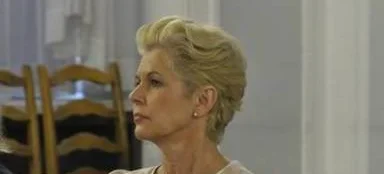
On Thursday, the Senate will decide on the amendment to the act on the professions of doctor and dentist, the entry into force of which threatens to reduce health care funds by PLN 13 billion next year. – I am ashamed that the Ministry of Health came up with the draft of this act – said the chairwoman of the Senate Health Committee, Beata Małecka-Libera, during the debate. The vote on the Senate resolution is to take place in the Sejm on Thursday evening.
Senate: Huge health debt requires a lot of funding, not savings

Published Dec. 15, 2022 14:46
Zdj. Facebook
The debate on the Senate's resolution took place on Wednesday afternoon. Presenting the position of the Health Committee, which was in favor of rejecting the act in its entirety, Beata Małecka Libera emphasized that its sense can and should be reduced to seeking savings due to the difficult situation of the state budget. At the same time, she pointed out that health care - due to the continuous high level of underfunding and the health debt accumulated during the pandemic - is the last area in which these savings should be sought. – The very idea of looking for savings in the budget of the Ministry of Health seems bizarre at the moment, after the COVID-19 pandemic. The huge health debt requires a large subsidizing of all these inequalities that have accumulated over two years. The originator of the project is the Ministry of Health and it was the ministry that came up with the initiative to transfer to the National Health Fund the tasks that had previously been additionally financed - said Małecka-Libera. She emphasized that the National Health Fund already has a problem with financing an adequate supply of services, as evidenced by the constantly long queues, for example to specialists, and if the current pool of funds has to be used to pay for new categories of services - such as emergency medical services, preventive vaccinations or medicines for seniors and pregnant women - also the payer will have to look for savings, i.e. limit the availability of benefits. – This raises the objection of the whole environment – she said.
Małecka-Libera also reminded that the position of the Health Committee of the upper chamber refers not only to the substantive criticism of the act, but also to the way it was adopted, which - in the opinion of the Senate legislators - repeatedly violated the Constitution. One of the most serious allegations is the lack of public consultations on the project. The weight of this accusation is very high, especially after the Thursday decision of the President of the Republic of Poland - Andrzej Duda vetoed the so-called lex Czarnek 2.0 (i.e. changes in the education law), and the argument was the lack of dialogue and lack of consultation. It is worth adding that another allegation of unconstitutionality directly concerns the office of the President of the Republic of Poland, because the schedule of work on the act deprives the head of state of the constitutionally guaranteed time to make a decision on signing the act, if it were to enter into force on January 1, 2023.
Deputy Minister Maciej Miłkowski, who represented the government in the Senate, repeated that the act was designed to organize financial flows and did not threaten the level of spending on health guaranteed by the act of 7 percent of GDP. GDP for health. However, as the senators of the majority of the opposition in the Senate said, the provisions of this act create only paper guarantees, especially in conditions of high inflation, and the level of health care spending in relation to current GDP remains below 5 percent, regardless of the calculations that are used as a reference point they take GDP from two years ago.