The earlier detected, the better the chances of survival - with this statement any oncologist will agree. Cancer, however, does not always produce unambiguous symptoms or they are difficult for the average person to see. Sometimes, quite by chance, a specialist in another field will see something that raises his concern. Dr. Agnieszka Laskus, a specialist in periodontology and general dentistry, talks about such signals.
Signs of cancer that a dentist can spot. Signals that should not be ignored

Published Feb. 5, 2024 08:40
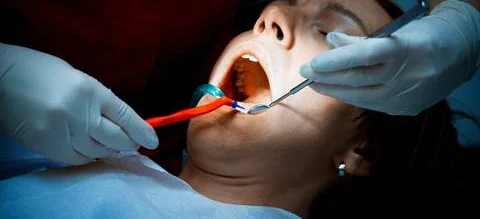
Fot. Thinkstock/Getty Images
Oral cancers - do they always produce symptoms?
According to patient.gov.pl, a service of the Ministry of Health and the National Health Fund, head and neck cancers are diagnosed in about 11,000 people a year. Tumors in this group are most common in people over the age of 45. Men get the disease as much as five times more often than women. Experts are sounding the alarm - the number of patients is increasing every year. The State of Mouth Cancer UK 2022 report, published in 2022, states that "8,864 people were diagnosed with oral cancer in 2021 alone. This is 36 percent more than 10 years ago. During the year, 3034 people died from this cancer. This represents a 40 percent increase in the number of deaths over the past decade and a 20 percent increase over the past five years."
In the first stage of the disease, the chances of a cure are as high as 95 percent, which is why early detection and implementation of treatment are so important. What should be of concern?
- There are several such symptoms. To mention are any, non-healing ulcers in the oral mucosa (on the cheeks, lips, gums, palate or tongue, or in the throat), pain and burning, problems with swallowing, saliva secretion, phonation (chronic hoarseness) disturbing discoloration (color change). What a dentist may also see during a routine check-up are, for example, non-healing ulcers in the mouth, proliferative changes (spreading, expansions, lumpiness) enlarged lymph nodes, altered shape and consistency of tissue structures such as gums, red or white plaques in the mouth, change in color of discoloration," enumerates Dr. Agnieszka Laskus, a specialist in periodontology and general dentistry.
Unilateral nasal obstruction or bloody nasal discharge should also alert us. The primary care physician will refer us to an ENT specialist for further testing. If concerns are confirmed, we will be referred to an oncologist.
It's not just oral cancer - what else can a dentist be concerned about?
- During a dental visit, the doctor has the opportunity to look at the patient's face for a long time. Sometimes we notice disturbing changes on the skin of the face or lips, as well as within the oral mucosa ( change in consistency, color , shape) In the case of regular patients, whom we see regularly, the change may appear between one visit and another. The suggestion to take a closer look at the change should be given priority by the patient, Dr. Laskus stresses.
The expert also points out the role of the dental interview and even... a simple chat with the patient.
- We know that a visit to the dentist is uncomfortable for many people, so we do a lot to make the patient feel safe. Talking gives a lot, and sometimes it can... save a life. From a simple question about general well-being, we can learn that the patient has problems on the gastrointestinal side, such as constipation and diarrhea. When I ask about diet to assess it for the risk of oral diseases, it may turn out that the patient avoids certain foods or meals in a certain consistency because of, for example, discomfort in the stomach or intestines, difficulty swallowing. These are alarm signals that require diagnosis," explains Agnieszka Laskus, MD.
Ignoring worrisome symptoms is not always intentional. The patient, looking at himself every day in front of the mirror, does not necessarily notice certain changes - especially if the disease develops slowly. We tend to adapt to certain changes.
- I may be concerned about yellowing of the patient's skin or conjunctiva, and this symptom may indicate liver problems. Another example would be significant weight loss. This is especially true if it involves a patient whom I have been treating for a long time, and who has lost a lot of weight since the last visit. In such cases, the dentist should inquire whether the patient has been following a special diet, and if it turns out that he has not, it is worth suggesting a visit to a specialist and further diagnostics, the expert says.
How to avoid getting head and neck cancer?
According to the Ministry of Health and National Health Fund service, "about 90 percent of head and neck cancer patients admit in their history that they smoke tobacco, pipes or cigars. The risk of cancer of the middle pharynx and larynx increases tenfold for smokers." Other risk factors include drinking alcohol, poor oral hygiene and infection with the human papillomavirus HPV, among others.
Elaborated. based on a press release
Topics
stomatolog / objawy raka / nowotwory głowy i szyi / nowotwory / nowotwory jamy ustnej / onkologia