During the two years of the pandemic in Poland, the number of organ transplants decreased, as the number of reported donors decreased. In 2021, 1,274 organs taken from deceased donors were transplanted in Poland, while in 2019 a total of 1,536 transplants were performed.
The number of organ transplants is declining

Published March 9, 2022 08:38

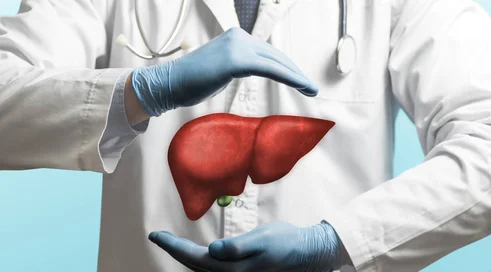
Fot. Getty Images/iStockphoto
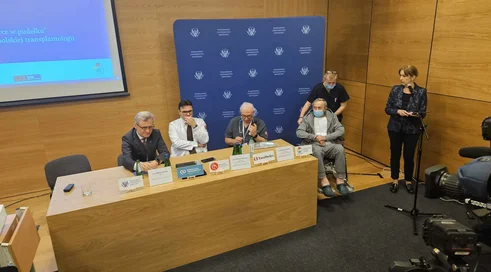
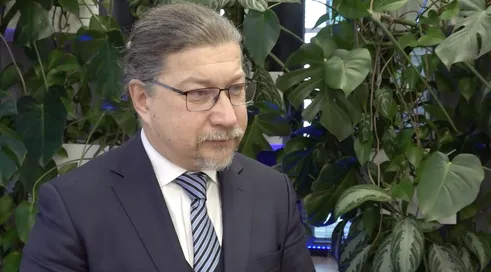
- Organ donors are identified primarily in intensive care units, which during the pandemic focused on the protection of covid patients. In addition, the patient suspected of being exposed to SARS-CoV-2 infection was disqualified for medical reasons and not considered a potential donor - explained Magdalena Kramska, head of the Transplantology and Blood Treatment Department of the Ministry of Health Investments Assessment Department during the session of the Parliamentary Health Committee on Tuesday.
Opposition to donation does not have a significant impact on the number of transplants, although it is necessary to strengthen public awareness in this area to enable more effective donation and save lives.
The main problem that results in a smaller number of organs for transplantation is the low donation activity of hospitals, which was pointed out by Jerzy Hardie-Douglas (KO). - In the Lodzkie Voivodship we have 27 hospitals with the potential for organ donation, and only three of them are active in this field - he said. Hospitals "meeting the criteria of donation potential" are hospitals with, inter alia, intensive care unit, stroke unit. There are 385 such hospitals in Poland. - This does not mean that each of them would be able to report potential donors, because it also depends on the number and profile of patients, the scope of services - explained the head of Kramska. However, she confirmed that many hospitals do not identify potential organ donors, despite having a donation potential. The situation is to be changed by the support program for the quality system of organ donation, which will be financed from EU funds. The idea is that a pilot project will be implemented in hospitals. The participating hospitals are to receive additional funding for achieving the expected donation rates. - We want to standardize the performance of donation procedures, piloting first in 50 hospitals - 40 organs and 10 tissues. So that the donation procedure works properly and thus facilitate the work of transplant coordinators - said Magdalena Kramska.
According to the data presented at the meeting of the Health Committee at the end of February, slightly over a thousand people waited for a kidney transplant, 140 for a liver transplant, 420 for a heart transplant, and 157 for a lung transplant. The average waiting time for a kidney transplant in a person first submitted for transplantation is approx. 900 days. - This is one of the lowest rates in the world. These include patients who require urgent transplantation, and there are patients who can undergo dialysis while waiting for a transplant for one to four years. We want to shorten the dialysis period as much as possible, because during this time the patient's condition constantly deteriorates - emphasized Dr. Artur Kamiński, director of Poltransplantu.
The waiting time for an emergency heart transplant is approximately 90 days on average. - We can connect the patient to the ECMO or implant the patient with an artificial heart chamber. Therefore, it is not the case that every patient will die if they do not receive a transplant, said the head of Poltransplantu. For a lung transplant, the average scheduled waiting time is 225 days. For patients requiring urgent lung transplantation, the average waiting time is 16 hours. On average, the patient waits for an elective liver transplant about 120 days, and for an urgent liver transplant - 24 hours on average.