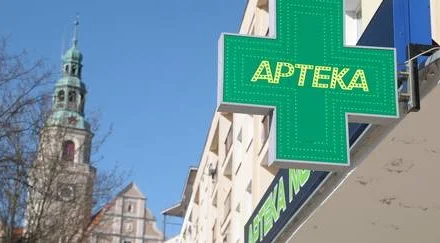
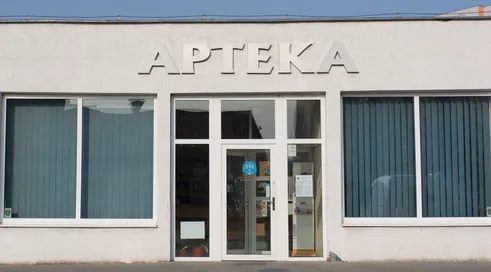
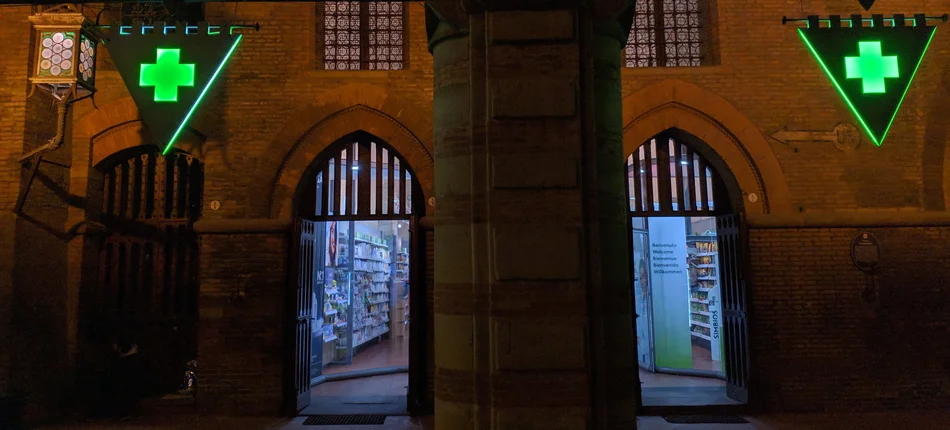
In a county with a population of less than 40,000, the county board will be able to designate a pharmacy to be on duty at night and on holidays. The duty of one such pharmacy will be financed by the National Health Service. What about counties with larger populations?
SME Advocate
Money for night and holiday shifts of pharmacies

Published April 4, 2023 17:55
Fot. Tomasz Kobosz
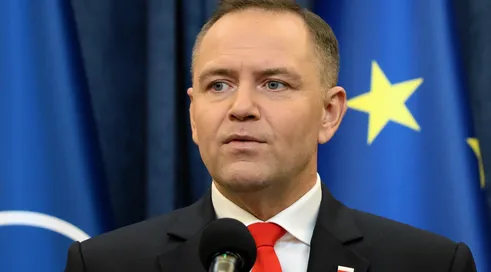
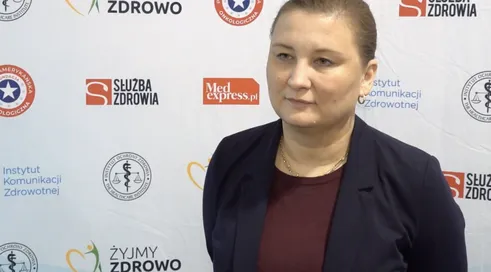
Ombudsman for Small and Medium Enterprises Adam Abramowicz, in cooperation with the President of the Supreme Pharmaceutical Council Elżbieta Piotrowska-Rutkowska, has repeatedly raised the issue of remuneration for the performance of mandatory on-call duties by pharmacies open to the public. April 9, 2019. [1] The Ombudsman sent an inquiry to the Minister of Health regarding the issue in question. In a response dated May 12, 2019, the Health Ministry confirmed the need to amend the regulations governing on-call duty by pharmacies [2].
It is worth pointing out in this context that, among other things, as a result of the above actions, the Ministry of Health has initiated work to regulate the rules for remunerating pharmacies for mandatory on-call duties [3]. The SME Ombudsman submitted to the Minister of Health an opinion dated August 31, 2021[4] to the draft law on amending the Law on Reimbursement of Medicines, Foodstuffs for Special Nutritional Purposes and Medical Devices and some other laws, including the Pharmaceutical Law. In this opinion, he pointed out that the proposed rate for an hour of on-call duty at night and on holidays may not compensate for all the costs incurred by the entrepreneur to ensure community access to medicinal products, and therefore it seems necessary to set this rate at a higher level.
The Ministry of Health, in a letter dated September 10, 2022 [5]. and in the contents of the Project's public consultation report [6], explains and cites the following calculations of the proposed rate of remuneration to pharmacies for mandatory on-call duty: The amount (...) per hour of on-call duty, seems adequate and proportional to the costs incurred in connection with pharmacy dispensing by pharmacy operators. This is, moreover, an amount 3 times higher than at one time (in 2018) envisaged by the proposals jointly developed by the Union of Polish Counties and the NRA (...). According to the draftsman, the above amount will make up for the losses. At the same time, the project proponent has never claimed that the proposed funding is to be so high as to be an incentive. The amount is only intended not to discourage pharmacy operators from conducting on-call services. [7]
It should be clarified that currently the problem of remunerating pharmacies for mandatory on-call services at night and on holidays - is not regulated [8]. Article 94 of the Pharmaceutical Law [9] requires the availability of services of public pharmacies also at night and on holidays, but does not provide for their remuneration for this.
According to a planned amendment to this article - in a county with a population of less than 40,000 residents, the county board will be able to designate by resolution a pharmacy (or pharmacies) to be on duty at night and on holidays. The duty of one such pharmacy will be financed by the National Health Fund. The duty of a larger number of pharmacies and the duty of pharmacies in county seats with more than 40,000 residents - are to be financed by the county.
The obligation to designate pharmacies for mandatory on-call duty will not apply to counties whose headquarters are located in a neighboring city with county rights. The lump sum remuneration of a pharmacy for one hour of on-call duty will be 3.5% of the minimum gross monthly salary for labor (currently it is about PLN 122, which on a monthly basis, with an average of about 82 hours of on-call duty per month - gives a total of PLN 10 thousand).
infra
[1] https://rzecznikmsp.gov.pl/ritilob/2019/04/2019.04.10-Pismo-wychodz%C4%85ce-5.pdf
[2] https://rzecznikmsp.gov.pl/ritilob/2019/05/2019.05.15-Odpowied%C5%BA-na-pismo-z-dnia-09.04.2019.pdf
[3] Draft Law on Amendments to the Law on Reimbursement of Medicines, Foodstuffs for Special Dietary Purposes, and Medical Devices, and Some Others - No. from the list of legislative works of the Minister of Health: RCL # UD226, currently at stage: RCL - Confirmation of the draft by the Standing Committee of the Council of Ministers https://legislacja.rcl.gov.pl/projekt/12348505
[4] Letter from the Ombudsman for Small and Medium Enterprises dated August 31, 2021, marked: WPL.706.2021.TO, https://rzecznikmsp.gov.pl/ritilob/2021/09/WPL.706.2021.TO-pismo.pdf
[5] Letter from the Minister of Health, dated September 10, 2022, marked: PLPR.07.120.2022.PR https://rzecznikmsp.gov.pl/ritilob/2022/09/2022.09.13-WPL.250.2022.TO_.pdf
[6] Report on the public consultation of the draft law on amending the law on reimbursement of medicines, foodstuffs for special nutritional purposes and medical devices and some other laws: https://legislacja.rcl.gov.pl/projekt/12348505/katalog/12799488#12799488,%20s.%201178-1180
[7] Letter from the Minister of Health, dated September 10, 2022, marked: PLPR.07.120.2022.PR, pp. 7 - 8 https://rzecznikmsp.gov.pl/ritilob/2022/09/2022.09.13-WPL.250.2022.TO_.pdf
[8] Maximum surcharges The maximum surcharge charged by a pharmacy for dispensing medicines at night, regardless of the number of medicinal products dispensed or prescriptions filled, is PLN 3.20.
[9] Law of September 6, 2001, Pharmaceutical Law (i.e., Journal of Laws 2022, item 2301, as amended).