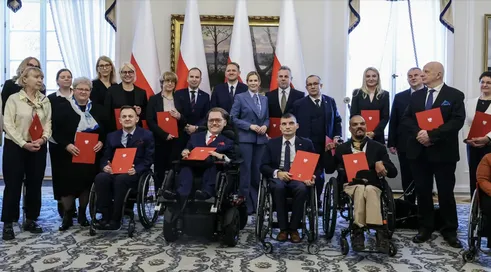
Warsaw City Hall has launched a new three-year health program, "PneumoOnko," which provides free pneumococcal vaccinations for oncology patients who are residents of the capital. - The vaccines protect against the risks posed by infection with these dangerous bacteria, which is insanely important in the case of cancer, says Professor Beata Jagielska, director of the National Institute of Oncology in Warsaw, which is one of the hospitals participating in the program.
Warsaw oncology patients will be vaccinated against pneumococcus free of charge. The program is being implemented, among others, at NIO-PIB

Published Nov. 22, 2024 09:04
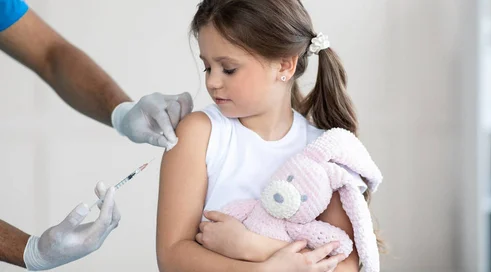
Fot. Thinkstock/Getty Images
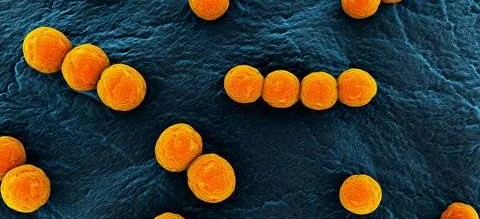
One of the most dangerous complications in people with secondary immunodeficiency caused by, among other things, cancer is pneumonia, most often caused by the bacterium Streptococcus pneumoniae, or pneumococcus. Pneumonia caused by pneumococci generally presents with fever above 38 degrees Celsius, shortness of breath, coughing, with expectoration of often purulent secretions. There is often an accelerated heart rate and an increased number of breaths per minute. Chest pain is not uncommon. In extreme cases, cyanosis occurs. Often pneumonia itself is preceded by a viral infection, paving the way for a bacterial infection.
One of the most effective ways to prevent pneumococcal pneumonia is vaccination. Currently, there are two types of vaccines available, with different profiles of action. One of them has a much higher efficacy and is a 20-valent conjugated vaccine. It is administered once and increases protection against pneumococcal pneumonia for many years. This is precisely what is administered under the "PneumoOnko" program.
- Vaccination is one of the most effective methods of preventive health care that help prevent serious complications during cancer treatment. The Polish Oncology Society recommends immunization for oncology patients as a priority," says Beata Janas, MD, PhD, who is responsible for coordinating immunizations at NIO-PIB.
- Vaccination can be carried out during the period of maintenance or less intensive anti-cancer treatment, but cannot be considered equivalent to vaccination of healthy individuals. As for post-treatment vaccination, vaccines can be administered no earlier than 3 months after completion of chemotherapy and/or radiotherapy, and no earlier than 6 months after completion of treatment with rituximab or another anti-CD20 monoclonal antibody, Dr. Janas adds.
In addition to NIO-PIB, the "PneumoOnko" program was joined by, among others, the Holy Family Specialized Hospital and the Independent Public Open Treatment Complex Warsaw Białołęka-Targówek.