"In 2023, 659 people in Poland contracted tick-borne encephalitis. 35-58 percent of patients with central nervous system involvement develop permanent neurological complications," the Health Ministry warns. In addition to the CSE, the result of a tick bite can be Lyme disease. What can be done to reduce the risk of such complications?
What to do with a tick bite?

Published Aug. 26, 2024 08:59

Fot. iStock/Getty Images
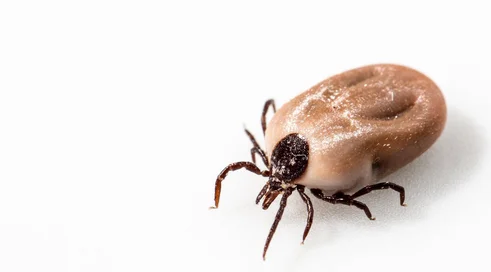
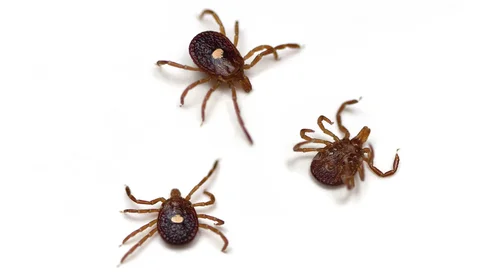
As MZ reminds, the common tick is an arachnid that goes through three phases of its development cycle - from larva to nymph to adult form in 2-3 years. In order for it to transform into its next form, it must drink the blood of an animal or human. An adult tick is the size of a pin head, but after eating, it increases its size several times.
Ticks wait for a host on shrubs, near tall grasses and in damp places. They are most active from spring to early autumn. The mere bite by them does not hurt, but it can be dangerous, because the tick in its saliva can have pathogens with which it will infect you. In Poland, the most common diseases they carry are Lyme disease and tick-borne encephalitis.
So how do you proceed after a tick bite?
- If you know how to do it, you should pull it out, but if you don't know how to do it - then don't. This can be done properly, using, for example, tweezers or a special lasso, which we buy at the pharmacy. We certainly don't lubricate it, don't pour water on it, God forbid, don't set it on fire - because the tick will pass on even more Lyme spirochetes to us," advises Dr. Michal Sutkowski, president-elect of the College of Family Doctors in Poland and vice-dean of the Faculty of Medicine for Development at Lazarski University, in the program Wyszło na Porada of the channel Wyszło na Zdrowie.
Some people take a tick bite so seriously that they visit a hospital emergency department with the problem. Doctors stress that this is absolutely not the right thing to do.
- We don't go to the ED, because that's where people's lives and health are saved. The tick needs to be pulled out fairly quickly, but it doesn't have to be minutes or even hours. You can calmly wait until the morning and pull it out at the family doctor's office. Ultimately, we can go to a night and Christmas care facility. It is important that we get to the doctor, because from that time the period in which we should possibly do tests begins to expire. It's worth the best for our family doctor to know when a tick has bitten us," stresses Dr. Michal Sutkowski.
If the tick is difficult to remove and the doctor feels that the bite condition requires the intervention of a surgeon, he or she should issue a referral to a surgical outpatient clinic with the notation "urgent" to help the patient get immediate help from a specialist.
Serious complications after a tick bite can be Lyme disease and tick-borne encephalitis. In the first case, a migratory erythema appears at the site of the tick bite. This is an oval-shaped lesion that enlarges over time. It is generally ring-shaped, but sometimes it can have a different form or no form at all. The erythema may be accompanied by flu-like symptoms: fever, fatigue, headache, a feeling of flare-ups.
The earliest erythema appears after a few days (usual around day 7), but it does not occur in everyone. Earlier changes are usually an allergic reaction to the tick bite or an inflammatory lesion. Therefore, you should carefully observe your mood and the appearance of your skin after a bite.
If the erythema is left untreated, disseminated infection can occur. Lyme disease can develop over months or even years. Untreated, it leads to serious neurological complications, heart disorders or joint disease. Lyme disease is treated with antibiotics. It is important to introduce treatment early, before the infection spreads in the body.
Symptoms of tick-borne encephalitis, on the other hand, appear within two weeks and resemble the common cold: fever, headache, muscle and joint pain, nausea, upper respiratory tract inflammation. If the viruses enter the central nervous system, a second phase of the disease can develop after a short period of time after the symptoms of infection have subsided, with symptoms of spinal cord and meningitis or encephalitis and meningitis. In most cases, tick-borne encephalitis is mild, but complications can occur, causing permanent sequelae. There is no effective drug that combats infection with the TBE virus. Treatment is purely symptomatic, aimed at controlling inflammatory symptoms.
Elaborated. with information from MZ
It's worth reading

#WyszłoNaPoradę