Does the Health Minister want to test deliveries in ambulances? That's one of the questions raised during this session of the Sejm, specifically - during the deliberations of the Parliamentary Group on Local Government Hospitals, which on Wednesday dealt with plans for changes in hospitality. On Thursday, in turn, at the plenary session, Law and Justice deputies asked from the rostrum whether financial gain was more important than the beauty of birth. That, in a nutshell, is the level of discussion around the hospital sector reform written into the NAP by the previous government (that is, the Law and Justice government).
One in three delivery rooms does not meet the criterion of 400 births per year

Published Sept. 16, 2024 08:17

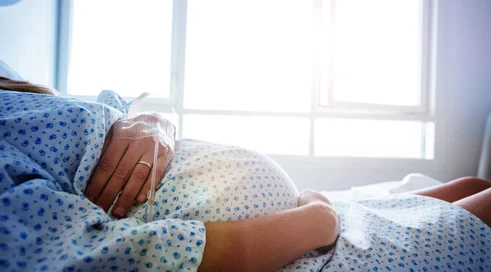
Fot. Thinkstock/Getty Images
On August 9, the Health Ministry released for public consultation a draft amendment to the Law on Health Services, which includes a whole package of solutions for hospitals. A few weeks earlier, the Health Minister had presented the assumptions for this draft at a major conference with local government hospital directors and local government officials, and at the time it was well received. However, when the draft itself was released, there was mostly criticism. And concerns, primarily with the quantitative criteria presented for gynecology and obstetrics and surgical wards.
The biggest emotions were aroused by the information that one in three delivery rooms does not meet the criterion of 400 births per year. And although it has been known for several months (the Minister of Health has spoken about it publicly) that the criterion of the number of deliveries will not be the only one, because the NFZ will also take into account the geographical criterion when qualifying for the network (the radius of distance between hospitals must not be too large), a simple message got through to the public: the government plans to close more than a hundred delivery centers.
The Health Ministry has consistently explained in recent weeks that it is not the ministry that will make decisions, but the hospitals themselves and their governing bodies. - Some of the wards will not support themselves," said Deputy Minister Wojciech Konieczny, for example. This is determined primarily by demographics, i.e., a steadily declining number of births, but also by increasingly higher expectations regarding quality and safety standards, such as the availability of anesthesia during childbirth. Such conditions can only be provided by some hospitals, where births are relatively numerous.
Deputy Minister Marek Kos, responding to a question from Law and Justice (PiS) deputies on whether and how many delivery rooms the "liquidators' coalition" intends to close, recalled that during the eight years of PiS rule, nearly 70 gynecological and obstetric wards disappeared from the map of Poland. And that at the same time, the criterion of 400 births appeared in discussions about the safety of parturients and the necessary changes in hospitality. - Ono was not created in 2024. If a hospital has 120 births per year, and we have such births as well, assuming that statistically every second birth is natural, this means that a midwife may not deliver a baby for two or three weeks. Does this increase the safety of mother and child? - he asked rhetorically.
At the same time, Kos assured that the project is "at a very preliminary stage of the government's work," and consultations with the medical community and local governments are currently underway, after which adjustments can be made. The public consultations lasted until August 30, but it is clear that they do not end the discussion of the hospital reform project, as it also comes up in intra-Coalition talks.