On March 3, the international community unites to celebrate World Hearing Day, an international initiative under the aegis of the World Health Organization to raise awareness about the importance of hearing protection, prevention and support for people with hearing loss. This year's slogan, "Changing mindsets: let's make ear and hearing care a reality for everyone!" calls for global solidarity and action to improve the hearing health of people around the world.
World Hearing Day 2024: Invisible disabilities.

Published March 1, 2024 09:20

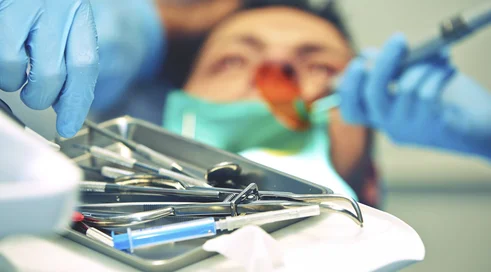
Fot. Thinkstock / Getty Images
Tedros Adhanom Ghebreyesus, WHO Director-General, stresses that hearing loss, often referred to as an "invisible disability," needs to break down public misperceptions and stigma to enable more effective prevention and treatment efforts.
Among the inspiring stories highlighted this year by the World Hearing Forum at the WHO was the story of Joanna Bialasz - a remarkable 17-year-old girl whose life is a testament to the fact that with the right support, determination and access to modern technology, barriers associated with hearing loss can be overcome. "Don't give up when you face obstacles, dream and achieve your dreams," is the motto of her story posted on World Hearing Forum (https://worldhearingforum.org/joanna-bialasz/).
Joanna Bialasz, has struggled with profound bilateral hearing loss since early childhood. Thanks to the cochlear implant in 2008 at the World Hearing Center in Kajetany by Prof. Henryk Skarzynski, new possibilities opened up for her. She is active, passionate and pursues her dreams. As a high school student with a journalism profile, she shows a unique interest in foreign languages, art and culture. Her story is an example of how technology, the help of specialists, community support and personal determination can change lives. She is a true ambassador for our achievements and an excellent example for other patients.
In the context of this year's World Hearing Day celebrations, Prof. Henryk Skarzynski, a prominent specialist in otolaryngology and hearing surgery, national consultant in otorhinolaryngology, and director of the Institute of Physiology and Pathology of Hearing, stresses the importance of the advances that have been made in hearing treatment. He notes that such methods of treating hearing defects, which give patients access to the latest technology and the opportunity to return to the world of sound, are being intensively developed in Poland and around the world.
- We have been performing the most hearing-improving surgeries in the world for 21 years, and Polish patients at the World Hearing Center are very often the first or among the first in the world to have access to the latest technology. We look for new solutions and improve our skills with the deaf or hard of hearing in mind, to give them a chance to come out of their silence and live a normal life," says Prof. Henryk Skarzynski, whose work at the World Hearing Center has already changed the lives of hundreds of thousands of people. He also reminds of the importance of early diagnosis and intervention. He also points out the link between hearing loss and various health problems, such as depression, memory and cognitive dysfunction, which underscores the importance of a comprehensive and interdisciplinary approach to treating hearing loss.
After the age of 65, nearly 50 percent of people have various hearing problems, and after the age of 70 the percentage rises to about 75 percent. - The statistics provided by the World Health Organization are alarming - more than 1.5 billion people worldwide live with some kind of hearing loss, with the number estimated to rise to more than 2.5 billion by 2050. Many times these problems lead to exclusion," he warns.
Thanks to the work of specialists like Prof. Skarzynski and through the stories of people like Joanna Bialash, World Hearing Day becomes an opportunity not only to educate and raise awareness, but also to celebrate advances in treatment and support for people with hearing loss.
For more information on the latest hearing treatment options, visit our website at https://whc.ifps.org.pl/.
Source: press mat.