Data from the Social Security Administration shows that the number of men taking leave for the birth of a child is steadily increasing. While the change is positive, the mere willingness of fathers to take over some of the care does not solve the problem of dramatically low fertility rates.
SOCIAL SECURITY: Fathers on "maternity" are increasing, children are not

Published Feb. 2, 2026 08:11

Fot. Getty Images/iStockphoto
The Social Security Administration has been observing gradual changes in the use of parental leave for several years. Data for 2025 confirms that while men are still in the minority among maternity benefit recipients, their role in childcare is steadily increasing. In 2025, fathers accounted for 33.4 percent of all maternity benefit recipients. A year earlier, the figure was 33.8 percent. The share thus remains at a similar level, but a detailed analysis of the data shows significant changes in the structure of benefits used.
Biggest increase in parental leave
The most visible increase is in parental leave. In 2024, fathers accounted for 12.3 percent of those receiving maternity benefits on this account. In 2025, their share rose to 16.7 percent, an increase of more than 4 percentage points in a year. The change came despite a continued decline in the number of births, which, ZUS points out, indicates fathers' increasing willingness to use their entitlements and greater involvement in caring for their children in the first years of life. The changes to parental leave are effective as of April 26, 2023, and are the result of amendments to the Labor Code implementing the EU's work-life balance directive. Parents of children with a "pro-life" certificate can enjoy extended parental leave - up to 65 or 67 weeks, depending on the number of children born at one birth.
9 weeks only for the other parent
One of the key changes introduced in 2023 is a 9-week non-transferable portion of parental leave to be granted to each parent individually. This solution aims to increase fathers' participation in childcare and is one of the key mechanisms promoted by the work-life balance directive.
Maternity benefit for the period of these 9 weeks of parental leave is 70% of the benefit base. The exception is if the child's mother submits - no later than 21 days after the birth - a request for payment of maternity benefit for the period of maternity and parental leave in full. Then the amount of the benefit is 81.5 percent of the assessment base.
Social Security data confirms effectiveness of changes
The goal of the work-life balance directive was, among other things, to increase fathers' participation in childcare and facilitate women's return to the labor market. The Social Insurance Institution's data for 2025 shows that the new solutions - especially the non-transferable portion of parental leave - are having a real impact on families' decisions and are leading to a gradual but lasting change in the pattern of parental leave use in Poland.
Demographic catastrophe
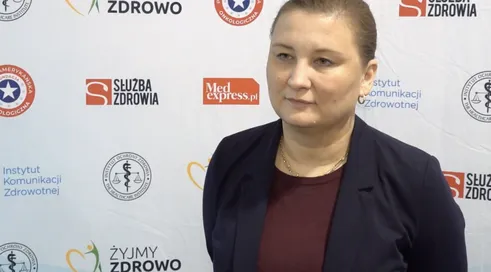
The number of births in Poland is steadily declining. This means that although fathers appear more often in the vacation statistics, fewer and fewer children are being born themselves. During a debate organized by the Institute for Health Communication, experts stressed that the decision to have a child today is made under completely different conditions than just a decade ago. As philosopher and ethicist Prof. Jacek Holowka noted, Polish women are increasingly giving up motherhood not out of lack of desire, but out of a rational assessment of reality. - This is not a lack of instinct or selfishness. It's rationality," he stressed. The CBOS survey showed that 68 percent of Polish women do not plan to have children. Experts pointed out that parenthood has become a decision that requires a sense of stability - economic, health and emotional. Experts agreed: financial programs such as 800 Plus have not solved the fertility problem.
The next step: looking at men
The growing number of fathers taking parental leave is a signal of social change. At the same time, the declining birth rate means fewer and fewer future contributors for Social Security and increasing pressure on the pension system. The data clearly show that without a national demographic strategy, it will be impossible to reverse negative demographic trends. At the Women's Health Congress on March 26, the topic of fertility will be addressed from a slightly different perspective. Experts will try to answer the question of why men do not want to have children - and how their decisions affect women's choices and the future of the system.
Source: ZUS/Medepxress.pl