The University Clinical Hospital in Wroclaw organized the first exercise in performing cardiopulmonary resuscitation using ECMO (Extracorporeal Membrane Oxygenation) in simulated conditions. As part of the two-hour training, doctors learned how to perform the life-saving procedure as quickly as possible. As a result, they were able to reduce the time to render aid by as much as seven priceless minutes.
ECMO in simulated conditions - university supports doctors

Published July 4, 2023 13:42
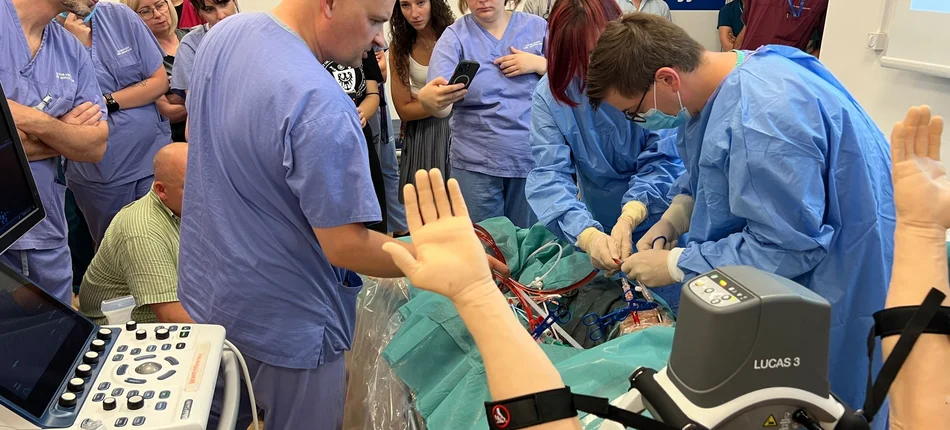
fot. UMW
The training was organized as part of the only program in Poland for the treatment of out-of-hospital cardiac arrest with ECMO called WOHCA (Wroclaw Out-of-Hospital Cardiac Arrest). It is carried out by the Institute of Heart Diseases and the Department of Anesthesiology and Intensive Care of the University Clinical Hospital in Wroclaw in cooperation with the Wroclaw Ambulance Service.
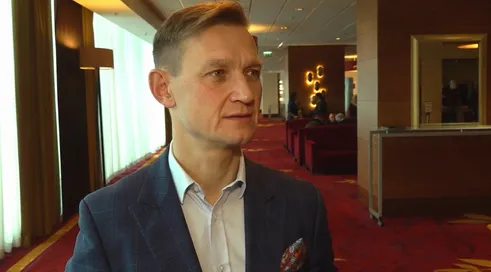
- The need to urgently set up ECMO can occur when least expected, such as in the middle of the night on call. This is not a procedure that is performed so often that it is perfectly rehearsed, so the opportunity to train in safe, simulated conditions is extremely important to us," stresses Wiktor Kuliczkowski, MD, professor of the University of Warsaw, head of the USK Hemodynamics Laboratory, coordinator of the WOHCA program and co-organizer of the simulation.
Support in conducting the exercises was provided to the hospital by the Medical Simulation Center of the Medical University of Wroclaw. As it turned out, the training brought tangible results.
- We realized three scenarios of sudden cardiac arrest and ineffective resuscitation, which required ECMO implantation. Thanks to subsequent trials, we were able to reduce the procedure time from 18 to 11 minutes from the moment the "patient" arrived at the simulated Hemodynamics Laboratory. Without the help of the CSM, such a streamlining of operations would have been impossible," adds Wiktor Kuliczkowski, MD, UMW professor.
Mariusz Koral, who heads UMW's Center for Medical Simulation, explains that the center is not only involved in educating students, but is also actively involved in training medical personnel.
- Simulations are an ideal way to practice working in interprofessional teams, the importance of which is emphasized, among other things, by the recent recommendations of the Conference of Rectors of Academic Medical Schools, notes Mariusz Koral. - The training on the use of ECMO perfectly illustrated this. It was attended by a team of doctors and nurses from the Hemodynamics Laboratory, as well as doctors, paramedics and nurses from the Early Response Team of the Department of Anesthesiology and Intensive Care. The effectiveness of the assistance provided depends on the smooth interaction of all these people.
Dr. Tomasz Skalec, an anesthesiologist and co-organizer of the simulation, notes that coordination during the ECMO-Cardiopulmonary Resuscitation (E-CPR) procedure lies with the anesthesiologists. - While the cardiologists were practicing setting up ECMO, our team was perfecting the delivery of resuscitation in the most challenging medical scenario. It turned out that some of our actions could also be improved.
Cardiologists at the USC Heart Institute are practicing to operate even more efficiently. However, they stress that their ability to save lives largely depends on what happens before a patient is admitted to the hospital. - We are able to significantly reduce the mortality rate, but for this there is a need to increase public awareness of first aid, notes Wiktor Kuliczkowski, MD, UMW professor.