The invention, a dental infiltrant, a resin-like substance of consistency, is designed for the minimally invasive treatment of initial caries of the hard tissues of the tooth. The invention will thus find application in the prevention and treatment of initial caries.
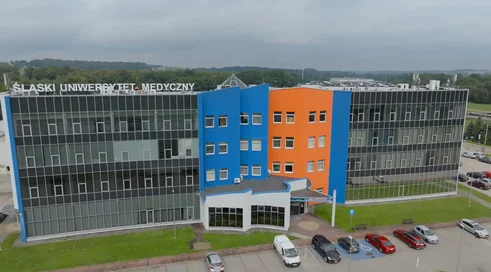
New weapon in the fight against caries. Patent of scientists from the Silesian Medical University

Published Dec. 2, 2024 08:52
174255659.jpg
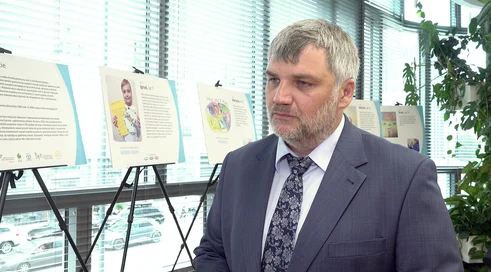
- The invention will make it possible to stop caries in its early stages without invasive intervention, thus keeping tooth tissues almost intact. The materials used to create the resin will ensure blocking the penetration of bacteria and their toxins deep into the hard tissues of the tooth, and also have an inhibitory effect on the development of bacteria, their multiplication, which will reduce the possibility of the formation of secondary caries, among other things," says Prof. Malgorzata Skucha - Nowak, head of the Department of Propedeutics of Dentistry at the Faculty of Medical Sciences in Zabrze ŚUM, the originator of the invention.
According to Prof. Edward Wylęgała, Vice-Chancellor for Development and Technology Transfer at the ŚUM, the invention will revolutionize dentistry. - It's like winning an Olympic gold medal. Medical patents change treatment, like this one, and are one of the most important achievements and activities of universities, he said.
The concept of infiltration emerged in the first decade of the 21st century and involves soaking (infiltrating) decalcified enamel with a low-viscosity resin, thus stopping the progression of lesions. Icon was launched in 2009 in Germany by the DMG Company, and in the same year Icon, as this material is referred to, was marketed commercially as the first infiltrant. Currently, it is the only one used in clinical practice. It is designed to be applied exclusively to enamel.
Dental Infiltrant, patented by our scientists, has in its composition an ingredient responsible for bacteriostaticity, that is, it further hinders or prevents the reproduction of bacteria. Icon does not have this feature. In addition, there is a chance that the patented infiltrant could be used not only in the treatment of early enamel decalcification, but also in the treatment of decalcification of the root cementum, i.e. the tissue covering the root of the tooth. In clinical health, this tissue is not in contact with the oral environment, so it is not subject to the carious process. However, when we deal with many forms of marginal periodontal disease (formerly known as periodontitis) then, the root cementum is exposed to carious bacteria. A dental infiltrant is able to protect it.
The development of diagnostic methods that allow early detection of the carious process (before a cavity develops) has allowed the development of a branch of dentistry - called microinvasive dentistry. The increasing awareness of our patients about the prevention of caries and its various forms allows for a much faster therapeutic response.
The infiltration procedure is an innovative treatment that bridges the gap between prevention and mechanical restoration of enamel defects. The end result also improves aesthetics by reducing the visibility and masking white spots of enamel in decalcified areas on tooth surfaces. It is a minimally invasive treatment method that fills, strengthens and stabilizes demineralized enamel - without losing healthy tooth structure, adds Prof. Skucha - Nowak.
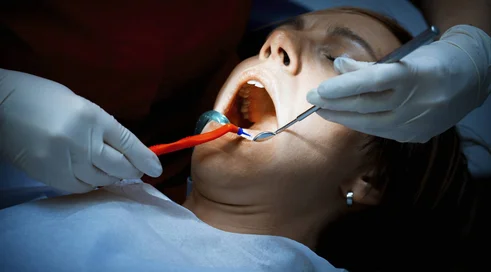
The infiltration procedure itself, for the dentist, is friendly and, most importantly, painless for the patient. It is necessary to prepare our treatment area (decalcification site) properly and apply dental infiltrant, gently remove its excess and then harden it with a light-curing lamp. Already the color change of the white spot after infiltration indicates the success of the procedure. The ideal infiltration material should be characterized by: low density and viscosity, high surface tension, hydrophilicity, no toxic effect on the body, bacteriostatic, no interaction with ingested food and drugs, the ability to polymerize to a solid state, resistance to chemical and mechanical agents and aesthetics after polymerization. It is also extremely important to us dentists that the procedure be completely painless for patients. The infiltration procedure is just that.
- The patented invention is the fruit of many years of joint research conducted at the Department of Propedeutics of Dentistry, Faculty of Medical Sciences in Zabrze, ŒUM and the Department of Organic Chemistry, Bioorganic Chemistry and Biotechnology, Faculty of Chemistry, Silesian University of Technology. Scientific cooperation on the part of the University of Technology was started by the late Professor Miroslaw Gibas - a great scientist and authority when it comes to materials used in dentistry.
- In our Department, we helped from the chemical side to realize a concept born in the Department of Dental Propedeutics. Namely, the concept of producing a preparation intended for minimally invasive treatment of initial caries of hard dental tissues (without the need to use a drill in the dental office)," says Anna Korytkowska-Wałach, Ph.D., Department of Organic, Bioorganic Chemistry and Biotechnology, Faculty of Chemistry, Silesian University of Technology, and adds: -What specifically did our assistance consist of? For example, since the preparation was intended (among other things) to inhibit possible carious processes, we proposed to include an imidazole derivative as a bioactive component in the infiltrant composition. We also performed its synthesis, of course.
According to Wojciech Borówka, Technology Broker at ŚUM: - This patent, developed by the research team of the Silesian Medical University, has the potential to revolutionize diagnosis and therapy in dentistry, significantly increasing precision and patient comfort. As a technology broker, I see tremendous opportunities to commercialize this solution, which fits in with global trends in personalized medical care. We are currently in advanced discussions with a major pharmaceutical company regarding a potential collaboration for the implementation of a dental inforlatrant. At this stage, due to the nature of ongoing negotiations, we cannot disclose details.
Source: Silesian Medical University