The method of orthotropia, advertised as a modern way to treat malocclusion and improve facial appearance in children, is raising increasing doubts among experts. As Patient Ombudsman Bartlomiej Chmielowiec points out, orthotropia is not in line with current medical knowledge, and its use may violate patients' right to health services with proven effectiveness.
Orthodontics: Controversial method under the magnifying glass of the Patient Ombudsman

Published Oct. 14, 2025 07:51

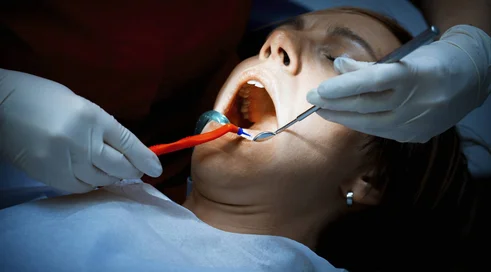
Fot. Getty Images/iStockphoto
Orthotropics is a controversial method used in orthodontics, which in children during the period of intensive growth is supposed to improve the direction of facial growth, open the upper airway and treat malocclusion. Although it is sometimes heavily promoted in social media and on dental office websites, it is not recognized in the scientific community. Experts indicate that its use may not only be ineffective, but also potentially harmful.
Concern about the growing popularity of orthotropics was expressed in January this year. Polish Dental Society (PTS). In response to this publication, Patient Ombudsman Bartlomiej Chmielowiec has taken action to investigate whether the use of this method violates patients' right to health services that correspond to current medical knowledge.
An analysis of the market for dental services showed that orthotropics is readily offered in the treatment of minor patients. The Ombudsman therefore sought the opinion of the provincial consultant in orthodontics. According to the opinion obtained, the method is not based on scientific facts, is not included in pre-graduate or specialty curricula, and its effectiveness has not been confirmed by clinical studies.
A similar position is taken by international scientific societies, including the American Association of Orthodontists and the British Orthodontic Society, which note the lack of evidence supporting the effectiveness of orthotropics and caution against believing claims that postural exercises can permanently "model the face."
Also of concern is the manner in which the therapy is carried out - including the timing of its initiation, the extent of expansion of the dental arches or the leaning of incisal teeth. The round-the-clock use of braces, used in this method, can lead to inflammation of the gums, their recession and instability of treatment results.
The Polish Orthodontic Society (PTO) stresses that orthotropics is not part of academic or specialty education in Poland. Nor has the PTO organized any courses or training on the technique, promoting treatment based on the principles of Evidence Based Medicine - that is, on sound scientific evidence confirming the effectiveness and safety of orthodontic methods.
There is also a lack of reliable, high-quality clinical studies to confirm the benefits and safety of orthotropics. There have also been no analyses of the long-term effects of its use.
As Bartholomew Chmielowiec points out:
"According to Article 6 (1) of the Law on Patients' Rights and the Patients' Ombudsman, every patient has the right to health services that meet the requirements of current medical knowledge. In the course of treatment activities performed, it is forbidden to provide services that do not meet the aforementioned requirement of the law," says the Patient Ombudsman.
As a result of the findings, the Ombudsman is conducting investigations into practices that violate the collective rights of patients against entities offering orthotropic treatment. As reported, the first administrative decisions obliging these entities to stop unlawful practices have already been issued.
Source: MPC