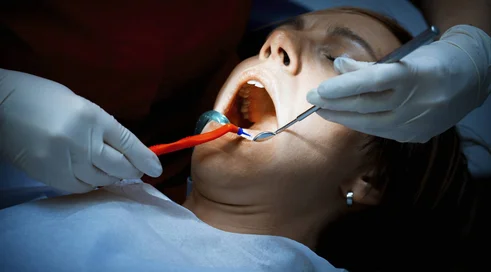
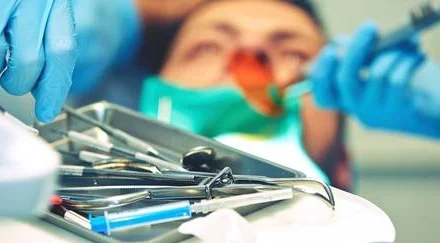
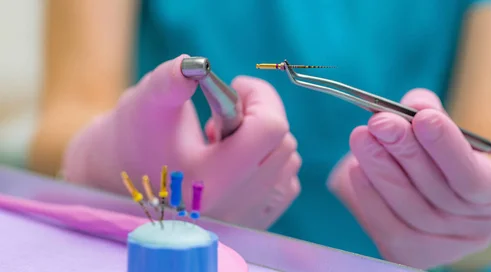
An interdisciplinary team of SUM specialists led by Prof. Malgorzata Skucha-Nowak, head of the Department of Dental Propedeutics and associate dean of the Faculty of Medical Sciences in Zabrze, carried out dental procedures using an "Augmented Reality" (AR) system - CarnaLife Holo, developed by the Polish company MedApp S.A. The system uses special goggles that allow three-dimensional, interactive visualization of the patient's medical data. These included an extraction procedure for a retained tooth, performed in cooperation with dentist Dr. Katarzyna Olek, a specialist in dental surgery, and a periodontal procedure with dentist Dr. Maciej Lopacinski in a patient diagnosed with periodontitis.
Silesian Medical University: first dental procedures using augmented reality

Published Aug. 20, 2024 08:04
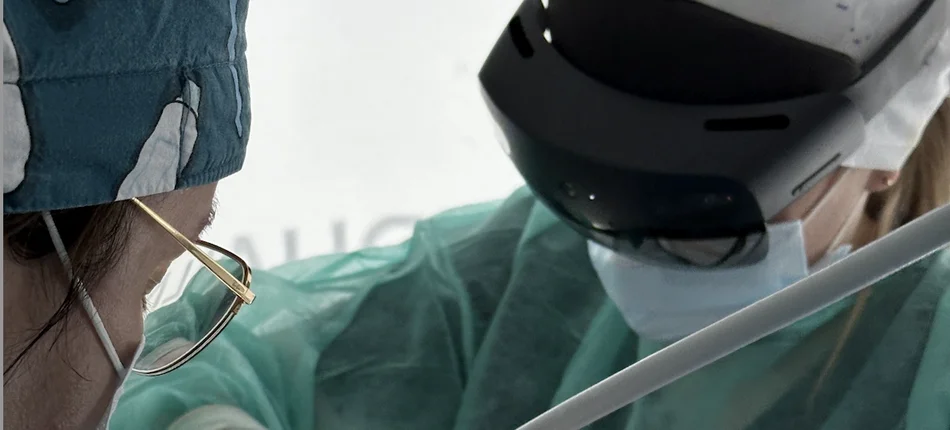
- In the first case, the retained eighth was the cause of frequent pain, while in the second, the untreated condition could lead to tooth loss, explains Prof. Skucha - Nowak.
Augmented reality, which was used during the procedure, is the image of the world we see, only that with the elements applied, in this case the image of the CT scan (CBCT), which allows us to obtain an accurate three-dimensional image of the maxillofacial structures including not only the bones and teeth, but also the nerves using the Hololens 2 goggles - AR therefore does not take us to virtual reality (VR), but adds objects to the image of reality in which we find ourselves - emphasizes Prof. Skucha - Nowak.
The AR technology used in the CarnaLife Holo allows doctors to be far more precise both in planning the surgical procedure and during the procedure itself. The 3D holographic image is superimposed on the natural image, and in this way the surgical field is made more visible, allowing the procedure to be performed with extreme accuracy, such as keeping the surrounding tissues intact and reducing the invasiveness of the surgical intervention as much as possible. - My team and I have used this technology for preoperative as well as intraoperative planning. The integration of augmented reality technology and the use of holograms in surgical planning, has allowed us to better tailor surgical procedures. At this stage, we can tentatively say that the use of this type of innovative solution can be a way to shorten the procedure qualification and planning procedure, with proficient use of the tool - it can potentially shorten the procedure time, which is extremely important for the dental patient.
Many times the cause of periodontal disease can be, in addition to systemic and local factors, including genetic, general diseases or anatomical conditions, lack of proper - for a given clinical situation - oral hygiene, i.e. proper cleaning of teeth, which remove food debris and bacterial plaque deposited after meals. - There are about 50 billion bacteria belonging to 300 species in the human oral cavity. However, not all of them are involved in disease processes. Bacteria residing in the oral cavity are referred to as "opportunistic amphibionts," i.e. having a so-called dual relationship with their host - in this case, humans. Under certain conditions they can play the role of harmless symbionts, and under other conditions they can play a pathogenic role- emphasizes Prof. Skucha-Nowak.
Most often, in advanced clinical cases of periodontal disease, it is necessary to visit a periodontal specialist, who will diagnose the problem and indicate the optimal treatment options, assesses Prof. Skucha - Nowak. - Periodontal surgery, unfortunately, in many cases, becomes a necessity. This is due, for example, to the depth of periodontal pockets, the need to remove the lingering subgingival bacterial plaque along with its toxins and dead epithelium.
Oral health should be taken care of properly from the moment a child is born. This is because the lack of proper oral hygiene leads to caries, the formation of afts, or ringworm. According to the National Health Service, caries is a disease that appears in the first year of a child's life. It occurs in 35-50 percent of children between the ages of 2 and 3. It increases to 56-60 percent in 3,4 -year-olds. Unfortunately, almost 90 percent of 12-year-olds in Poland have dental caries, which then translates into serious problems in adulthood. Oral problems affect the condition of the entire body at any age. Pregnant women should be especially careful to avoid inflammation in the oral cavity, which can have a negative impact on the course of pregnancy, the SUM expert adds.
Special problems also apply to the last molars, which include the eights. Their eruption process, position in the bone and specific location in the area of the angle of the mandible and the cusp of the jaw are often the cause of a number of problems for patients, and there are indications that they should be surgically removed.
In addition to the use of augmented reality in the areas of dental surgery and periodontics, we and our team are working on the wider use of this innovative technology in other areas including pediatric and adult restorative dentistry and endodontics, prosthodontics, orthodontics, etc.
The Silesian Medical University is a pioneer when it comes to modern solutions in dentistry. In addition to using augmented reality methods, virtual reality (VR) has been used for several years. "Virtual dental office" entirely designed by SUM staff and implemented in the didactic process of the medical and dental faculty of the Faculty of Medical Sciences in Zabrze is the only modern educational tool of its kind in Poland. It reflects an authentic office and realistic clinical situations. The student acquires skills with ergonomic principles in mind, learns the scope and activities required of a dentist, allows him to learn about his capabilities and choose the right solutions for himself. The use of VR in the educational process of medical students is aimed at: learning about clinical problems much earlier than before, forming critical thinking skills, learning to work in a team, acquiring the ability to create innovative solutions. In addition, this tool allows to increase the creativity of students, the effectiveness of achieving and then verifying the assumed learning outcomes, to make them look for solutions to the problems they will encounter on their professional path on their own, as well as to force students to verify their existing knowledge and skills, which may allow them to individually identify areas for supplementation or consolidation. In addition, it requires the continuous improvement of the competence of university teachers in the areas of innovative techniques. The didactic teacher assumes the role of supporting the student in the search for available solutions. The student takes his place at the center of the didactic process and is given the opportunity already at the preclinical learning stage to make decisions on his own. The use of the "virtual dentist's office" as one of the didactic tools allows the students to be independent and awaken their creativity, while at the same time there is no risk to the patient, in simulated clinical conditions, explains Prof. Skucha - Nowak.
Teaching methods that have existed in the realm of academics' dreams until now have become a reality for students of the Faculty of Medical Sciences in Zabrze. At this stage of experience with augmented reality using 3D imaging and holograms, I dream of also being able to use this technique as a tool in the didactic process of medical-dental students at our Faculty. We'll see what time will bring," stresses Prof. Skucha-Nowak.
Source: SUM