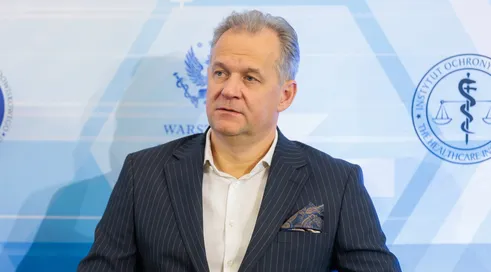
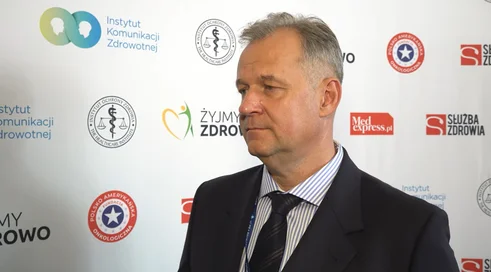
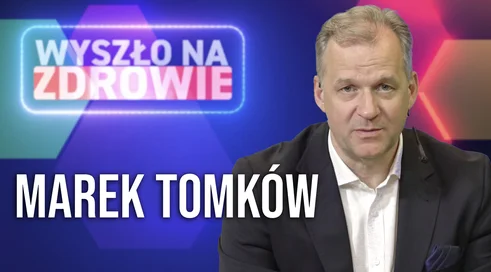
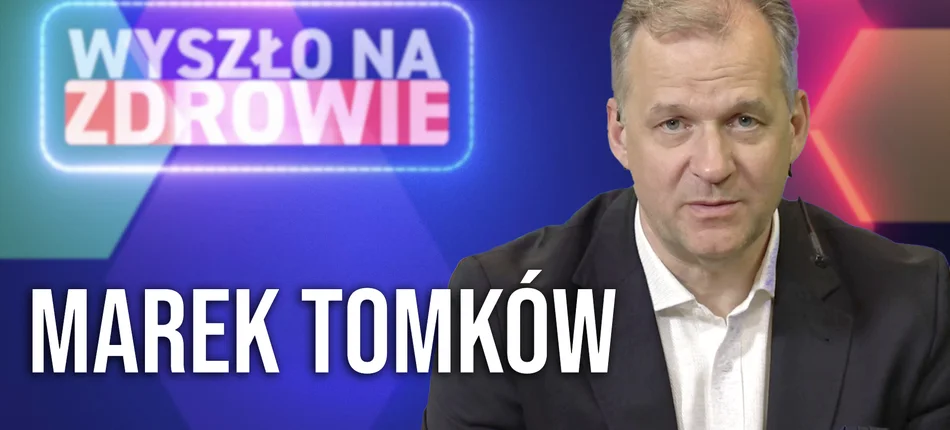
- Every day we dispense narcotics, the heaviest drugs, and suddenly it turns out that with this one there is such a big political dispute, and yet this can be completely peacefully reconciled. This project should be worked on, and at the same time give a free hand to pharmacists. Let them decide for themselves, as they do 180,000 times a month when they issue pharmaceutical prescriptions in a health emergency," said Marek Tomkow, president of the Supreme Pharmaceutical Chamber, when asked on the program Wyszło na Zdrowie about the dispute over the pilot program, under which pharmacists will be able to issue prescriptions for emergency contraception.
There are no other pills anymore. There is only the "day after" one

Published May 10, 2024 09:00
Slightly more than 100 applications for participation in the pilot, under which a prescription for the morning-after pill will be available from a pharmacist, had been received by May 7 at NFZ branches across Poland. Considering the number of pharmacies in Poland, this is probably not a staggering number?
This interest is not small, because if we are talking about a hundred pharmacies in a few days, it is easy to imagine that this will certainly be a number several times higher in a while. The second issue is whether we really need to run 12,000 pharmacies and 27,000 pharmacists for these few hundred prescriptions a day. I think there is no need to bid on how many there will be. What is important, however, is that they be evenly distributed.
We had a meeting attended by several thousand pharmacists and tried to address a great many concerns. There are two issues that need to be discussed in particular. The first issue is the famous parental consent in a 15-year-old. This position of the Supreme Pharmaceutical Council is not based on my or my colleagues' beliefs. It is also the position of the Supreme Pharmacy Council, the Supreme Medical Council, the Supreme Council of Nurses and Midwives, as well as Physiotherapists or Diagnosticians.
The communities of all medical authorities have said directly that this is a health service, so there should be guardian's consent in the case of a minor. That's what the Ombudsman said, that's what journalists said, and that's what lawyers said. They all say that this consent should be there, and this was the first point that pharmacists wanted to hear. Our recommendation is that in minors such consent should be asked for.
The second issue is the National Health Fund procedures. We are talking about 100 applications so far. This does not mean that the contracts are concluded yet. This procedure will take a while. Hopefully shorter than the one that was for vaccinations. We've also heard that the fund is going to cap these benefits, and this is another problem that needs to be solved. Pharmacies, hearing that they can get a few of these consultations, simply don't want to mess around with the gigantic paperwork in order to compete for 150 or 200 zloty a month, and at the same time have the problem that some patient will have to be told that she is just off-limits (The conversation was recorded before the National Health Service announced that the service would not be limited - ed. note). Let me make a reflection. I've been under the impression for several weeks that there are no more other pills. There is only this one.
Indeed, the bone of contention has been and continues to be the issue of parental consent in the case of minor patients, or perhaps clients? Who actually?
The basic point is that we have a law in a very different state. It's more consistent, less consistent, but on the other hand it's solid enough that it can't be circumvented so easily, just so that a 15-year-old doesn't have to get consent. What you are trying to do by cutting out four words is to suddenly say that we are no longer obligated to demand such consent, while a doctor or nurse has such an obligation. At the same time, today in a pharmacy such a patient cannot be weighed, cannot be measured at the waist, cannot have her blood pressure measured without parental consent. And suddenly it turns out that by deleting four words all these regulations disappear. If this is the whole idea behind Plan B, it is not a good one.
In the very first words of this regulation, and this can be found by anyone, it says "patient." The definition in the Patients' Rights Act states that it is a person to whom health care is provided. We also have to answer the question, if we remove these four words for ourselves, will it make it no longer pharmaceutical care, but pharmacist care? And what is pharmacist care? We have no idea, for the reason that it is not defined anywhere. So the question arises as to whether we, at this point, are not exposing ourselves to claims from parents. It was enough to write in the regulation "in the case of a minor, consent is not required". And this is not there - nor can we find it in the regulatory impact assessment. In the event of a lawsuit brought against the pharmacist by the father of the girl who was given the service, what is such a pharmacist to hide behind? A statement? We have no official position, nothing hangs on the website of the Ministry of Health. No communiqué has emerged that says consent is not required. And the Ombudsman has said that it is required. Are we supposed to argue in court between one position and the other?
Therefore, our attitude is what it is. We are absolutely in favor of developing this pilot, primarily because it has a very broad educational value. On the other hand, we don't want to agree to be excluded from the entire health care system, creating a concept that doesn't exist anywhere else, just to bypass consent in those few fifteen-, sixteen- or seventeen-year-olds nationwide.
It was straightforwardly said that since the president did not sign the law, until the head of state changes you have to have a plan B. Don't pharmacists feel that someone has used them to get around the regulations?
I don't want to get into an emotional zone, because it ends up with someone saying that I have views like President Andrzej Duda, and that's not the point. The point is that we have a number of laws today, and it is impossible, to put it ugly, to neuter them in such a way that a perfect Plan B is created. In my opinion, Plan B can be great, but it's not supposed to be a mutilated Plan A, it's supposed to be something completely different, which is a broad educational program, a very large one, in which we talk about contraception with women, not just those between the ages of fifteen and eighteen. I'll probably surprise someone, but I have a reasonable suspicion that it's not only those between fifteen and eighteen who are having sex in Poland. I could be wrong, of course, but that's my sense. Therefore, we are targeting education even to the mothers of these children, and this is a huge advantage. We're tapping into the potential of pharmacists, we're creating the first program in Poland where any woman, no matter what her situation is, can walk into a pharmacy, meet with a pharmacist and learn something that she can also pass on to her child. She can make sure that her daughter doesn't get her knowledge from the Internet. This is an extremely important thing.
Bringing all this down solely to the issue of parental consent, attaching silly ideas that say someone should ingest something in front of a pharmacist, is the wrong way to go. Imagine the situation of a father to whom a 15-year-old comes and says: Daddy, yesterday I had sex with a friend, but I absolutely did not want it. Then I went to the pharmacy, and there the gentleman said, I don't have to call you. He gave me a prescription and still told me to swallow the pill with him. This is something that any normal person wakes up screaming with, much less the pharmacist in charge.
We dispense drugs every day, we dispense the heaviest drugs, and suddenly it turns out that with this one there is such a big political dispute, and yet this can be completely peacefully reconciled. We are increasing access to competence, as some want, we are securing fifteen-year-olds, as others want, we want to ensure the development of pharmacists - those who want to develop, but at the same time those who want to shield themselves even with their own religious views do not have to do so. They simply do not enter the pilot.
I believe that this project should be worked on, while giving a free hand to pharmacists. Let them decide for themselves, as they do 180,000 times a month when they issue pharmaceutical prescriptions in a health emergency. After all, this is not the only pill at which one issues a pharmaceutical prescription. We do it with antibiotics, with epinephrine drugs. We do it with drugs that save lives in diabetes. With this gentle adjustment, this could be a really great project, it's just a matter of not getting caught up in political discussions either.
In that case, should this crippled Plan B be cured by amending certain assumptions in what has already been created, or just leave it untouched, and implement it as national law dictates?
At the moment, I think we should wait before making two hundred, three hundred or one thousand pharmacies out of these hundred. We should simply let pharmacists decide. Many of them have made statements in the media, among others, that they want to suggest, however, our recommendations, they don't want to take risks. Today we talk about the morning-after pill, but a few years ago we said the same thing about vaccinations, where there were even more concerns and even more problems, because it was something completely new. After all, for us, a pharmaceutical prescription is nothing new. Nor is talking to a patient. Vaccination was something completely exotic, so we passed that stage by simply running it without emotion, solving another problem every day. Today, for example, we already have a response from insurers that this is covered and the pharmacist can perform this activity completely calmly.
We should be talking, for example, about contracts or simplifying paperwork. I'm surprised that someone says that this is such a pilot that is supposed to last until the change of president. If all our work is to focus on solving the problem of the 15-year-olds, which is marginal in my opinion, and wait until the change of president, well then you are right. We feel a little bit like a tool in this situation.