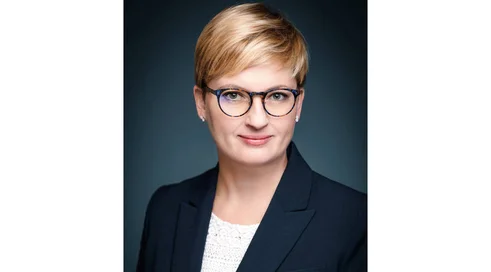
Dr. Katarzyna Kęcka, chairman of the board of directors of Szpitalne Centrum Medyczne in Goleniów sp. z o.o., Polish Federation of Hospitals.
Work organization vs. patient care cost optimization

Published March 27, 2023 17:00

What is quality of care? A state to which one should aspire, wanting to ensure an adequate level of care in the area of health services. The Ministry of Health has grouped the factors that affect the quality of health care services, these are:
- "standards for premises (building) conditions, that is, the minimum standards that a room must meet in order to be able to provide the services in question within a certain scope.
- standards of medical equipment and apparatus in relation to the type of services provided - these are the requirements applicable to entities applying for a contract for the provision of health care services with the National Health Fund and required for the provision of guaranteed services,
- standards for medical personnel relating to minimum staff qualifications and employment standards"(Quality in Healthcare - Ministry of Health - Gov.pl Portal (www.gov.pl))
The current situation in medical entities does not create a climate conducive to the provision of quality services. Many issues can be raised that affect the quality of care, however, what matters most at the moment are staff shortages and inadequate valuation of services, or if you prefer underestimation taking into account inflationary indicators, translating into a rapid and high increase in the price of services, equipment, resources and pharmaceuticals. The result is the inability to purchase new equipment or upgrade the conditions of the premises.
But indeed, it is the shortage of medical staff that is the most important factor driving up the cost of providing services, given the cost structure of hospitals. This is related to the fact that the labor market shapes salary levels, some managers of medical entities also apply so-called financial incentives to maintain the continuity of contracted services. This applies primarily to medical staff, but is also beginning to be felt in the case of nurses, midwives or paramedics. This is a perfectly understandable mechanism in the case of deficit professions, but will awareness of this improve the situation of medical entities and the cost of living? Unfortunately, no.
At this point, one would have to ask the question - how do we prevent personnel costs from being elevated and ensure the right level of quality of care? It would seem that this is an unsolvable problem, and yet. The simplest solution lies in the proper qualification of activities according to the levels of professional competence in each profession.
It has been said for years that doctors do too much clerical work, to improve this in the departments there are medical secretaries, who at the same time can handle the proper coding of services for the payer. The conclusion? Leave it to doctors to treat patients.
A similar statement can and even should apply to the nursing staff. Let the nurses take care of the patient according to their competence. At the moment, due to the legislative mess, there is a system of work in the wards that is not fully understood, where basically all nurses perform the same or similar tasks regardless of their education. This, unfortunately, results in too few nurses and can affect the low level of patient care. And with the pay raise chaos, it has caused huge problems in grading nurses.
A nurse educated in the Polish higher education system is a professional with a wide range of competencies, including subjective examination of the patient, ordering examinations or independently prescribing certain medications. According to the educational results, she is responsible for the organization of work in the department in caring for patients while combining this with certain professional skills. Can we really afford to employ nurses for patient care activities, which are usually the largest part of care? For example, in the internal medicine department of the hospital I manage, nurses perform strictly defined activities, including supervision and monitoring of the patient's condition, administering medications on medical orders and on their own, ordering tests and controlling the work of subordinate staff. Although there are no employment norms for medical nurses, the hospital employs dozens of them. What do they do? First of all, patient care, feeding, basic dressings, medication administration, basic physical activity of the patient. For two years, the work system in the department has changed tremendously. At present, caregivers perform the vast majority of activities previously assigned to nurses.
Since everything can be recalculated, the hospital counted the actual cost of patient care. The year 2019, the year before the pandemic, and the year 2022 were recalculated. The pandemic was not taken into account, because the operation of the hospitals went beyond normal operations. Yes, at first glance, personnel costs increased, caused by the additional employment of medical caregivers. Because if there are no standards, why hire them? And here may be the answer. The hiring of medical caregivers has definitely improved the quality of work, as reflected in patients' opinions on hospitalization, but also improved the efficiency of bed base utilization, i.e. throughput. Compared to 2019, bed throughput doubled and the number of person-days almost halved. With the number of beds reduced by a third, there was a 40% increase in hospitalizations. In addition, the cost of antibiotic therapy decreased by 30%, due to a huge decrease in so-called "prolonged" hospitalizations, which also means a decrease in nosocomial infections.
In summary, the total cost of patient care in the internal medicine department in 2022 compared to 2019 was almost PLN 600 lower, despite the drastic increase in prices and salaries in medical entities over the past few years. So if there is no need for this then why overpay? It is necessary to simply regulate the employment of medical caregivers in hospitals and adjust the employment of nurses to actual needs.